Childhood centres feeling financial squeeze as low turn-up continues
Some parents are still scared that their children will get Covid-19 at the creche. A lot of parents also don’t have jobs anymore and can’t afford school fees.”
Early childhood development centres responsible for supervision and stimulating the intellectual capacity of the little ones have been suffering financially as Covid-19 brought on a low-turn up of learners.
The sector in the South African context employs many women, especially in vulnerable communities.
Pretoria-based centres this week shared their experiences of operating under Covid-19, which saw the early development centres’ doors closed for more than four months, putting pressure on profit margins.
Yolanda du Plessis, an administrator of an early development centre in the east of Pretoria, said they were still faced with low enrolment of learners.
“When we first opened in July 2020, we had only three children from 230 before lockdown,” she said, reflecting on some of the struggles they went through.
Months after the outbreak, the centre was still short of about 140 learners compared to what they usually took care of.
“Some parents are still scared that their children will get Covid-19 at the crèche. A lot of parents also don’t have jobs anymore and can’t afford school fees.”
Du Plessis said this hit on their finances hard seeing them lose 10 staff members.
“We could not afford to have all the staff back, there just was not enough money to pay all the salaries.”
She said having to implement safety measures under the new norm came at a significant cost to them.
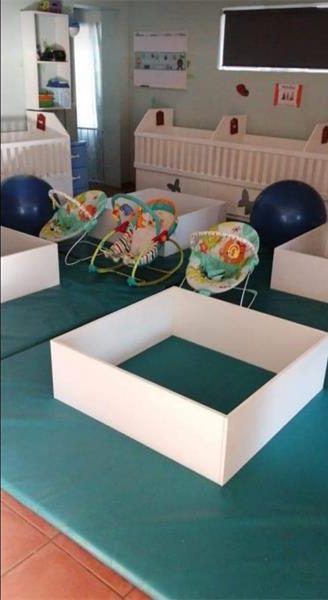
“Our school uses 5l hand sanitiser per day. The number of children allowed into the school, only 50% are allowed with the 1.5m social distancing rule.
“All the classes are marked where the kids must stand for complete social distancing. We now sanitise everything from the school playground, toys, toilets.”
She said that making the children adapt to wearing a mask and to wash hands regularly, was not a strain.
“Before the lockdown, we used to keep all the toys, mattresses, etc, clean daily, so it wasn’t a new thing for us to make sure everything is extra cleaned.”
Children are usually touchy and dependent beings, their natural way of living is opposite to society’s “new normal” under Covid-19 outbreak times.
This begged the interest of how early childhood centres coped with taking care of them under the pandemic.
Sandra Viljoen, who owns a preschool in the east of Pretoria, said a brand-new school routine had to be established to ensure that children were kept in smaller groups to adhere to social distancing.
READ MORE:Helping Hand helps people hear again
“Every aspect of our school’s operational plan had to be re-evaluated and adapted.”
Viljoen said parents were no longer able to watch their little ones inside their classrooms play to minimise the number of people coming through the school.
The new ways of doing things saw separated spaces allocated for Covid-19 screening for children, staff visitors and disinfection of premises in the morning and at night – every single day.
The costs of these changes for the sector which closed for over four months with no income did not come easy.
“The enormous capital outlay of Covid-19 protection gear, fogging machines, foot-operated hand sterilisers, shoe covers, masks and much more was incredibly difficult for a small business to carry.”
While the sector remains as a source of income for most women, the reopening of the sector came after a struggle as the matter also ended-up at the courts.
“The massive amount of paperwork that had to be completed before re-opening was overwhelming and extremely time-consuming,” she said.
“The financial challenge was the greatest. Our numbers dropped by a staggering 80% and only a handful of parents continued to pay the full school fees.
“We had to adjust our fees drastically, but we still lost most of our pupils. We re-opened in July with only 27 pupils but still had our 18 staff members to take care of,” Viljoen said.
Viljoen described the drop in enrolment as “drastic”.
“Seven months after re-opening, we only have 65% of our space filled and it is also apparent to us that the parents are under enormous financial strain. To that end, we have not passed our usual annual increase since 2019.”
For Viljoen, the four months closure was the biggest struggle of her life to keep the doors open.
“The financial strain on me as a small business owner was immense and still is. We are still in the process of recovering but we are nowhere near the numbers that we used to have.
“It is a daily challenge to meet our financial obligations with such reduced numbers but the same number of employees.”
Spokesperson for the Tshwane social development MMC Luthando Kolwapi said the attendance in several centres supported by the metro had 10-15% attendance since they reopened earlier this year.
Kolwapi said the metro decided to keep the doors of centres closed as parents were uneasy sending children to school.
“There was a lot of uncertainty when it came to the safety of children and we needed to ensure that we have all the safety regulations in place for their safe return.”
Most pre-schools in the region confirmed having the same experience.
Do you have more information about the story?
Please send us an email to editorial@rekord.co.za or phone us on 083 625 4114.
For free breaking and community news, visit Rekord’s websites: Rekord East
For more news and interesting articles, like Rekord on Facebook, follow us on Twitter or Instagram