‘We are technically bankrupt,’ Tshwane mayor admits
“Further to that we also learnt that the City is paying rent in some unoccupied buildings like BKS and that we have exceeded carrying capacity of Tshwane House even though ventilation is a challenge.”
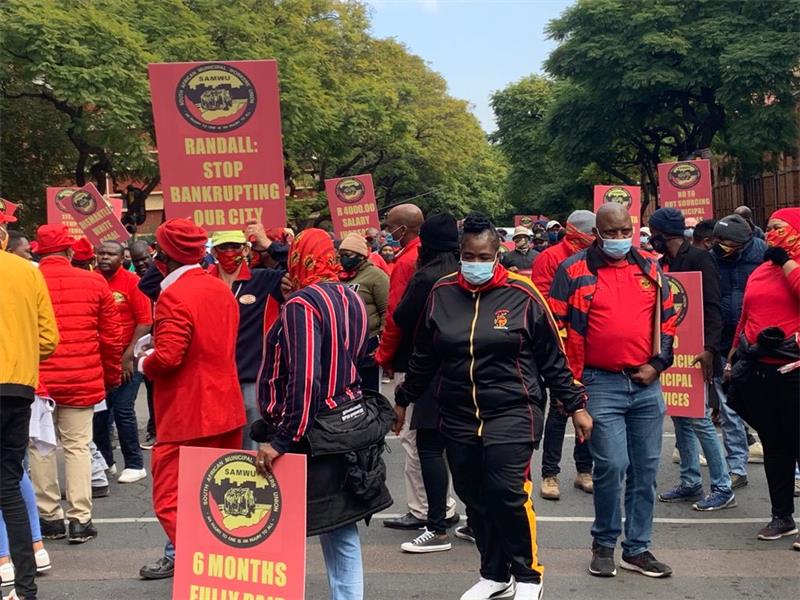
Tshwane metro, which was technically bankrupt, was considering all its costs “very carefully” as it faced a workers’ protest action over wage increases.
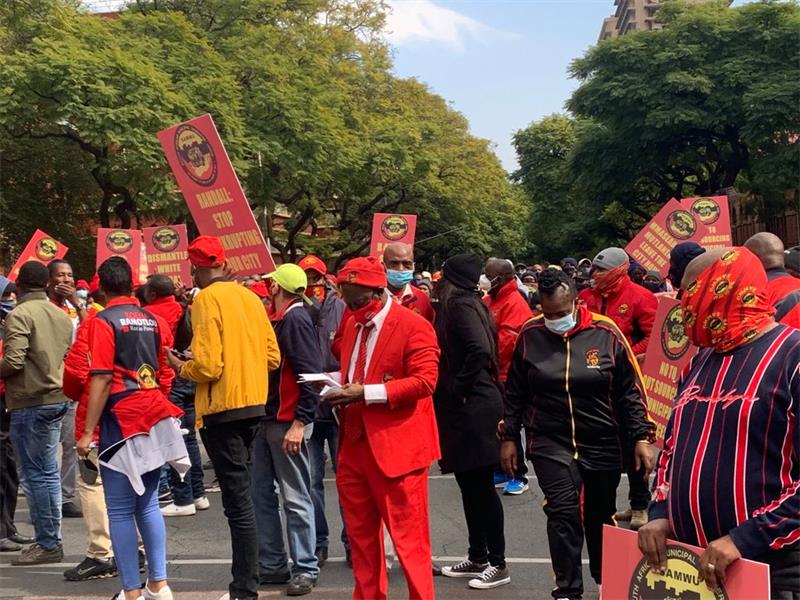
Municipal workers affiliated with the South African Municipal Workers Union (Samwu) embarked on a march this week, to press home their demands for a wage increase
The marchers delivered a memorandum to Tshwane finance MMC Mare-Lise Fourie.
Fourie said the issue of wage increases would be engaged on further at the South African Local Bargaining Council.
Samwu regional secretary Mpho Tladinyane said workers were demanding:
– a salary increase of R4 000,
– a housing allowance of R3 500 for all workers,
– R15 000 sectoral minimum wage,
– 80/20 medical aid contribution,
– Covid-19 allowance of R3 500.
They also demanded access to municipal services stands and that the mayor lobby Salga to accede to workers’ demands.
He said Samwu had been engaging the metro “for the last four years to ensure that municipal buildings were compliant with occupational health and safety act requirements”.
“In December 2020, Samwu wrote to the mayor on non-compliant buildings but to date, nothing has been done.”
Tladinyane said these buildings were Isivuno, TMPD in Boom Street, Mabopane and Madiba 1, Bothongo Plaza, Grasdak in region 7, Merngvers and Danlouw in region 4 among other buildings.
“Further to that we also learnt that the city is paying rent in some unoccupied buildings like BKS and that we have exceeded carrying capacity of Tshwane House even though ventilation is a challenge.”
He said it was also alleged that the city had irregularly spent R80-million “on the crooked matter regarding a delay in resolving the capacity issue”.
He said the metro should operationalise its two power stations (Rooiwal and Pretoria West) as they had a capacity to generate 400 megawatts of electricity.
“Noting the challenges experienced by the country in terms of electricity generation, the capacity of these two stations can cushion the city against loadshedding.
“We demand the city starts generating electricity at the two power stations, that funds be availed to ensure availability of coal and oil and that all dysfunctional turbines be fixed.”
He said the metro had also shown an appetite to outsource services currently done by permanent employees.
“This is mainly happening at parks, waste management, group property and Tshwane bus service.”
Tshwane mayor Williams said when he presented his budget in council, he indicated that the city had reached a point where its liabilities had exceeded its assets, therefore, making the city technically bankrupt from an accountancy perspective.
“This is why the approval of the budget was so critical to assist in restoring financial stability and driving core basic service delivery to refocus the city and take it forward.
“While this is the case on paper it will not compromise core city operations as the city is able to ensure that it functions optimally.”
He said salary increases, in particular, would be engaged further at the South African Local Bargaining Council which was the platform where such matters were discussed.
“The issue of wage increases is being raised at multiple spheres of government particularly now during Covid-19 where there is a need to ensure the savings have occurred across the government.”
Williams said the city was not in a position where it was struggling to pay its debts as it was adequately servicing its loans and managing the relationship with its creditors.
He said the metro would limit the number of critical vacancies considered to cut costs, and no overtime would be processed unless for essential services.
“Departments are required to review all contracts for value for money and all leases and rental buildings must be renegotiated. The appointment of consultants is to be strictly monitored.”
Samwu gave Tshwane metro seven days to respond to its grievances.
Do you have more information about the story?
Please send us an email to editorial@rekord.co.za or phone us on 083 625 4114.
For free breaking and community news, visit Rekord’s websites: Rekord East
For more news and interesting articles, like Rekord on Facebook, follow us on Twitter or Instagram