ConCourt slams Gauteng over decision to put Tshwane under administration
Unpacking the judgment by the Constitutional Court on the placing of the Tshwane metro under administration in March 2020. The court looked into the legality and whether the decision was warranted.
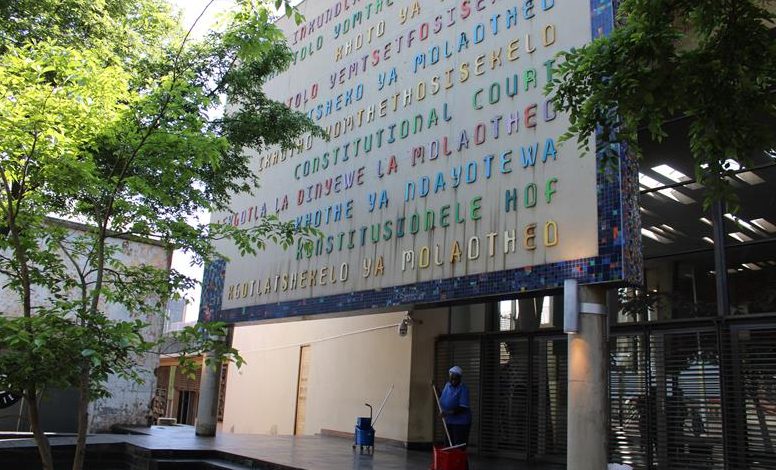
The Constitutional Court has censured the Gauteng provincial government for failure to support or address the political impasse in the Tshwane council before placing the metro under administration.
This was one of the findings of the majority of the Constitutional Court judgment penned by Justice Rammaka Mathopo and delivered on Monday, on the Tshwane council dissolution by the Gauteng government in March 2020.
The judgment was delivered by Justice Steven Majiedt.
“The Gauteng provincial government weakened the [Tshwane] municipal council further by failing to support it, only to draw on this weakness to deliver the deathblow of dissolution contrary to what the Constitution requires, when it placed the metro under administration in March 2020,” the court found.
The council had several failed meetings between November 2019 and March 2020 due to political disagreements between the DA, its failed coalition partner the EFF and the ANC.
“What the executive council (provincial government) did, does not conform to the constitution. Its failure is inconsistent with the duty to ‘support and strengthen the capacity’ of the council to ‘manage [its] own affairs, to exercise [its] powers and to perform [its] functions’,” the judgment read.
The court found there was an error by provincial government in interpreting a section which was used to place the metro under administration, resulting in the court finding the decision to be unlawful.
“The provincial government misconstrued its powers and failed to apply itself to the issues faced by the municipality,” the judgment read.
The provincial government had argued that it placed the metro under administration due to failed council meetings which hindered councillors from fulfilling their executive duties such as passing of budgets, electing a new mayor and appointing a new city manager.
The metro’s mayor at the time Stevens Mokgalapa had resigned following an alleged sex scandal involving member of the mayoral committee for transport, Sheila Senkubuge.
It also argued that the dissolution was warranted based on metro’s failure to provide the residents of Hammanskraal with sufficient water and that there had been “widespread corruption, the irregular expenditure to the tune of R5-billion and there was widely reported crisis at the Wonderboom national airport that included issues of corruption and maladministration”.
In the majority judgment, the court said that although there were exceptional circumstances in the case of Tshwane, these did not warrant the provincial government to dissolve the council, without first offering support.
ALSO READ: ConCourt says Gauteng government dissolution of Tshwane council was ‘unlawful’
The arguments by the provincial government fell flat, the court said, and if the government was concerned about corruption, this should have been brought to the attention of the police to solve, which was not.
“In our country corruption has manifested itself into a sickness that requires the full might of law. Corruption is, however, not the prerogative of the municipal council. This is a matter for the South African Police to deal with, not the provincial government.”
Mathopo said that it was “disturbing” that the dissolution decision was taken without council’s full engagement. That a letter that was written by the Tshwane metro’s speaker Katlego Mathebe, in response to the intended move by the provincial government, was not considered in the final decision.
“The provincial executive blatantly ignored its own guidelines.”
The case of Tshwane dissolution was the first of its kind to reach the ConCourt.
The judgment stipulated that the dissolution law should be invoked “sparingly” given that the provincial government has other options in dealing with council impasses.
“Giving the provincial government carte blanche to intervene, in the most drastic manner, where circumstances do not warrant such action, would be contrary to the spirit of co-operation between the provincial and local governments. It would also violate the core principle of the autonomy of local government,” the judgment read.
There were other minority judgments by the court’s justices that disagreed with this judgment, however, it was the final judgment by the court as five judges concurred on it.
This was the third court where the Gauteng provincial government decision, endorsed by the national Cogta department led by Dr Nkosazana Dlamini-Zuma, lost. It previously lost the case at the Gauteng High Court and the Supreme Court of Appeal.
The Constitutional Court ruled Tshwane dissolution was unlawful.
Do you have more information about the story?
Please send us an email to editorial@rekord.co.za or phone us on 083 625 4114.
For free breaking and community news, visit Rekord’s websites: Rekord East
For more news and interesting articles, like Rekord on Facebook, follow us on Twitter or Instagram