Tshwane early Covid hospital admissions mostly children under 2 years and 87% unvaccinated
Jassat said the surge in infections affecting children could also be due to children under 12 years currently not vaccinated which made them vulnerable to infection.
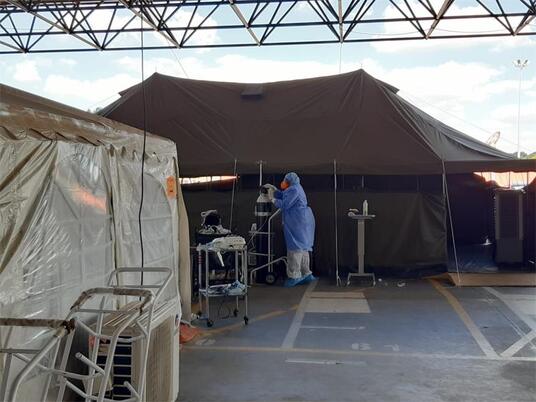
The slight increase in coronavirus hospital admissions in Tshwane consists mainly of children under ages of two, and 87% of hospitalisations are unvaccinated individuals.
This is according to an early data analysis by the National Institute for Communicable Diseases (NICD).
The work of a group of scientists was presented by NICD’s Dr Waasila Jassat on Monday, during a media briefing by the Department of Health.
Jassat said although the data was still incomplete, early analysis showed that the slight increase of admissions in Tshwane hospitals over the past two weeks consisted of 13% vaccinated individuals and 87% of those were unvaccinated.
“There are much higher risks of deaths among those unvaccinated,” she said.
She said the region was experiencing an earlier slight increase of admissions compared to other regions in the Gauteng province. Over the last two, weeks Tshwane had 455 Covid-19-related hospital admissions.
“Thankfully we are not seeing any increase in deaths yet,” Jassat said.
ALSO READ: NICD: Tshwane one of regions where new Covid-19 variant detected 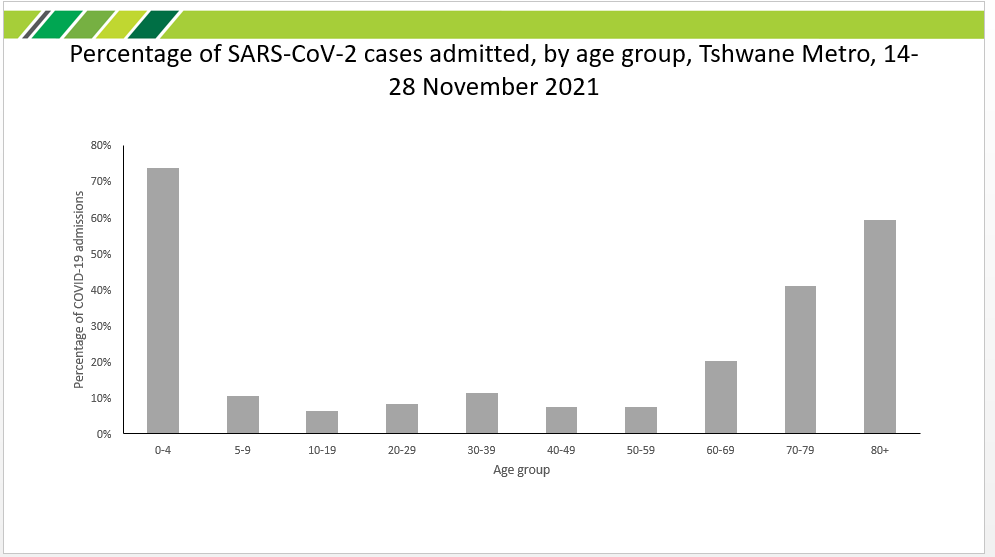 Tshwane district hospital had the highest admissions followed by Steve Biko hospital, Jubilee and MedForum private hospital.
Children between 0-four years accounted for 70% of admissions, and the most cases were for the age group under two years. Admitted people with severe diseases mostly affected those aged 60 and above.
She said the scientists were analysing data on hospital admissions on whether they could be linked to the new dictated Omicron variant.
“Although we usually see most admissions affect older groups, in this early resurgence in Tshwane we see that most admissions are in the 0-2 age group. It is important to note that while we do hospital surge preparedness, this time we may need to look at the pediatric preparedness but there are no signals that the children are severely sick,” she said. J
assat said the surge in infections affecting children could also be due to children under 12 years currently not vaccinated which made them vulnerable to infection.
“We are not sure if it [children admissions] is related to variants currently circulating,” Jassat said.
She said during the third wave hospital admissions in children did increase. Jassat urged people with symptoms not to delay medical consultations.
“The NICD and national Department of Health did an audit of mortality at hospitals during the second and third wave. One of the things we found was that the patients that died in the hospitals were presenting very late, they were already quite sick and were dying within the first or second day of being admitted.”
NICD’s Michelle Groome said while most of the national infection increases have been driven by the rise in Gauteng which affected young people aged between 20-39 years, the infections have spread to other age groups.
The Tshwane region continues to record relatively high infections. Since Friday, the region recorded an average of 1 000 infections.
This is half of the average daily infections for the province.
Do you have more information about the story?
Please send us an email to editorial@rekord.co.za or phone us on 083 625 4114.
For free breaking and community news, visit Rekord’s websites: Rekord East
For more news and interesting articles, like Rekord on Facebook, follow us on Twitter or Instagram