Health minister calls for collective social action programme to fight GBV
“Ending GBV is a collective responsibility and takes a social compact that ensures safe spaces and communities for women and children.”
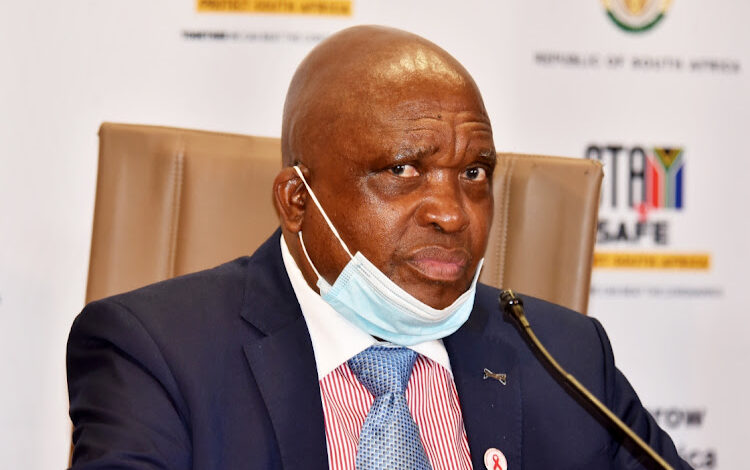
Encouraging all citizens behind a sustained programme was necessary to win the fight against gender-based violence (GBV), health minister Joe Phaahla said.
“The fight against GBV will never be won unless, as a society, we mobilise all formations and citizens behind a sustained programme of social action,” he said.
“Ending GBV is a collective responsibility and takes a social compact that ensures safe spaces and communities for women and children.”
Phaahla and basic education minister Angie Motshekga led a post-State of the Nation Address briefing of the social protection and community and human development cluster last week.
The briefing came days after the Sinoville police station, north of Pretoria, was announced to have recorded an across-the-board increase in the number of sexual crimes in the quarter three crime statistics released by police minister Bheki Cele.
The statistics, recorded between October and December 2021, revealed that the station recorded an 18.2% increase in sexual offence, a 16.7% increase in rapes, and a 50% increase in sexual assaults.
A total of 133 sexual offences, seven rapes, and six sexual assaults were recorded.
During the same period, in the previous year, only 11 sexual offences, six rapes, and four sexual assaults were recorded.
Sinoville Crisis Centre CEO Colleen Strauss said these statistics were not a true reflection of what was happening on the ground.
“We have always said that the reports are not a true indicator of what is happening as a lot of adult women do not want to report assaults and cases are not opened in a lot of the children’s cases reported at the centre,” CEO Colleen Strauss said.
“We have done education, spoken to men not to rape and to women to report it,” Strauss said.
She added the main thing of which would encourage victims to come forward was creating safe spaces for victims and harsher sentences for perpetrators of these criminal acts.
Nationally, sexual offences decreased by 9%.
Previously, government said it was intensifying its response to GBV and femicide (GBVF) through the implementation of the National Strategic Plan on GBVF.
This aimed to promote the empowerment of women.
President Cyril Ramaphosa also signed into law three pieces of legislation that were aimed at strengthening the criminal justice system against perpetrators and improving support to survivors.
“The implementation of this legislation will go a long way to ensuring that cases are successfully prosecuted, survivors are protected and that there are more effective deterrents in place for perpetrators,” Phaahla said.
ALSO READ: Mandatory vaccines in South Africa: Can a blanket approach be justified?
Do you have more information about the story?
Please send us an email to editorial@rekord.co.za or phone us on 083 625 4114.
For free breaking and community news, visit Rekord’s websites: Rekord East
For more news and interesting articles, like Rekord on Facebook, follow us on Twitter or Instagram