Weather service warns of possible flooding in Tshwane
The SA Weather Service has issued a level 4 warning about possible flooding.
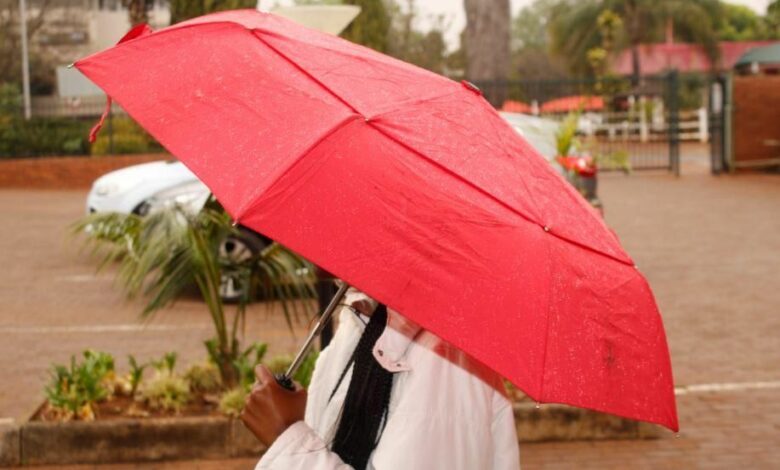
The SA Weather Service warned about the possibility of flooding in the Tshwane area on Saturday.
Forecaster Ishmael Moyo said they had issued a level 4 warning about possible flooding on Saturday, into the early hours of Sunday.
“We have issued a level 4 warning for disruptive rainfall that’s expected to result in flooding,” he said.
The disruptive rainfall was also expected to have an effect on traffic and transport.
“But it is mainly rain-related. No hail or lightning is expected,” Moyo said.
ALSO READ: Police urge residents to be safe during Easter
From Sunday, the warning was expected to be decreased to level 2 with temperatures expected to drop to 16 degrees.
The 80% chance of showers and thundershowers was only expected to decrease to 60% on Sunday.
From Monday, Moyo said there was a 30% chance of showers and thundershowers with clear skies only expected from Tuesday.
Temperatures were also expected to start rising then, as a result of the decreased possibility of rain.
On Monday and Tuesday, temperatures were expected to rise to 19 and 20 degrees, respectively.
“On Wednesday, the conditions will be clear the entire day and there will be similar conditions on Thursday,” he said.
Between Wednesday and Thursday, maximum temperatures were expected to rise to 20 and 21 degrees, respectively.
MasterDrive CEO, Eugene Herber, said motorists should avoid low-lying bridges, areas prone to flash floods, or large pools of water in the road wherever possible.
Herber said anyone who found themselves on the roads in heavy rainfall should follow these safety tips:
– Turn on your headlights.
– Adjust your speed to conditions. This includes reducing your speed if other
vehicles have reduced theirs.
– Leave larger following distances so there is more time to respond if
something goes wrong.
– Give yourself more time to stop or to go around corners.
– Reduced speed is the best way to avoid the chances of sliding out of control.
– If your car is sliding out of control, slowly lift your foot from the
accelerator but do not brake hard or move your steering wheel violently.
– If you start to skid, don’t slam on the brakes. Continue steering in the
direction you want to go and do not make any harsh adjustments.
– If the downpour becomes extreme, pull over at a petrol station or another
safe place.
– Estimate the depth of the water and avoid driving through water that comes to
the middle of your tyre or higher. Most drivers risk driving through a pool of water, but it is easy to underestimate the depth. Additionally, roads that collect water are more vulnerable to collapse and to create potholes.
– Where possible, drive in the middle of a road where the water is at its lowest.
– Never drive through fast-flowing water, it is very difficult to judge its depth.
– Once you are through the water, lightly touch your brakes a few times to dry them off.
– If you stall and you are not in danger of being swept away, do not restart your car. Rather get a mechanic to check that no water has made its way into
the engine.
– If you feel your car losing its grip on the road, open the door to let some of the water in, which might help to weigh the car down and allow the tyres to grip the road again.
– If you are in danger of being swept away, abandon your vehicle if you have an opportunity to do so safely.
ALSO READ: People urged to avoid baptisms in rivers this Easter weekend
Do you have more information about the story?
Please send us an email to editorial@rekord.co.za or phone us on 083 625 4114.
For free breaking and community news, visit Rekord’s websites: Rekord East
For more news and interesting articles, like Rekord on Facebook, follow us on Twitter or Instagram