Make our language official, Khoisan king demands
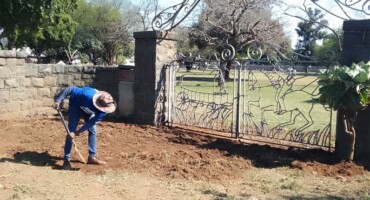
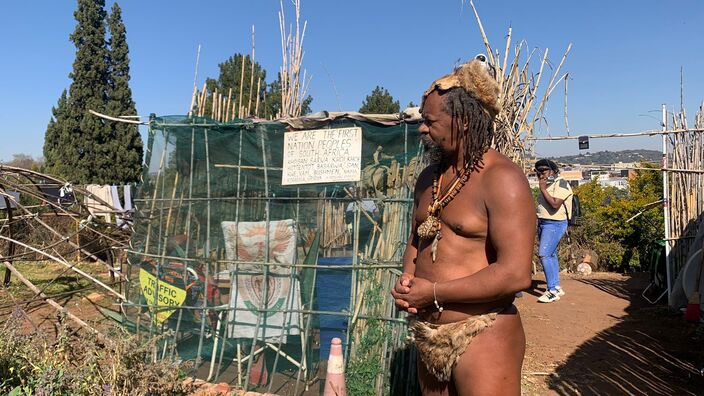
The king and a handful of his followers have been camping on Union Buildings’ lawn near the Nelson Mandela statue for almost four years now.
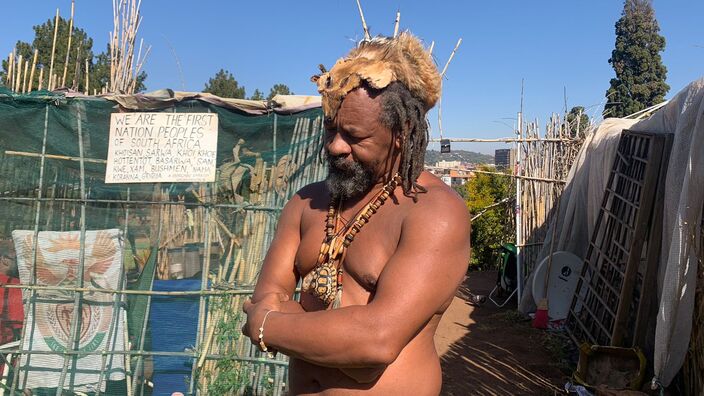
King Khoisan SA has questioned the education department’s ability to introduce the Khoi, Nama and San languages to South African schools.
This was because, according to King Khoisan SA, the government itself has yet to officially recognise King Khoisan SA and his people’s language, namely Kwazi-Khoe.
The king and a handful of his followers have been camping on Union Buildings’ lawn near the Nelson Mandela statue for almost four years now.
This comes after the national education department said it wanted to introduce African languages as a second additional form of learning in school curricula to strengthen the teaching of previously marginalised African languages.
The planned introduction targets about 2 584 schools, that are not offering African languages at present.
King Khoisan’s group has been demanding that the Khoisan people be recognised as the first indigenous nation of South Africa, since November 2018.
They also demand that the label “coloured” be removed from all official government documents and Kwazi-Khoe be listed as an official language.
The group’s demands have not been met since they started camping out at the Union Buildings – even after then-deputy president Cyril Ramaphosa received their memorandum of demands.
The group has recently called on the education department to list Kwazi-Khoe as an official language in South Africa so that it can be taught in schools.
Basic education minister Angie Motshekga recently announced that Khoi, Nama, San and sign languages will be introduced as additional subjects in South Africa’s school curriculum.
More than 80% of children continue to learn in a language that is not their mother tongue.
Motshekga announced the proposed policy shift to promote mother-tongue teaching and learning in schools on Tuesday last week, during a debate of the department’s budget vote in the National Council of Provinces (NCOP).
She said had it not been for Covid-19, the introduction of Swahili in schools would have already started.
According to her, Tanzania and Kenya were willing to assist the department in finalising plans to introduce the language in South African schools.
“I think we are the only continent teaching children in a language that is not their home language. This continues to contribute to under-achievement and poor performance. We must have a policy shift in this area,” she said.
Department of Basic Education spokesperson Elijah Mhlanga said the department was recognising these languages and allowing them to be taught in school to preserve them.
Mhlanga said the recognising of the languages was a bid to restore the stature of indigenous languages that had historically suffered suppression.
“The languages are currently offered, but on an unofficial basis. The aim is to elevate them to be widely available where there are teachers able to teach.”
He said currently the department was targeting the Northern Cape learners in grades R to 12.
King Khoisan SA called on the government to make the languages official first, and then offer them nationally, to the advantage of all learners.
“For us as the first nation, we need to ensure that the education department implements policies correctly.”
He said it was not right to have their language on the coat of arms with plans to teach it in classrooms while it was still not recognised officially.
King Khoisan SA said in recognising the language, more jobs could be offered through home language learning at schools.
“The Northern Cape already has a small fraction of people speaking our language. It would be educational to spread the language to areas where it is not spoken,” he said.
The Chairperson of the Select Committee on Education and Technology, Elleck Nchabeleng, also supports the move to increase African languages in schools and plans for the development of mother-tongue education.
“Without the concerted effort of introducing mother-tongue learning and teaching in our schools, we run a risk of institutionalising colonialism.
“It is, therefore, imperative that we advance the decolonisation of our education system through developing African language systems and our native knowledge in our curriculum,” he said.
ALSO READ: Dube police warn community about stock theft increase
Do you have more information about the story?
Please send us an email to editorial@rekord.co.za or phone us on 083 625 4114.
For free breaking and community news, visit Rekord’s websites: Rekord East
For more news and interesting articles, like Rekord on Facebook, follow us on Twitter or Instagram