Central vegetable garden hopes to inspire regeneration in the CBD
The Garden of Peace aims to work for food sovereignty, and economic and ecological justice, together with other networks for food sovereignty, in the country and worldwide.
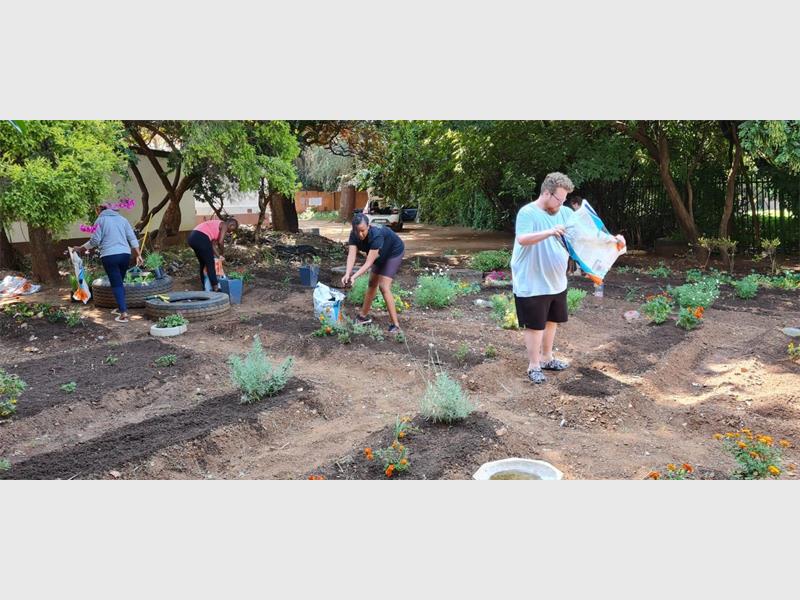
Members of Unisa’s Department of Christian Spirituality hope their gardens of peace will bring relaxation and tranquility in stressful times for the metro.
The Garden of Peace is a project started by the Department of Christian Spirituality, Church History and Missiology and other stakeholders as a way of combatting the effects that Covid-19 had on food security and vulnerable groups.
The garden comes as one of the department’s community engagement initiatives, and coordinator Prof Annalet van Schalkwyk says that gardens of this nature can go a long way in promoting food sovereignty.
“With food sovereignty, the power of food production, food sales and consumption, is in the hands of small-scale local and often poorer gardeners and farmers; and not dominated by mainline agriculture and markets,” said Van Schalkwyk.
The garden started as a subset of a Bible study group where participants would plant heritage beans and seedlings in the planter. The soil is prepared by Prof Annalet and her husband.
During the beginning of the Covid-19 pandemic, the housemother of the Burgers Park Caretaker’s House, Selly Mathonsi got involved in the project as well as members of the Akanani programme for men and boys to assist.
Also read: North school denies racism accusations
The boys and men were part of the Tshwane Leadership Foundation (TLF) Burgers Park House for the homeless which also managed vulnerable women at the time of tight lockdown restrictions in conjunction with the Department of Social Development.
The metro council donated to TLF in July 2021 to extend the garden project to more gardens. One of which was the Inn (a shelter for vulnerable older persons in Lilian Ngoyi Street) and another one at Inkululeko Day Care Shelter in Salvokop.
“The name ‘Garden of Peace’ is a pointer towards renewing sustainable livelihoods, well-being and happiness of individuals and households.
“It brings together physical well-being with mental and spiritual happiness and an experience of the presence of the Divine. The Garden of Peace aims to work for food sovereignty, and economic and ecological justice, together with other networks for food sovereignty, in the country and worldwide,” Van Schalkwyk concluded.
Currently, there are five gardens of peace in the metro. All five gardens are found on the premises of five projects of TLF in the inner city of Tshwane.
Though residents are enjoying the fresh produce and other benefits including gardening training and stress relief, Prof Annalet still says that they have “a far way to go before becoming sustainable and productive”.
Residents interested in the gardens or would like to support them can leave a message at info@tlf.org.za
Do you have more information about the story?
Please send us an email to editorial@rekord.co.za or phone us on 083 625 4114.
For free breaking and community news, visit Rekord’s websites: Rekord East
For more news and interesting articles, like Rekord on Facebook, follow us on Twitter or Instagram