Water levels at critical levels in Pretoria leaving dry taps for many
“This is a very serious situation for our city,” says the utilities MMC, who called on residents to remain vigilant and to use water sparingly.
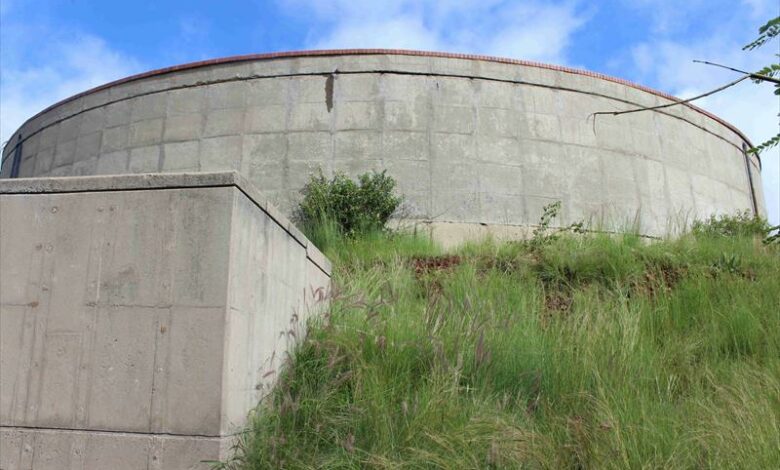
Water levels have dropped to critical levels in parts of Pretoria, the Tshwane metro said in a statement on Friday, January 27.
The metro said that Rand Water informed it that the system supplying the eastern parts of Pretoria had regressed as compared to Thursday, and was at critically low levels.
On Wednesday, utilities MMC Daryl Johnston said that the metro would implement stage 2 water restrictions.
“This is a very serious situation for our city, as all of Gauteng is a water-scarce area with limited access to this precious resource,” he said.
“While Rand Water has not officially announced stage 2 water restrictions yet, the level of flow control and reduction by Rand Water to the metro is higher than in October 2022 when stage 2 saw a 30% reduction,” Johnston’s statement read.
The metro confirmed that some eastern areas were experiencing no flow of water. These are the
– Mooikloof reservoir
– Grootfontein reservoir: High-lying area of The Hills
– The Wilds
– Elardus Park reservoir
– Some parts of Moreletapark
The metro said that pumping has commenced at the Elardus Park reservoir, which is supplied by the Garsfontein reservoir. By the afternoon, there was an improvement in the water level.
The metro said that residents in this area would begin gradually regaining water supply as the reservoir filled up.
The metro requested for Rand Water to lift the restrictions on the reservoirs supplying the affected areas, after which it lifted the flow restrictions to critical reservoirs.
The metro said there was a slight improvement in the west of the city but some areas were still without water.
West areas that are currently without water:
– Magalies reservoir: Rosslyn
– Klipgat reservoir: Mabopane Block T
– Akasia reservoir: high-lying areas of Amandasig
– Soshanguve block L reservoir: high-lying areas of Soshanguve Block L, M, K, K and LL extensions
– Mnandi reservoir: some parts of Mnandi
“The metro requested Rand Water to also lift the flow restriction to the Akasia and Magalies reservoirs which should improve the situation,” the metro said in a statement.
In Soshanguve block L and Klipgat, the areas affected should improve as soon as the supply from Rand Water normalises.
Tshwane and other Rand Water clients are facing between 5% and 30% restrictions in water flow to major reservoirs in Gauteng.
Rand Water said that power failures and high temperatures were impacting the water supply.
“As a result, the water storage in its reservoirs has been rapidly declining,” it said in a statement.
According to Malcolm de Klerk, a councillor in the east of Pretoria, it was not only Tshwane that was being affected by the Rand Water restrictions.
“Demand is incredibly high,” said De Klerk.
“That’s why a level of rotation has started to stabilise the water system and to avoid a total loss.”
De Klerk said that the metro had organised water tankers in case of total water loss.
“Ward councillors need to communicate water levels and water tanker central points to residents. They should also make additional arrangements such as negotiating with local gyms to help with showers and borehole supply points,” said De Klerk.
Residents can report water-related issues to the metro at the below numbers:
– No water supply, burst pipes, leaking meters, or blocked street sewers: 012 358 9999 or 080 1111 556.
– Illegal water connections: 012 358 9060.
– Non-payment transgressions: 012 345 8514.
For account enquiries, residents can contact 012 358 9999.