R7.8bn a year needed to address water problems in Tshwane
“Residents have enough worries as it is without having to worry about water as well.”
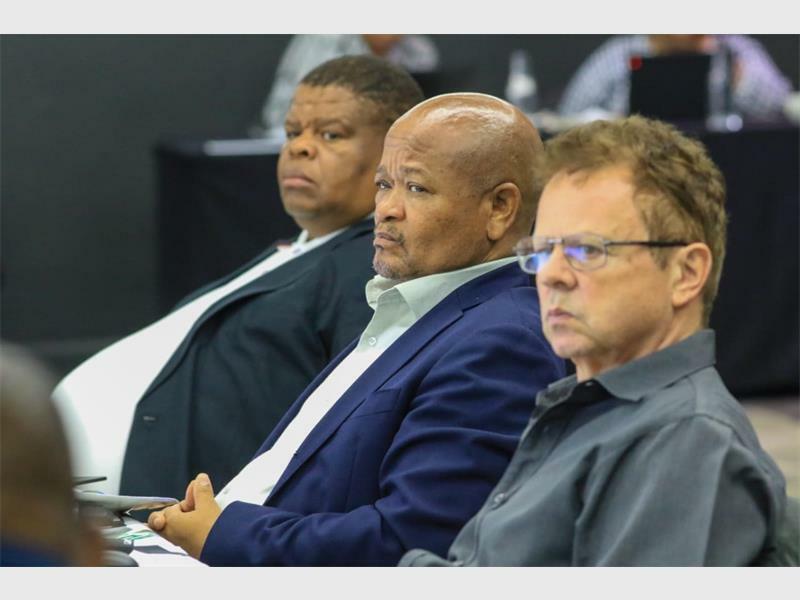
Tshwane needs investment of not less than R7.8-billion year-on-year for 10 years to match its infrastructure backlog and future upgrades, according to the minister of water and sanitation.
“To support the municipality in addressing backlogs, Tshwane must fulfil its water commitment in the next 24 months and its water bills to sustain water supply,” said minister Senzo Mchunu.
He said municipalities needed to focus on water wastage such as leakage and dismantle businesses such as illegal car washes because they came at huge expense.
“We are asking metros to measure water supply to their residents as we do not like to be restricting water. It must be managed.”
Mchunu made these comments during a press briefing on plans to implement strategies to tackle water scarcity in Gauteng at Menlyn Maine, east of Pretoria on March 14.
The plans are part of an agreement between the department and municipalities to improve infrastructure in the province.
He said residents have enough worries as it is without having to worry about water as well.
Mchunu said Tshwane had planned to spend about R350-million in two years to build new water infrastructure such as reservoirs, bulk pipelines and towers.
He said the work to address infrastructure demands in Soshanguve, Atteridgeville and Laudium/Erasmia, Mooikloof, Centurion and Garsfontein would start in March.
He said the department would assist Tshwane in improving infrastructure on condition that it started implementing its own immediate plans in 24 months.
“We will be motivated to assist Tshwane if they commit to their plans; if they fail to meet commitments in 24 months, we will take over.”
ALSO READ: Tshwane it targets R7bn monthly revenue to cover debt
[WATCH] Minister @Senzo_Mchunu_ is briefing the media on the outcomes of his meeting with Gauteng Municipalities held yesterday morning https://t.co/rTHCQiykWo
— Water&SanitationRSA (@DWS_RSA) March 14, 2023
He said the consumption of water in Gauteng was above average. To cease water wastage and respond to demand, Tshwane needed to invest over R7-billion to address infrastructure backlogs and upgrades.
He said the investment would cover the short-, medium- and long-term plans that the department was implementing, with the metro.
“The average water consumption in the country is 233 litres per capita per day. Gauteng’s average consumption is at least 300 litres per capita per day.
Both these consumption levels are much higher compared to a world average of 173.
Gauteng is reckless in water usage. It’s too much.”
He said non-revenue water was above 40% on average, compared to the international norm of 15%, while physical losses due to leaks and bursts were about 25%.
“To guarantee water security, we are building dams to preserve [water] for long-term use. In areas where there is no sufficient water due to a lack of rain, water is conveyed from water-rich areas or catchments through a network of infrastructure such as canals and tunnels, pipelines and pump stations to preserve for later use and also through underground water harvesting.”
Mchunu said to sustain water provision in Gauteng, Rand Water would increase the treatment capacity of Zuikerbosch from 3 800 mL/day by a further 600 mL/day between 2023 and 2025.
“Of the additional 600 mL/day, in June 2023, Rand Water will commission 150mL/day while 300mL/day will come in 2024 and the 150mL/day in 2025.”
Mchunu said the total treatment for Zuikerbosch would be 4 400mL/day by 2025.
He said the department’s long-term plan was to accelerate the completion of Lesotho Highlands water phase 2 project.
He said thereafter the department could transfer up to 485 million cubic metres per annum of water from the Orange (Senqu) river in Lesotho through the integrated Vaal River system and “the bulk of this water to Gauteng”.
Mchunu said his department was further planning to engage Minister of Electricity Kgosientso Ramokgopa and the water board to address the impact of load-shedding.
“We do intend to partner with the private sector through our water partnerships office, to jointly invest in the water sector and ensure water sustainability for the province.”
ALSO READ: Tshwane metro assets could be seized to pay its Eskom debt
Do you have more information about the story?
Please send us an email to editorial@rekord.co.za or phone us on 083 625 4114.
For free breaking and community news, visit Rekord’s websites: Rekord East
For more news and interesting articles, like Rekord on Facebook, follow us on Twitter or Instagram