Relocation beneficiaries halved
Flood victims claim the metro is backing down on its promise of relocating all of them and are concerned for the safety of those being left behind.
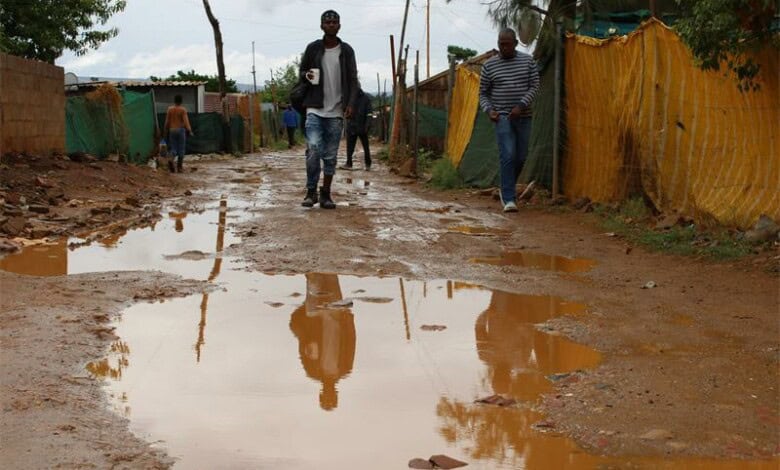
It seems like all hope is gone for some of the flood victims residing on the flood lines.
This comes after these residents claimed the Tshwane metro has changed the number of people set for relocation, leaving some behind in the danger zone.
They claimed the metro is backing down on its promise of relocating flood victims before the rainy season, and are concerned about the decreased number of households set for relocation and for their safety.
The then MMC for Human Settlements, Ofentse Madzebatela, announced around September that Tshwane was busy with the land rehabilitation process in Pienaarspoort and that the preparation of the relocation of the Mamelodi flood victims was set for November.
He said: “The site is currently being cleared, and once all rehabilitation work is completed, it will yield more than 5 000 serviced stands to the Mamelodi flood victims and other informal settlements, including Eerste Fabrieke, Soul City, Phomolong, and others”.
Community leader Vusi Msiza from Mavuso informal settlement said, “We are very disappointed with the manner in which Tshwane metro is now handling the relocation process”.
He said all households residing on the flood lines were promised relocation by November, but suddenly things have changed, including the number of people set for relocation.
“The rainy season has begun, and we are experiencing calls from the same community who were told that they were going to relocate them in November, fearing for their lives when it rains,” said Msiza.
He said a total of 400 households at Mavuso Informal Settlement residing at the flood lines were supposed to be relocated, and all of a sudden the number has changed to 200 households.
“We have it on our record or database that 400 households were set for relocation.”
Msiza wanted to know what was going to happen to the remaining 200 households.
Soul City informal settlement was among the first groups to experience the flood in 2019, but today the informal settlement has been removed from the list set for relocation.
Kgaogelo Masemola from Willow Farm informal settlement said, “We have realised that there are beneficiaries that were supposed to be relocated, and now they are being excluded.
“We need them to be re-added,” he said.
Masemola pleaded with the metro to include the leadership of the informal settlement when they are making the final decision on the relocation.
“If the Tshwane metro has the challenge of providing land in a short space of time, it should at least have a temporary place to shelter them should we experience another flood,” he said.
He said the temporary shelter must have the provision of privacy because “every time we experience these floods, we have to be packed in one space where there is no privacy”.
Masemola said this was not healthy, and flood victims became displaced, which hindered the relocation process going forward.
“If someone is displaced, tomorrow when they come to their shack mark and they don’t find his/her shack, they immediately remove that particular person from the list.
“This leads to people being jumped. Some are unemployed and are unable to rebuild their shacks.
“We are pleading with Tshwane metro to run the relocation process professionally and be competent enough.”
The issue of relocating flood victims had been ongoing for years.
It all started in 2019, when over 700 shacks at an informal settlement in Eerste Fabrieke, Mamelodi, were swept away by floods when the river overflowed, which left more than 1 000 people homeless, among them women and children.
Masemola said both the government and the city of Tshwane are failing them, because “they kept us in the dark and communications are bad”.
ALSO READ: Stakeholders in the west call for stricter spaza regulations
He claimed the flood victims are experiencing delays for no apparent reason.
“The rainy season has arrived, and it seems like they are waiting for someone to die first before they take us seriously,” he claimed.
The flood victims claimed they were tired of empty promises and dates after dates set for relocation.
“It is almost five years now and we are still waiting to be relocated.”
The community leaders said they are waiting for the outcome of the meeting with Tshwane metro officials on November 18 to discuss a way forward.
Tshwane metro spokesperson Lindela Mashigo said discussions are still underway with regards to the number of residents to be relocated.
He said a meeting has been arranged with ward councillors and community leaders for 18 November.
“The relocation process is scheduled to commence by end of November 2024, if all goes according to plan,” said Mashigo.
“The land was acquired to accommodate K54 beneficiaries and other informal settlements in Region 5 and 6 and issue of Soul City informal settlement will be resolved by November 2024,” he said.
Mashigo added:“Tthe shack marking has been completed by our team and the process of registration and verification is currently underway.
Tshwane metro is not prepared to place floods victims back to community halls.”
The City of Tshwane has 210 informal settlements with an estimated households of 405 247.
The following are principles informing the relocation and allocation of stands (resettlement) in Tshwane:
• No relocation from informal settlement to informal settlement; the relocation and allocation will be for permanent stand/serviced permanent stand
• Both the old and new informal settlements (particularly those in dangerous areas) to be prioritised (balancing act);
• All to be shack-marked, verified and registered to be relocated and allocated a stand;
• Only South Africans to be relocated and allocated stands;
• Prioritise those that are in the area of development including, under power lines servitude, road reserves, environmentally sensitive areas;
• Allocate beneficiaries in the National Housing Needs Register applied in 1998 and TRUs that is sitting along power line servitude;
• Meaningful and inclusive consultation and engagement with all including the informal settlements residents, hostel dwellers, those on the needs register and the backyard dwellers.
• Implementation of court orders where feasible.
Do you have more information about the story?
Please send us an email to bennittb@rekord.co.za or phone us on 083 625 4114.
For free breaking and community news, visit Rekord’s websites: Rekord East
For more news and interesting articles, like Rekord on Facebook, follow us on Twitter or Instagram