Tshwane acts on qualified audit opinion
The audit shows that the municipality has failed to move towards an improved financial year, highlighting continued governance and management challenges.
The Gauteng Provincial Government has welcomed the release of the Auditor-General of South Africa’s (AGSA) audit outcomes for the 2023/24 financial year, which show improvements by the province’s municipalities.
The Tshwane Metro however has received a qualified audit opinion for the second consecutive year.
A qualified audit opinion is issued when a municipality’s financial statements contain material misstatements in specific amounts, or when insufficient evidence is provided to conclude that specific amounts are materially misstated.
This outcome indicated that Tshwane has struggled to implement the recommendations made by the AGSA in the previous year’s audit.
It shows that the municipality has failed to move towards an improved financial year, highlighting continued governance and management challenges.
The Gauteng Provincial Treasury (GPT), alongside other governmental bodies such as the Gauteng Department of Cooperative Governance and Traditional Affairs (Cogta), and the South African Local Governance Association (SALGA), is working closely with Tshwane to address its audit challenges.
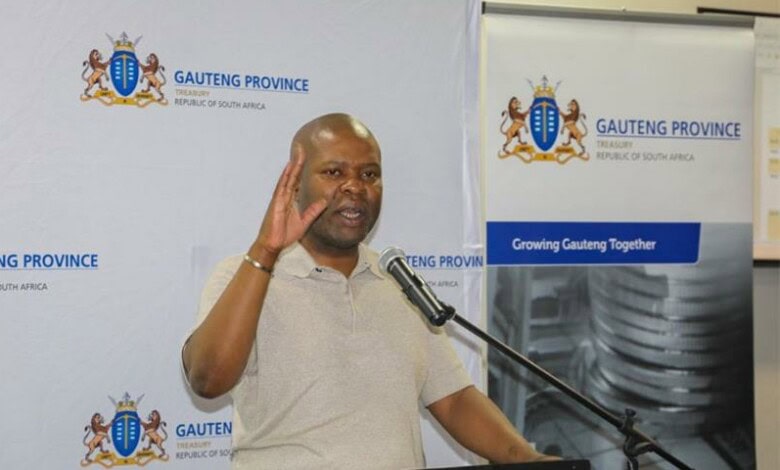
According to the MEC of Finance and Economic Development, Lebogang Maile the municipality faces complex, localised issues that hinder rapid improvement.
“The department has reiterated its commitment to offering technical support and focusing on key intervention, including National Treasury reporting reforms and the implementation of the Financial Management Capacity Maturity Model (FMCMM), to assist struggling municipalities,” said Maile.
He said Tshwane’s qualified audit opinion reflects its ongoing difficulties in managing finances effectively, a situation that impacts its service delivery and financial sustainability.
The GTP has emphasised municipalities in the province operate under varied geo-historical contexts, meaning that while some improvement might seem slow, efforts are being made to bring about change.
While Tshwane’s financial audit outcomes remain concerning, Maile said the GPT and its partners are working to improve the metro’s financial reporting and overall governance.
In response to the AGSA’s alarming findings in the 2023/24 audit report around unauthorised expenditure and governance failures in Tshwane, the new administration led by Mayor Dr Nasiphi Moya, has moved swiftly to implement accountability measures.
This comes after the report revealed R3.6-billion in unauthorised expenditure, as well as ongoing governance failures.
Determined to restore financial integrity, Moya convened the Tshwane Consequence Management Committee (CMC) on January 29.
The CMC has been tasked with addressing misconduct and financial mismanagement, introducing a wave of reforms.
These include the conclusion of 180 forensic investigations, which have led to 129 disciplinary actions against city employees and 39 criminal referrals.
The administration’s focus on tackling these issues marks a shift in governance culture, with the mayor emphasising that accountability will no longer be compromised.
This included 48 cases identified for financial recovery and flagged irregularities in the metro’s operations, further emphasised by stagnation in the audit outcomes.
The state of financial management, according to the report, stemmed from a long history of administrative failures that have allowed such practices to continue unchecked.
The mayor’s reaction has been one of urgency, as she prioritises the clean-up of financial and administrative failings.
One of the main goals is to change the root causes of inefficiency that have led to the city’s stagnation in audit outcomes.
The backlog of over 1 000 forensic investigations, inherited from previous administrations, is being addressed to prevent further erosion of governance standards.
By strengthening oversight, the city hopes to curb further misconduct and uphold its responsibility to residents.
An additional 70 cases have been referred to the Financial Disciplinary Board, marking the first time that such referrals have been made, further bolstering the city’s financial oversight framework.
Moya emphasised that her administration is taking firm steps to address prolonged suspensions within the city’s workforce, which have led to significant financial strain.
Currently, the city spends R30-million a year on suspended employees, and steps are being taken to expedite disciplinary processes.
The mayor has also pledged that any further irregularities and corruption will be dealt with harshly, ensuring that Tshwane’s financial management is held to the highest ethical standards.
Moya said to embed a culture of accountability and excellence and ensure proper consequence management going forward, the metro will take firm action in several areas.
“We are changing the culture of governance by addressing the root causes of non-performance, as highlighted by the AGSA.
“We are clearing the backlog of investigations, including over 1 000 forensic reports inherited by my administration, many of which had not been acted upon,” said Moya.
Do you have more information about the story?
Please send us an email to bennittb@rekord.co.za or phone us on 083 625 4114.
For free breaking and community news, visit Rekord’s websites: Rekord East
For more news and interesting articles, like Rekord on Facebook, follow us on Twitter or Instagram or TikTok.