Tshwane on track to settle Eskom debt by 2029
In addition to the Eskom debt, the metro has forged forward with clearing the R4.7-billion VAT debt linked to the cancelled PEU Smart Meter contract which has now been fully settled.
The Tshwane metro is making steady progress in settling its historic debt to Eskom, following a court-ordered payment arrangement finalised in late November 2024.
The city has committed to a five-year repayment plan, aiming to fully clear the debt by March 2029.
Demonstrating its commitment, Tshwane made an initial payment of R400-million in December 2024, followed by a substantial payment of over R1-billion at the end of March 2025.
These payments have reduced the outstanding debt to R5.66-billion, just three months after the agreement was concluded.
The payment arrangement plan is subject to the following conditions:
– All current accounts must be paid in full on or before their due dates (30 days).
– If Tshwane defaults on the payment arrangement and the current accounts, the arrangement shall be terminated, and the full amount owing will become due and payable to Eskom immediately.
Eskom Gauteng spokesperson Ronel Kotze confirmed that the metro is adhering to the agreed payment plan.
“According to the payment agreement, the City of Tshwane is expected to settle this debt by March 2029,” said Kotze.
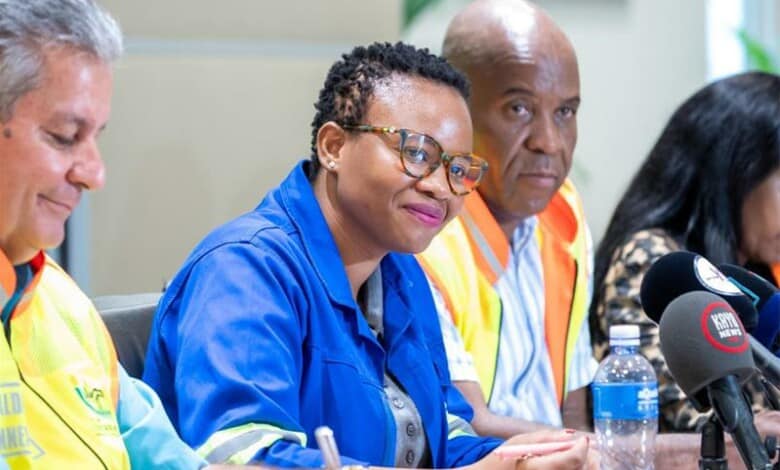
Tshwane Mayor Dr Nasiphi Moya highlighted this progress during a media briefing on April 2 at Tshwane House.
She emphasised that her administration is committed to restoring the city’s financial health and ensuring energy stability for its residents.
“This progress reflects the city’s determination to meet its obligations and secure a reliable power supply for all,” Moya said.
Moya said in addition to the Eskom debt payment the metro forged forward with clearing the R4.7-billion VAT debt linked to the cancelled PEU Smart Meter contract, which has now been fully settled.
“The PEU contract entered into by previous administrations was highly controversial and financially burdensome. While the city successfully exited the contract, it was left with a significant tax liability.”
She explained that the current administration has now made a final payment of R128-million, clearing this debt in full.
“SARS has formally acknowledged the settlement. This marks a major milestone in closing a difficult chapter in the city’s financial history and demonstrates the multi-party coalition government’s resolve to clean up the past and build a sustainable future.”
Moya stated that Tshwane has made significant progress in reducing its debt, with a 13.19% decrease from R29.6-billion on February 28 to R25.69-billion as of March 31.
Moya attributed this achievement to the intensified revenue collection efforts, including the Tshwane Ya Tima campaign and the Debt Relief Scheme approved by the council.
“These initiatives have not only helped the city recover outstanding debts but also provided much-needed relief to residents.”
Moya said notably, the metro has written off R2.42-billion from registered indigent accounts and R1.83-billion from over 31 500 inactive accounts.
“To further support residents and businesses, the city plans to extend the Debt Relief Scheme by an additional three months until May 31,” she said.
“This extension will allow more residents to benefit from the scheme, which has already received over 10 200 applications. By participating in the scheme, customers will have the standard R29 000 tamper fee waived, enabling them to regularise their supply and avoid additional penalties.”
Moya said in addition to the measures, Tshwane remains committed to protecting the most vulnerable residents by providing a comprehensive social package that eases the burden of municipal costs for those who need it most.
“That is why, in the Draft Budget for 2025/26, we have proposed increasing the indigent property value threshold from R150 000 to R250 000 under the new General Valuation Roll.”
She added that this important change will enable the city to extend support to an estimated 183 397 households, ensuring that more residents can access vital relief and remain connected to basic services during difficult times.
Moya said the multiparty government’s mayoral committee has taken proactive steps to address the adverse findings in the Auditor-General (AG) city’s 2023/24 financial year report.
“To achieve an unqualified audit, a top priority for this administration, the AG was appointed to conduct a pre-audit, with all necessary files submitted by March 31.”
She said the AG identified issues related to consequence management, and significant progress has been made in addressing these concerns.
“Two officials have been arrested by the SAPS for fraud, while eight companies are in the process of being blacklisted for non-performance. Additionally, an electrician from the Energy and Electricity Department was dismissed.”
She said these actions demonstrate the administration’s commitment to accountability and transparency.
Moya said the multi-party coalition government reached a significant milestone when it tabled a credible, fully-funded Draft Budget for the 2025/26 financial year on March 24.
She said this marks the first fully funded budget since May 2021, ensuring the city’s financial sustainability and consistent service delivery.
“The budget is funded through various sources, including grant funding totalling R7.4-billion, which comprises R5.5-billion for operational grants, R2-billion for capital infrastructure, and R152-million through the new urban development financing grant.”
Additionally, the capital budget is funded by R2-billion in capital grants and R430.5-million in internally generated revenue and donations.
According to Moya, the budget has been fully funded without relying on borrowing, avoiding additional debt that would worsen the city’s financial position.
“While no borrowing is planned for the 2025/26 financial year, this may be reconsidered in future years, subject to the metro’s financial recovery and improved debt capacity.”
She said in terms of tariffs, the metro has prioritised keeping rates and tariffs fair and affordable.
“The proposed adjustments include a 4% decrease in property rates, a 12% increase in electricity, a 13% increase in water, a 6% increase in sanitation, and a 4.6% increase in refuse removal,” she continued.
“A new city cleaning levy of R185 per month has also been introduced for households using private refuse collection,” Moya explained.
She added that over the next three months, this multi-party coalition government has set ambitious targets to improve the level of service delivery received by our residents.
“As part of this effort, the government has declared a war on backlogs and is tackling existing issues head-on.”
Moya said the current state of affairs includes 2 788 water leaks, 2 805 potholes in need of repair, 16 342 streetlights that require fixing, 81 streetlight mast illumination issues, and 521 high mast streetlight repairs.
“By addressing these backlogs, the administration aims to not only resolve existing problems but also respond quickly to new service requests, ultimately ensuring that residents see tangible and lasting improvements in their communities.
The Portfolio Committee on Cooperative Governance and Traditional Affairs in Parliament has welcomed Tshwane’s recent financial progress, calling it a positive step forward. This comes after Moya briefed it on her administration’s performance over the past 175 days.
Committee chairperson Dr Zweli Mkhize said the key achievements in Tshwane include a fully funded budget (the first in three years) and an R1-billion payment toward Eskom debt.
“The city also fully settled a R4.7-billion VAT debt and reduced its debtor’s book from R30-billion to R25.69-billion through intensified revenue collection and a debt relief programme, which cleared over R4-billion in arrears.”
Mkhize praised these efforts but urged continued focus on community engagement, clean water access in Hammanskraal, and measurable service delivery.
There are areas that we have not been able to reach in terms of service delivery. This is due to budget limitations. That’s why the 2025/26 fully-funded budget matters, as it will allow us to reach all areas through a prioritisation of resources. @CityTshwane pic.twitter.com/c3xDqEtIzs
— Dr Nasiphi Moya (@nasiphim) April 2, 2025
We held a media briefing today to update residents of Tshwane on the work we’ve done in past 175 days since we took office. We have a fully-funded budget for the 2025/26 financial year. We have paid over R1 billion to Eskom – tackling our debt to the power utility. @CityTshwane pic.twitter.com/CpUFmfrarP
— Dr Nasiphi Moya (@nasiphim) April 2, 2025
Do you have more information about the story?
Please send us an email to bennittb@rekord.co.za or phone us on 083 625 4114.
For free breaking and community news, visit Rekord’s websites: Rekord East
For more news and interesting articles, like Rekord on Facebook, follow us on Twitter or Instagram or TikTok.