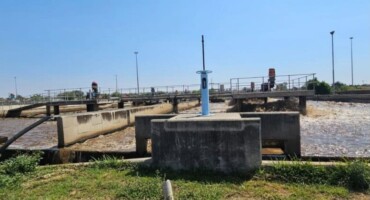
Boreholes bring relief to Sokhulumi and Langkloof communities
Four new boreholes, fitted with purification systems and linked to communal taps, aim to address years of unreliable water supply in these rural parts of Tshwane, where residents have relied on water tankers.
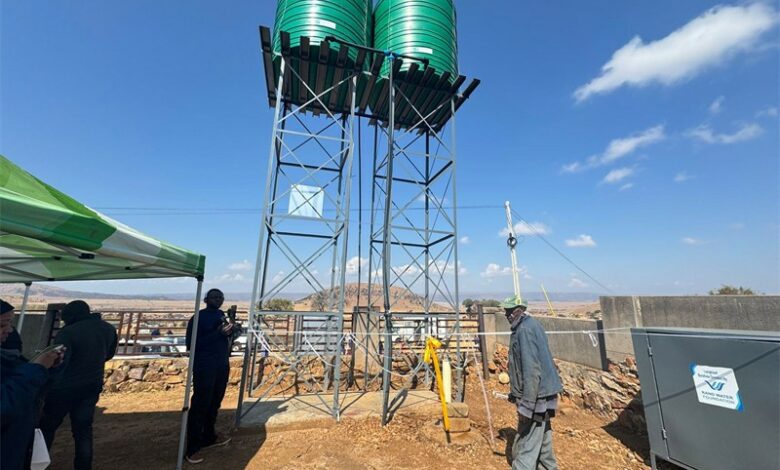
On August 8, the Sokhulumi and Langkloof communities received four new boreholes from the metro, as part of a plan to stabilise their water supply.
According to Ward 105 councillor Kgaugelo Phiri, the struggle for a reliable water supply has lasted many years.
“For a very long time, we have been struggling with the water supply. We would go for days without water because we depend on water tankers,” he said.
Phiri said that when the water tankers did not deliver, it meant no water for the community.
He said the boreholes were a better alternative for residents. “Residents will now have a place where they can get water if water tankers don’t come.”
Phiri said that, however, the boreholes will not be enough for everyone. “Although we have seven boreholes in the community, residents still get water supply [from tankers] once a week, and in some sections they don’t [have water] at all,” he said.
“Boreholes can get damaged easily, and in dry seasons, you will find that there is not enough water to pump from underground,” he added.
He then said a permanent water supply solution is required to supply the whole community with water.
“The boreholes are just a temporary solution; what we need is a bulk water system to solve… water supply issues,” said Phiri.
Tshwane mayor, Nasiphi Moya, said the delivery of boreholes was part of extended service delivery, which aims to better serve the rural parts of Tshwane.
She noted that for years, residents of this area had suffered from an unreliable water supply and had relied on tankers, but that the distance between them and Bronkhorstspruit made delivery difficult.
She stated that a consistent water supply could not be guaranteed after previously installed boreholes had malfunctioned.
The boreholes, donated by Rand Water, have a capacity of 20 000 litres and are attached to a purification system to ensure the water is clean.
“The boreholes are linked to communal taps in the area. We are grateful to Rand Water for extending a hand when the city approached the entity for assistance,” she said.
Moya highlighted that the Constitution recognises the human right to sufficient water access, saying that the council is responsible for ensuring that residents receive this service.
She added that the visit to the region formed part of the metro’s recently launched Integrated Urban Management Programme (IUMP).
She then said IUMP teams attended to services, including cleaning of illegal dumping sites, grading of the roads to the cemetery and the sports fields, as well as repair of potholes, and repair of other faults.
“We had made a promise that there would be no forgotten communities in Tshwane. We are committed to… ensuring that communities which were once neglected receive the service delivery they deserve,” she concluded.
ALSO READ: Two cars hit spikes on N14 in sudden resurgence of road attacks
Do you have more information about the story?
Please send us an email to bennittb@rekord.co.za or phone us on 083 625 4114.
For free breaking and community news, visit Rekord’s websites: Rekord East
For more news and interesting articles, like Rekord on Facebook, follow us on Twitter or Instagram or TikTok.