Budget targets turnaround amid opposition criticism
The R58.5-billion budget focuses on infrastructure upgrades, financial recovery, and service delivery, but opposition parties have slammed it as unrealistic, unfunded, and financially unsustainable.
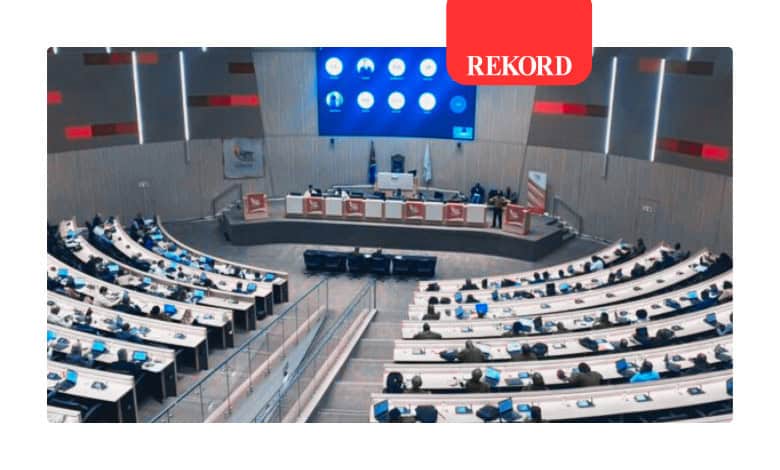
The Tshwane metro has tabled a R58.5-billion budget for the 2026/27 financial year, placing infrastructure investment, financial recovery and service delivery at the centre of its turnaround strategy.
Presenting the budget, Deputy Mayor and MMC for Finance Eugene Modise said the metro’s financial plan is guided by the theme of ‘sustaining the turnaround and leaving the city better than we found it’.
He noted that the National Treasury now regards the Tshwane metro as one of the country’s leading municipalities in terms of reform implementation and fiscal recovery progress.
The budget includes an operating budget of R55.7-billion and a capital budget of R2.8-billion, with the city projecting an operating surplus of R1.4-billion.
According to Modise, the surplus will be used to support capital projects not funded by grants, improve cash-flow sustainability and strengthen long-term infrastructure financing.
The city’s capital programme will largely be funded through grants, with R2.1-billion and R691.9-million generated internally.
Modise said the budget is built around six priorities: financial stability, economic revitalisation, infrastructure development, safety and cleanliness, social services and improved governance.
A major focus of the budget is infrastructure investment, with more than R2.1-billion allocated towards infrastructure development and renewal.
The Energy and Electricity Department has been allocated R597.3-million as part of a broader R2.18-billion medium-term allocation aimed at stabilising the electricity network, refurbishing ageing infrastructure and upgrading substations.
Among the projects highlighted are R50-million for the JJ 132KV power line in Soshanguve, R15-million for the Waltloo substation upgrade and continued work on the Monavoni 132/11KV substation project.
Modise said the city also committed R135-million towards city-wide electricity infrastructure refurbishment, as more than half of Tshwane’s transformers are now older than 40 years.
Water and sanitation emerged as the single largest capital allocation in the budget, receiving R715.8-million in 2026/27 and more than R3.1-billion over the medium term.
The funding will support wastewater treatment upgrades, reservoir extensions, pipe replacement projects and water conservation measures.
Modise acknowledged that the metro continues to face severe water losses, with non-revenue water sitting at 39%.
“Through the Water Stabilisation Plan, the city is intensifying leak repairs, pressure management, infrastructure upgrades and monitoring systems,” he said.
Roads and transport infrastructure also received major attention, with R402-million allocated to improve mobility and transport connectivity across the metro.
He said the metro further allocated almost R1.3-billion over the medium term for roads and transport infrastructure, including R159.8-million for A Re Yeng Bus Rapid Transit infrastructure.
Modise said the city would continue prioritising pothole repairs, flood mitigation projects and the restarting of delayed road contracts.
“The Bon Accord Asphalt Plant has been restored and now supports the City’s own asphalt production. It produces up to 220 tonnes per hour and runs under a five-year licence,” he said.
Modise said Tshwane’s revenue enhancement strategy remains central to the city’s recovery.
He said the city projects revenue growth of 6.9% with an overall collection rate of 90%.
Among the measures introduced are improved billing systems, stronger debt collection mechanisms, prepaid electricity meter programmes and initiatives aimed at reducing water and electricity losses.
The city also announced that meter reading accuracy has now reached 90%.
Modise further revealed that the metro has reduced its Eskom-related debt from R6.66-billion to about R4.73-billion.
In a bid to ease pressure on residents, Modise said electricity tariffs would increase by 8.8%, slightly lower than Eskom’s 9.01% increase.
Other proposed tariff increases include water at 10%, sanitation at 5%, refuse removal at 4.1% and property rates at 5%.
Modise said between January and April 2026 alone, more than 150 major leaks were repaired, while reservoir upgrades in key areas such as Hammanskraal, Temba, and Pretoria North reached completion levels of up to 100%, significantly improving system reliability.
He said more than R53-million has been allocated towards Expanded Public Works Programme initiatives, while the Tshwane Food Bank received R4.1-million.
Modise said the metro allocated R475-million for security services, R67.5-million for metro police technology and R17.5-million for a real-time crime control centre.
“Funding has also been set aside for additional metro police officers, satellite police stations and smart surveillance systems through the SafeCity initiative.”
He said illegal dumping, infrastructure vandalism and illegal land invasions remain major challenges for the metro.
“The budget further makes provision for governance reforms and anti-corruption interventions, including R36.7-million for forensic audit investigations and R19-million for internal audit functions.”
Modise said the city is also reducing reliance on outsourced service providers and redirecting funds towards internal operational capacity.
The internalisation programme includes the redirection of R344.4-million from outsourced contracts towards municipal-owned assets, fleet expansion and internal service delivery capacity.
“As government, we have a responsibility to ensure that every rand invested in infrastructure delivers tangible benefits to our residents,” he said.
Modise said addressing housing and settlement pressures remains a key priority for the City of Tshwane, particularly in rapidly growing communities such as Olievenhoutbosch, Mamelodi, Soshanguve, Winterveldt and Hammanskraal.
Modise said the Human Settlements Department has been allocated R416-million to support serviced stands, settlement upgrades and the expansion of dignified living conditions for residents across the metro.
“The department further receives a capital allocation of R1.519-billion over the Medium-Term Revenue and Expenditure Framework,” he said.
He added that major capital projects will include R147.3-million for bulk water provision, R127.9-million for bulk sewer infrastructure and R141.3-million for roads and stormwater infrastructure aimed at improving living conditions in underserved communities.
DA Tshwane caucus leader, Alderman Cilliers Brink, has sharply criticised the metro’s newly tabled budget, describing it as ‘unfunded’ and accusing the ANC-led coalition of worsening the metro’s financial position.
Brink said it was ‘telling’ that Mayor Dr Nasiphi Moya was absent when the budget speech was delivered.
“She is trying to disassociate herself from an incredible and unfunded budget,” Brink said.
“Moya has entrusted the finances of the nation’s capital to her ANC counterpart, Eugene Modise – a tenderpreneur benefitting unlawfully from city contracts,” Brink claimed.
According to Brink, the budget is built on unrealistic assumptions and masks deepening financial problems within the metro.
“The DA believes that Tshwane’s budget, like Joburg’s, is unfunded. It is based on unrealistic income projections and underestimation of liabilities,” he said.
Brink claimed that since the ANC-led coalition took control of the metro, water losses had increased from 32% to 41%, while electricity losses had grown from R1.87-billion to R3.2-billion.
He also alleged that revenue collection had declined from 93% to 83%, resulting in the city under-collecting about R1.75-billion against projected revenue targets during the current financial year.
Brink further criticised the city’s spending on water tankers, claiming expenditure had already exceeded the allocated budget by ‘hundreds of millions of rands’.
“In other words, the city is effectively budgeting for unauthorised expenditure.”
FF+ councillor Grandi Theunissen said the latest budget speech is not a credible, funded budget.
Theunissen said the downward revision of key performance areas shows that the original budget targets were unrealistic and could not be met.
He said the MMC for Finance delivered an illusion of a budget, unfunded, with promises that cannot be met, as money is channelled to water tankering.
He added that financial margins for electricity, water, sanitation and refuse have been adjusted downward, despite continued tariff increases.
Councillors will debate the budget in the next Council sitting.
Do you have more information about the story?
Please send us an email to bennittb@rekord.co.za or phone us on 083 625 4114.
For free breaking and community news, visit Rekord’s websites: Rekord East
For more news and interesting articles, like Rekord on Facebook, follow us on Twitter or Instagram or TikTok or WhatsApp Channel