Schools caught in property tax dispute
A High Court ruling against the metro has intensified scrutiny over unpaid property rates at Gauteng schools. AfriForum, the Solidarity Teachers’ Network, and the Gauteng government are trading blame over mounting municipal debt, electricity disconnections, and the impact on teaching and learning across affected schools.

A dispute over unpaid property rates at Gauteng schools has escalated into a broader accountability clash.
AfriForum, the Solidarity Teachers’ Network and the Gauteng government are divided over who should carry responsibility for mounting municipal debt affecting schools in Pretoria.
The dispute follows a Pretoria High Court ruling on May 5 ordering the metro to immediately restore electricity to schools, which were disconnected due to unpaid property rates.
The court also barred the metro from cutting power to schools over rates debt in future and opened the door for schools to claim damages linked to the outages.
AfriForum and Laerskool Wierdapark brought the urgent application after schools were left without electricity despite their current electricity accounts being paid.
According to Alana Bailey, head of Cultural Affairs at AfriForum, 79 schools were targeted for possible electricity disconnections before the urgent court application was launched.
She said most schools had their electricity restored quickly after the court order. Only one school contacted AfriForum after the ruling because “the power of most was restored quickly”, Bailey said.
She added that the outages had severe consequences for schools.
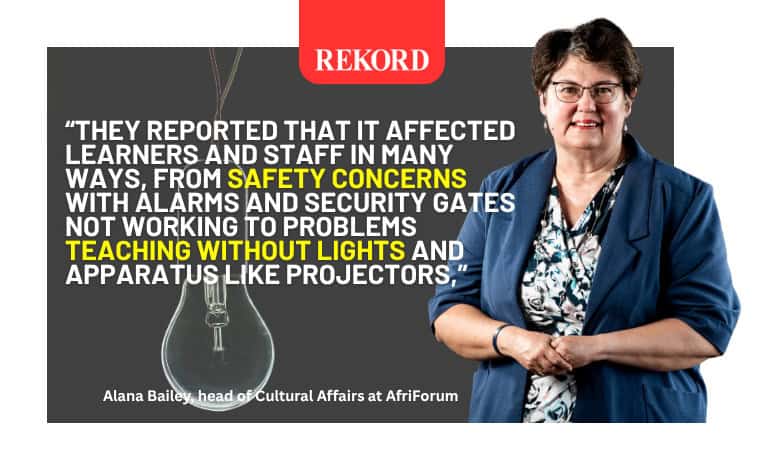
“They reported that it affected learners and staff in many ways, from safety concerns with alarms and security gates not working to problems teaching without lights and apparatus like projectors,” she said.
Bailey said schools were now being encouraged to submit damage claims to the metro, particularly for diesel used to keep generators operating and for food spoiled in feeding schemes for vulnerable learners.
She said the affected school governing bodies (SGBs) had pleaded unsuccessfully with the metro before approaching the courts.
Bailey also argued that the issue reflected a broader governance problem between municipalities and provincial authorities.
“Some of the amounts outstanding are huge, so this is also not a new problem,” she said.
Meanwhile, Solidarity Teachers’ Network accused the Gauteng Department of Education (GDE) of attempting to shift blame onto SGBs for non-payment while failing to meet its own obligations relating to property rates and municipal payments.
According to Johan Botha, head of the Solidarity Teachers’ Network, schools were forced into crisis management because of failures by the department itself.
“Some schools’ power supply was recently cut off precisely because the Gauteng Education Department itself failed to attend to certain administrative and financial obligations, including property tax on time,” Botha said.
He argued that SGBs were already carrying schools through difficult conditions and warned against further centralisation of financial control.
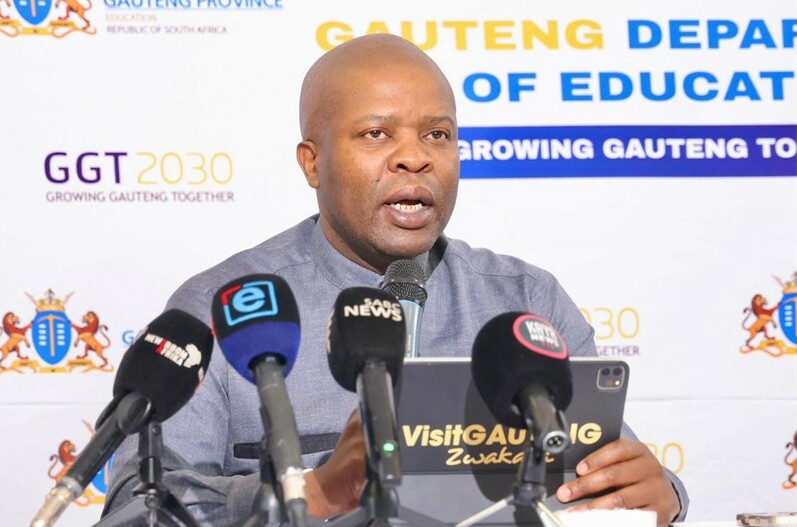
Gauteng MEC for Finance and Economic Development, Lebogang Maile, said on May 17 that the GDE was reviewing its decentralisation model after rising municipal debt exposed schools to electricity and water disconnections.
Maile confirmed that Gauteng schools owed municipalities R583.9-million in accounts older than 60 days, including R51.7-million owed to the Tshwane metro.
“The ruling prohibits further power cuts, confirming that schools should not face disconnection for property rates owed by authorities,” Maile said.
He added that schools had inherited historical debt after the department shifted responsibility for municipal accounts to schools and SGBs, while municipalities had also overbilled some schools through estimated readings and incorrect tariffs.
ALSO READ: Unie waarsku oor subsidieramp by Pretoria-skole
Do you have more information about the story?
Please send us an email to bennittb@rekord.co.za or phone us on 083 625 4114.
For free breaking and community news, visit Rekord’s websites: Rekord East
For more news and interesting articles, like Rekord on Facebook, follow us on Twitter or Instagram or TikTok or WhatsApp Channel