UP students help transform former dumpsite into hub of hope and opportunity
More than 1 000 community members and 250 students benefited from programmes at Moja Gabedi in 2025, as the University of Pretoria's community engagement hub continues to tackle food insecurity, youth development and urban regeneration.
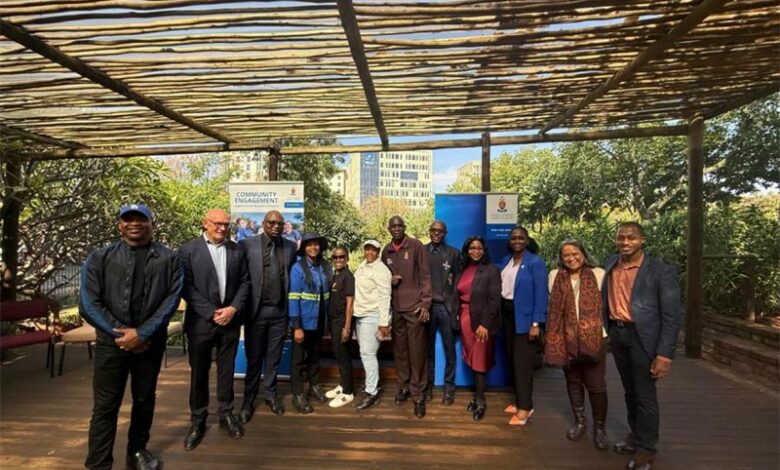
A former illegal dumpsite in Hatfield has become a thriving centre of learning, food production and community upliftment, thanks to the efforts of University of Pretoria (UP) students and community partners.
Located on Festival Street, Moja Gabedi has grown into a living laboratory where students apply classroom knowledge to address real-world challenges while supporting vulnerable residents.
According to UP’s Head of Curricular Community Engagement, Dr Eugene Machimana, more than 1 000 community members participated in food gardening, agricultural training and wellness programmes at the site during 2025.
At the same time, about 250 students worked alongside academic staff and community partners on projects aimed at improving lives and strengthening communities.
“These collaborative initiatives demonstrate Moja Gabedi’s important role as a living laboratory where theoretical and disciplinary knowledge is applied to address real societal challenges and advance meaningful community engagement,” said Machimana.
The site was established in 2019 through a partnership involving UP’s Unit for Community Engagement, metro’s Adopt-a-Space initiative, the Hatfield City Improvement District and other stakeholders.
Today, it serves as an organic urban farming hub focused on fruit and vegetable production, agricultural skills development and household nutrition support.
Dedicated farming plots are also allocated to food-insecure students through a partnership with UP’s Department of Student Affairs, creating opportunities for both food production and income generation.
Machimana highlighted a project involving beneficiaries of the Mastercard Foundation Scholars Programme, who received entrepreneurial training through vegetable production and bee farming initiatives.
“The harvested vegetables and honey were sold at low cost to the surrounding community, providing scholars with valuable hands-on experience in agribusiness and market engagement,” he said.
Some of the produce grown at the site was also donated to UP’s Student Nutrition and Progress Programme to support students facing food insecurity.
Students from various academic disciplines have contributed to the hub’s success. Architecture and Plant Science students collaborated on a vertical garden installation to explore sustainable ways of maximising urban green spaces, while honours students in Social Work and Psychology facilitated weekly youth development workshops for local high school learners.
Moja Gabedi continues to support research, entrepreneurship and community development initiatives, proving how student-led projects can make a lasting difference beyond the university campus.
“The university will continue to share its expertise, skills and resources with communities seeking to rehabilitate and transform spaces similar to Moja Gabedi,” said Machimana.
During a recent visit to the site, Tshwane Mayor Dr Nasiphi Moya praised the transformation and the role students and community partners have played in bringing the project to life.
“There’s a lot of innovation that happens here,” said Moya.
“What inspires me the most is that this was an illegal dumping site. The university then partnered with the City of Tshwane, took charge of this space, and turned it into what it is now.”
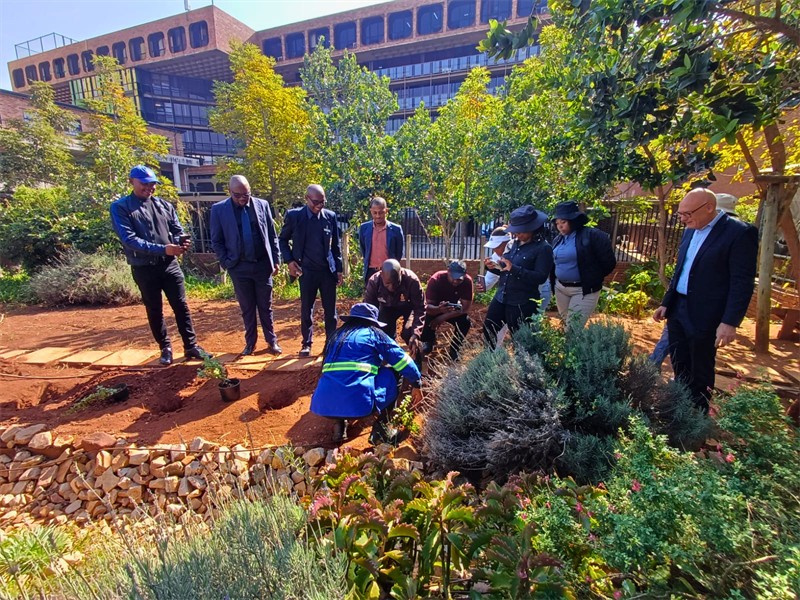
Metro officials help to plant bushes in Moja Gabedi.
She said Moja Gabedi demonstrates how underutilised land can be repurposed to benefit communities.
“We have made a commitment that we want to green our city. One of the challenges we always identify is when people say, ‘We don’t have enough land’. But what we see here is that you don’t need a huge piece of land; you just need a piece of land and you make it work.”
Moya added that the facility offers residents a safe communal space where they can exercise, meet, read and participate in community activities.
Do you have more information about the story?
Please send us an email to bennittb@rekord.co.za or phone us on 083 625 4114.
For free breaking and community news, visit Rekord’s websites: Rekord East
For more news and interesting articles, like Rekord on Facebook, follow us on Twitter or Instagram or TikTok or WhatsApp Channel