Matric final exam: Preparation with AI as study aid
Artificial Intelligence’s influence on the Class of 2026 will only be known from answer trends after the results. Besseling warns, however, that unequal internet access is creating inequality in AI usage.
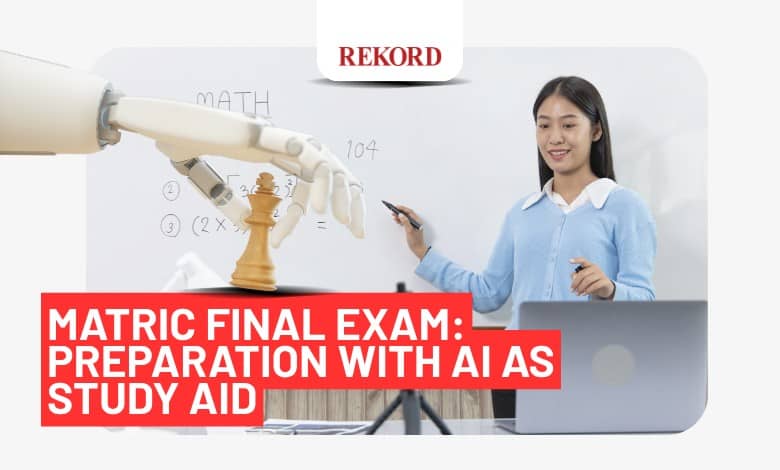
There are only a few days left before the Class of 2026 takes its places for the Grade 12 National Senior Certificate (NSC) examinations on October 13. The last phase of preparation is an important time for learners and parents, with revision, knowledge retention and skills now in the foreground.
According to Maryna Besseling, spokesperson for the South African Teachers’ Union, in the final preparation learners must make sure that they do not entirely rely on only one source or study method.
Artificial intelligence can be a part of this preparation, but only as an aid, Besseling emphasises.
“Like with other matric aids, including sample papers, workbooks and summaries, AI can be used to review content and enhance understanding. However, learners should use as many available resources as possible while making sure the work itself is thoroughly mastered,” Besseling says.
She believes AI can especially be used as a tutor or aid when learners review content: “It can help to explain concepts, generate questions or approach difficult work from another angle. The ultimate goal of preparation, however, remains that the learner possesses the knowledge and skills on their own.”

The use of AI for assessment brings other considerations into play.
Besseling says teachers get to know a learner’s individual writing and communication pattern throughout the course of the year. This includes unique language usage, phrasing, common mistakes, and the level at which the learner normally communicates. “When a learner’s work suddenly deviates strongly from this familiar style, it can be noticed,” she says.
It can also be noticeable when a large number of learners submit the same AI-generated answer.
According to Besseling, learners can use AI to support research, but the unprocessed use of AI answers can be considered plagiarism.
“Plagiarism is a serious transgression that can have a negative effect on a learner’s grades.”
According to her, there are currently no specific guidelines about the usage of AI during assessment preparation.
Policy documents and regulations referring to plagiarism in assessment can, however, also be applied in the context of AI.
“The role of AI in education is simultaneously developing at a fast pace. Internationally, educators are increasingly looking into using AI as an aid for so-called desk research, to find articles and publications, among other things,” she points out.
South Africa, according to Besseling, is still moving towards this approach, while schools are developing their own understanding of responsible AI usage.
“The heart of assessment, however, remains unchanged: it must determine whether a learner understands specific content, can apply the skills and answer questions within the requirements of a specific subject discipline. An answer that has simply been generated by AI does not necessarily show that the learner understands the work or that he or she can apply and explain it in another context.”
Besseling therefore points out that any content generated by AI must be measured for credibility and accuracy. A learner can use AI as a source, but their own interpretation remains core.
For the Class of 2026, there is a clear boundary between preparation and the exam room.
“The rules and regulations for the Grade 12 NSC exam prohibit learners from taking cellphones into the room. Smartphones were also added to the list of prohibited devices about two years ago. Direct access to online sources during the exam is therefore not allowed.”
She explains that schools and teachers are currently investigating the educational issues in the field of AI.
Besseling says guidelines for responsible use are increasingly being developed and implemented.
She also expects that adaptations to the form and format of assessment will ultimately be necessary to account for the existence and use of AI.
Questions could possibly be formulated differently in future to test skills that cannot simply be demonstrated through an AI answer.
For learners doing their final preparations, the message remains, according to Besseling, that everything must be learned and that they cannot focus only on certain content in the hope that it will be covered in the exam.
She pointed out that the extent of AI’s influence on the Class of 2026 will only become clearer after the results. “Trends in answers in specific exam papers and subjects could give an indication of how intensively the technology has been used.”
At the same time, Besseling points out that access to AI is not the same for all learners, since large communities still do not have internet coverage.
“The Class of 2026’s experience will also form part of the preparation for the Class of 2027, while schools and teachers will continue to adjust their approach to AI and assessment.”
Do you have more information about the story?
Please send us an email to bennittb@rekord.co.za or phone us on 083 625 4114.
For free breaking and community news, visit Rekord’s websites: Rekord East
For more news and interesting articles, like Rekord on Facebook, follow us on Twitter or Instagram or TikTok or WhatsApp Channel