Metro enforces water restrictions, higher tariffs and spot fines after short postponement
From daytime garden watering bans to steeper monthly tariffs for heavy users, here is what households and businesses need to know over the next 30 days.
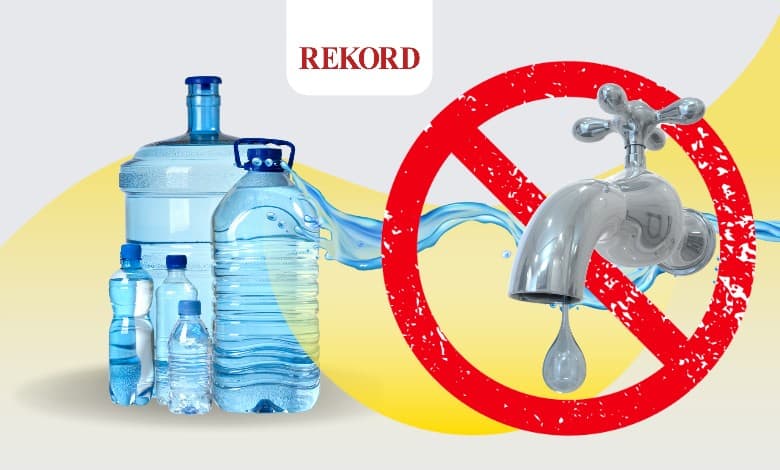
The Tshwane metro has implemented Level 2 water restrictions from November 16 after a directive from the Gauteng Department of Cooperative Governance and Traditional Affairs.
Residents and businesses must reduce their water consumption, while the Tshwane Metro Police Department (TMPD) will conduct spot checks and offenders face spot fines of R5 000.
The restrictions follow sustained high water consumption in the metro, which has exceeded its permanent Rand Water licence allocation by 34% and its temporary allocation by 19%.
According to the metro, the increased demand has placed pressure on Rand Water’s strategic bulk storage capacity, prompting the department to instruct water services authorities across Gauteng to implement Level 2 restrictions.
Restrictions run for 30 days
Lindela Mashigo, metro spokesperson, told Rekord that some consumers might have been confused by the postponement of the original announcement on November 16.
He explained that the delay was to allow the administrative notices to be issued. “The city acknowledges the confusion that may have been occasioned by the alert.”
Mashigo confirmed that the restrictions would run from November 16 to December 16.
Should the consumption reduction targets not be reached within this period, the metro will apply for an extension.
The city has been requested to reduce its daily consumption by 200 megalitres, equivalent to 200 million litres.
High-consumption areas face priority checks
Mashigo said enforcement would form part of the city’s efforts to monitor compliance.
Law enforcement officers, together with a dedicated team, will conduct spot checks, particularly during the day, in areas where water consumption has been exceptionally high.
Residents found contravening the restrictions could receive spot fines of R5 000.
He said the city had identified areas with high consumption. He explained the identified high-consumption areas would be prioritised for inspections, while enforcement would continue across the metro.
“We do not want to marginalise areas, but there will be main priority areas,” Mashigo said.
The inspections will take place across the metro’s regions, with the TMPD, working alongside the Integrated By-law Enforcement Committee, responsible for monitoring contraventions.
Water-saving rules target homes and businesses
The restrictions require households and businesses to implement water-saving measures.
The Level 2 water restrictions are enforced whenever the city is in a drought, experiencing a heatwave or water demand exceeds the available stored water due to seasonal changes.
The following is applicable under Level 2 restrictions
– Watering of outdoor landscaping is not allowed between 09:00 and 17:30 and is limited for a maximum of 30 minutes per day, if using a standard sprinkler system.
– The 30-minute-per-day time limit does not apply to landscape irrigation systems using a water bucket, water-efficient devices or techniques, including drip and micro-irrigation systems, stream rotor sprinklers and hand watering.
– However, these water-efficient systems and techniques must still follow the specified time schedule
– Watering of landscaping using borehole water, recycled water or rainwater harvesting is encouraged and is not affected by these restrictions
– Appropriate signage, clearly visible from a public thoroughfare, must be displayed at all properties where alternative water sources are used for irrigation
– Stop operation of ornamental fountains, except to the extent needed for maintenance purposes. Ornamental fountains can only be operated by recycled water
– Use a hand-held hose equipped with a positive shut-off nozzle or timed sprinkler system to water landscaped areas
– Washing of vehicles (including recreational vehicles and watercraft) is only allowed with hosepipes fitted with automatic self-closing devices, or with waterless products
– Mobile equipment washings are exempt from these regulations where the health, safety and welfare of the public are contingent upon frequent vehicle cleanings, such as garbage trucks and vehicles to transport food products, livestock and perishables
– Washing of vehicles is permitted at any time at commercial car washes
– Use of water from fire hydrants will be limited to firefighting and approved water supply to informal settlements
– Construction operations receiving water from a fire hydrant or water truck will not use water beyond normal activities
– No automatic top-up systems are allowed for swimming pools. It is recommended that all swimming pools be covered by a pool cover to avoid evaporation when not in use
– No washing or hosing down of hard-surfaced or paved areas with drinking water from a tap is allowed
The restrictions also introduce higher water tariffs aimed at discouraging excessive consumption by charging more per thousand litres (kl) as usage increases.
The following monthly consumption bands and tariffs will apply
– 0 to 9kl: Free
– 10 to 18kl: R43.20 per kl, plus a network access charge of R203.70 per 30-day billing period
– 19 to 30kl: R72.66 per kl, plus the network access charge
– 31 to 42kl: R89.72 per kl, plus the network access charge
– 43 to 60kl: R108.01 per kl, plus the network access charge
– Above 60kl: Applicable approved tariff
Qualifying indigent households will continue to receive 12kl of free basic water per month.
Properties valued at R250 000 and below, as well as officially registered indigent customers, will receive the applicable network access charge exemption.
The city has also that currently standard households use more than 20kl and indigent households currently use more than 17kl.
Consumers are encouraged to monitor their monthly consumption and take steps to avoid excessive water use.
The Level 2 restrictions will initially remain in place for 30 days from November 16.
The city will monitor consumption levels during this period to determine whether the measures have achieved the required reductions.
Residents can report visible water leaks and bursts through the city’s call centre on 012 358 9999 or via WhatsApp on 087 153 1001.
Also read: Nine people shot dead in Atteridgeville informal settlement
Do you have more information about the story?
Please send us an email to bennittb@rekord.co.za or phone us on 083 625 4114.
For free breaking and community news, visit Rekord’s websites: Rekord East
For more news and interesting articles, like Rekord on Facebook, follow us on Twitter or Instagram or TikTok.