Govt ups control of metal, copper trade as police struggle
“It is practically impossible to police all of this infrastructure, all of the time.”
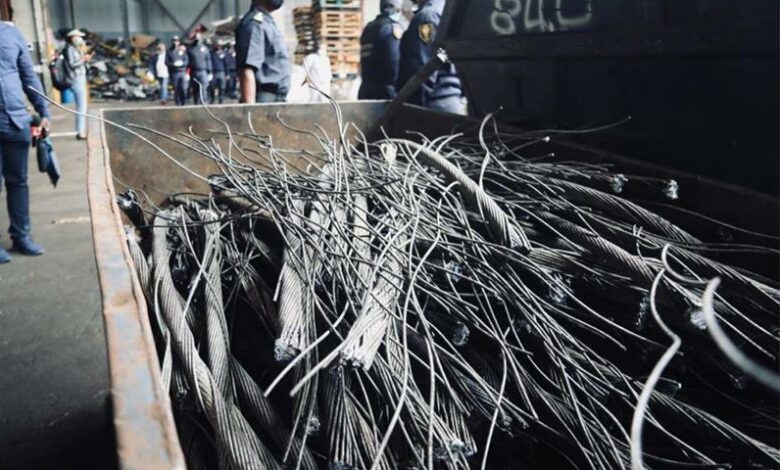
In an attempt to stabilise the country’s economy, government has initiated measures to curb the loss of R47- billion annually to cable and metal theft.
State-owned enterprises, municipalities and business have suffered as a result of theft of Telkom cables, rail tracks and rail cables, traffic signals and drain covers.
Government will prohibit the export of scrap copper and ferrous metal for six month, while it sets up a new permit system to regulate trade in these metals and limit exports to a number of ports of exit.
Minister of Public Enterprises Pravin Gordhan said in 2021, cable theft had cost Transnet R2-billion, while the approximately 742km of Eskom cable stolen had led to additional power disruption on top of load-shedding.
Police minister General Bheki Cele indicated that 20 multi-disciplinary economic infrastructure police task teams had been established since June and were responsible for 3 000 operations so far that nabbed 1 946 suspects.
The Tshwane metro has not been left behind in its fight against cable theft.
Tshwane MMC for safety and security, Grandi Theunissen said from January to October, 69 people were arrested, 6 268 cable theft hotspots patrolled throughout Tshwane, 338 complaints received and responded to and operations targeting scrapyards and other places of interest conducted.
“This means the unit helped prevent prolonged power outages that adversely affect households and businesses,” said Theunissen.
He said curbing cable theft would assist Tshwane reduce expenditure on replacing damaged and stolen cables.
We have had a spike of vandalism and theft targeting our substations across Tshwane during loadshedding. We need your help as residents to be our eyes and ears in your communities and report suspicious activity to our TMPD 24-hour line on 012 358 7095/7096 @CityTshwane pic.twitter.com/O7GHGX6GsT
— Mayor Cilliers Brink (@tshwane_mayor) September 13, 2022
Tshwane Metro Police department (TMPD) cable theft unit members arrest three people in different incidences https://t.co/nHjP1TQbSQ#ArriveAlive #CopperTheft @TMPDSafety pic.twitter.com/Z3oFtJZZgC
— Arrive Alive (@_ArriveAlive) October 27, 2022
@CityTshwane @tshwane_mayor for the past 42 hours we habit had electricity I.e Savannah, Blyde and Greencreek. Vandalism and cable theft they said. Help us understand how people stole cables with electricity on and way up there where your own workers need a cheery picker pic.twitter.com/HLqkxqPw6y
— Chris Tumusiime (@christumusiime) November 17, 2022
Trade, industry and competition minister Ebrahim Patel said, however that the South African network for copper was extensive and measures were needed apart from law enforcement operations.
“It is practically impossible to police all of this infrastructure, all of the time.”
He said the measures approved by Cabinet would look to reduce the demand for scrap metal and disrupt criminals.
“These measures were considered and approved by Cabinet on November 16, as part of a comprehensive package of measures to address the damage caused by metal theft to public infrastructure, the economy and communities.”
Patel said government would soon introduce a requirement for buyers and sellers of scrap metal to produce tax compliance certificates and environmental permits before they are issued with buyer or seller licences.
“These companies will also have to show where the scrap metal originated from and to whom it was sold.”
He said this would ensure that police focused resources on noncompliant companies instead of targeting scrapyards and recyclers wholesale.
“Government may also limit metal scrap and semi-finished exports to a limited number of ports which will assist SARS to inspect more containers for illegal and mislabelled exports.”
Patel said government would also consider amending existing laws or pass new ones to create a dedicated metal trading licensing regime.
“This may include prohibiting cash transactions for waste, scrap and semi-finished metal products.”
Do you have more information about the story?
Please send us an email to editorial@rekord.co.za or phone us on 083 625 4114.
For free breaking and community news, visit Rekord’s websites: Rekord East
For more news and interesting articles, like Rekord on Facebook, follow us on Twitter or Instagram