Metro dismisses cholera claim at Unitas
According to the Gauteng department of health, there were 29 laboratory confirmed cholera cases with the death at 17 people since May 15.
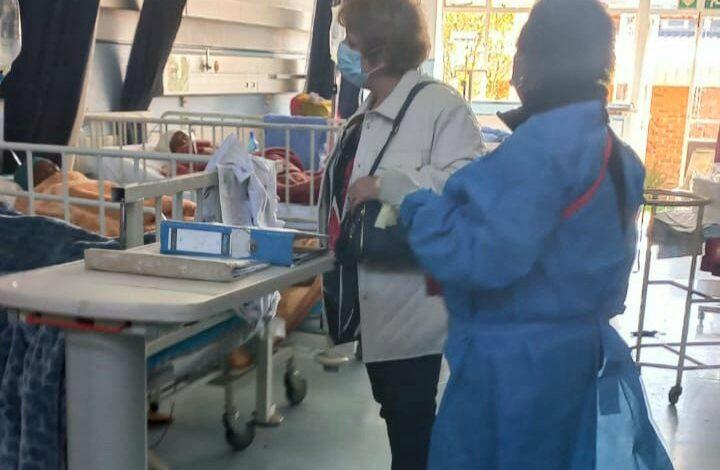
Tshwane metro has denied claims cholera was detected at Unitas hospital.
MMC for health Rina Marx was responding to a widely shared social media post claiming the hospital had admitted a cholera patient.
Marx said that any cases of cholera would be confirmed by the National Institute for Communicable Diseases (NICD).
The social media user claimed that their daughter contracted cholera after taking a headache painkiller with tap water.
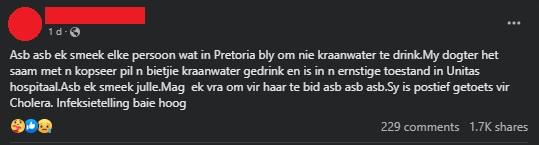
“Please please I am begging every person who lives in Pretoria not to drink tap water. My daughter drank some tap water along with a headache pill and is in a serious condition in Unitas hospital. Please I am begging you. May I ask you to pray please please please. She has tested positive for cholera. Infection count very high.”
Rekord was unable to reach the user but further posts indicate that the daughter was recovering and was eating solid foods once more.
On Wednesday morning, 165 patients had been admitted to Jubilee hospital with suspected cholera.
According to the Gauteng department of health, there were 29 laboratory confirmed cholera cases with the death at 17 people since May 15.
The department urged residents to ensure proper hand hygiene, especially before and after handling food or using the toilet.
SYMPTOMS INCLUDE:
– Diarrhoea
– Nausea
– Vomiting
– Stomach cramps
– Dehydration
The department said that residents should not wait for symptoms to get worse before seeking medical treatment.
Tshwane confirmed that piped water supplied by the metro tested negative for cholera on Sunday.
Centurion psychologist Dr Johan Coetzee said: “The issue with misinformation is that it could be on purpose, or by accident.”
Misinformation is a purposeful spread of information that is not true.
“These people are looking for a certain effect from a specific group of people. Older people are more susceptible to accepting and spreading the information.”
Coetzee said that misinformation can spread fear and anxiety.
“The best counter to misinformation, is correct information. People on social media tend to only delete their comments, but this is not enough. It is important to explain what you got wrong, and correct it.
“The best advice is to not forward information that is not true.”
He said commenting on a post, even to correct the mistake, can have the effect of giving it greater exposure.
“The more it spreads, the harder it is to rectify.
“Always go to a credible source, such as reputable media, a ward councillor and official spokespeople.
“We have a responsibility to check the quality of what we put out there,” Coetzee concluded.
Do you have more information about the story?
Please send us an email to editorial@rekord.co.za or phone us on 083 625 4114.
For free breaking and community news, visit Rekord’s websites: Rekord East
For more news and interesting articles, like Rekord on Facebook, follow us on Twitter or Instagram