Pledges pass target at metro’s first investment summit
The metro exceeded its first investment target by securing R86-billion in pledges at its inaugural Investment Summit, passing its R5-billion investment target.
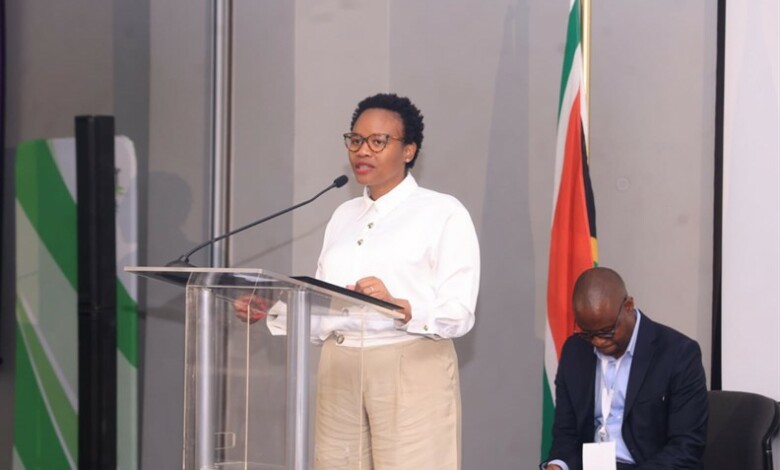
At its inaugural Investment Summit, the Tshwane metro unveiled ambitious plans to position South Africa’s capital city as a hub for investment, innovation, and job creation.
Held in Menlyn on September 10, the metro secured an impressive R16-billion in pledges, surpassing its initial target of R5-billion.
The metro confirmed that the pledges cover 22 projects across property and construction, the automotive sector, and infrastructure development. Notably, at least 10 companies in the construction and property sector made firm commitments to back Tshwane’s economic revitalisation.
Mayor Nasiphi Moya revealed this during the metro’s inaugural investment summit and declared that ‘Tshwane is open for business’.
Addressing business leaders, investors, diplomats, and community representatives, Moya outlined her administration’s economic vision under the theme ‘Tshwane Rising’.
She said the summit marked a turning point for the metro’s economy and the way the city partners with business.
Moya announced a set of concrete economic targets for the next five years.
“By 2029, we aim to grow Tshwane’s economy by 3.9% each year. We aim to attract between R17–R26 billion in new investment. And we aim to create at least 80 000 jobs for the people of our city.
“Today, we begin that journey with a clear target: to secure at least R5-billion in new projects this year. This is the benchmark against which we will measure the success of this gathering,” she said.
She said the pledges will cover the following sectors: construction and property development, renewable energy, tourism/meetings, incentives, conferences and events, and automotive and manufacturing.
Moya emphasised that growth must be inclusive.
“Every investment we secure must help to close the gap between those who have and those who still wait. Every opportunity we create must carry the promise of dignity for our people.”
She described Tshwane as a city of ‘remarkable character’, pointing to its resilience, diverse communities, and role as the ‘diplomatic heart of Africa’ with more than 150 foreign missions.
The capital is home to major international firms such as BMW, Ford, and Coca-Cola, as well as three major universities and over 300 000 students.
She noted that Tshwane is already a knowledge hub and a centre for research, innovation, and tourism.
However, she acknowledged the persistent inequalities in service delivery and infrastructure.
“Families in some areas enjoy reliable services and steady work, but in other areas, residents still face water delivered by tankers, power cuts, and long waits for decent housing.”
The mayor said bridging these divides requires honest reflection about the city’s finances.
“At an average of R2.5-billion in capital investment each year, it would take 36 years to fund the infrastructure Tshwane needs over the next decade. That is a gap we cannot close through public funding alone.”
The summit exceeded expectations, with more than R16-billion in new investment pledges secured – three times the R5-billion benchmark the metro had set.
According to Moya, the solution lies in collaboration.
“The city cannot do it alone. Business cannot do it alone. But together we can align public effort with private capital to unlock the infrastructure and assets that will drive growth.”
The metro has adopted the Tshwane Economic Revitalisation Strategy as a roadmap.
This strategy identifies 10 priority sectors, including the automotive industry, agriculture and agro-processing, construction and property, tourism and business events, digital and circular economies, township enterprises, and the student economy.
“Each sector is a gateway for investors to share in the growth of our city. And each is anchored in the conviction that partnerships between city and business will unlock the progress our residents deserve,” Moya explained.
Several underutilised city-owned assets will be opened to investors. These include the Rooiwal and Pretoria West power stations, with opportunities for energy generation and waste-to-energy technology.
The Pretoria Showgrounds will be earmarked for redevelopment as a business tourism and mixed-use destination, and Wonderboom National Airport, with potential as a logistics hub.
The Tshwane Fresh Produce Market, the second largest in the country, with opportunities for agro-processing and the Bon Accord Quarry, will be fully commercialised.
Tshwane said over 30 derelict inner-city buildings will also be repurposed for housing, student accommodation, and commercial use.
“These assets are more than buildings or land. They are catalysts for growth. Each one is being packaged with a clear business case, timelines, and transparent processes to ensure that investment delivers real results,” Moya explained.
To create a more business-friendly environment, the metro is reforming its internal processes.
She said initiatives include the Strategic Investment Committee to fast-track projects, the New Application Process System to cut red tape, and a VIP Business Line for direct investor access to decision-makers.
“Incentives will include property rates reprieves of up to 36 months and rental reprieves of up to 18 months during development phases.
“What is needed now is partnership,” Moya said. She asked the residents to join hands with the metro.
Moya also announced the launch of the Ithuba Youth Economic Development Programme.
“Ithuba means opportunity. This programme will incubate young entrepreneurs, open supply chains, create job pathways, and provide technical and artisanal skills. An initial R8-million has been allocated to youth entrepreneurship, with more to follow as the programme expands.”
She stressed that growth must benefit the majority.
“More than 60% of Tshwane’s residents are under the age of 35. For them, unemployment is not a statistic in a report. It is a daily struggle and a constant worry about the future.”
Closing her address, Moya reaffirmed her administration’s commitment to transparency, dedication, and alignment with investors.
Gauteng Province MEC for Finance and Economic Development Lebogang Maile said the investment summit is proof that investment momentum cannot remain confined to a single sphere of government.
“Investment must ripple across corridors, touch every municipality, and change the material conditions of our people.”
He said in 2024, Tshwane exports reached R400-billion, almost a third of Gauteng’s total; while imports exceeded R197-billion, making Tshwane a hub of both production and consumption.
“More than 1.27 million people are employed in Tshwane, amounting to a quarter of Gauteng’s workforce.”
MEC @LebogangMaile1 highlighted Tshwane’s pivotal role in driving Gauteng’s economic growth, emphasizing that this Investment Summit serves as a critical platform to unlock new opportunities, strengthen the city’s competitiveness, and advance the province’s overall development… pic.twitter.com/sJj3oS1mZL
— Eugene Modise (@eugene_modise) September 10, 2025
Ground Breaking R16 Billion committed to 22 transformative projects at the Tshwane Investment summit 2025 …. Proving that this is more than just talk, it’s real action.
A heartfelt thank you to our investors for believing in Tshwane’s rise!#TshwaneRising@CityTshwane pic.twitter.com/aljFPZsUL5
— Eugene Modise (@eugene_modise) September 10, 2025
Do you have more information about the story?
Please send us an email to bennittb@rekord.co.za or phone us on 083 625 4114.
For free breaking and community news, visit Rekord’s websites: Rekord East
For more news and interesting articles, like Rekord on Facebook, follow us on Twitter or Instagram or TikTok.