City’s air monitors out of order, spelling trouble for residents’ health
Pretoria's air quality consistently exceeds the National Ambient Air Quality Standards, especially for small particulate matter and ozone. Despite efforts, pollution from vehicles, industries, and waste remains a challenge.
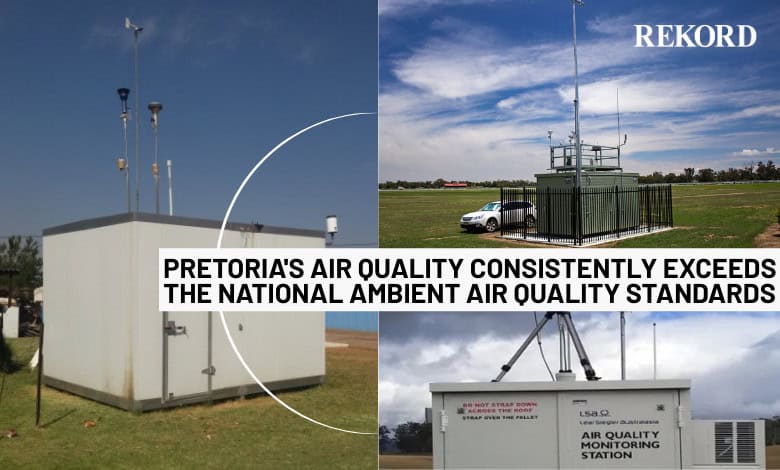
Residents’ health will continue to be at risk due to the Gauteng Department of Environment’s lack of budget for the maintenance and management of air quality monitoring stations.
The monitoring stations do not operate properly, thus making it impossible to monitor and measure air pollution and curb it from spiralling out of control.
Without proper air monitoring in place, residents are at risk of developing breathing issues and other health problems.
This startling information was revealed in a reply to questions tabled in the Gauteng Provincial Legislature to the MEC for Environment, Ewan Botha, by DA MPL Leanne de Jager.
These stations are at present producing raw, unprocessed data that offers little meaningful protection to communities.
“Without functioning monitoring networks, authorities cannot issue timely health warnings, assess compliance with air quality standards, or take urgent action when pollution reaches dangerous levels,” said De Jager.
“The DA will not sit idly by while this matter is not receiving the necessary attention. According to the World Health Organization (WHO), the combined effects of ambient air pollution and household air pollution are associated with 6.7 million premature deaths annually.”
Botha revealed in his answers that data shows all municipalities in the province failed to meet the National Ambient Air Quality standards for particulate matter in the last five financial years.
In the report submitted as an answer to De Jager’s questions, the metro has shown a consistent struggle in meeting the National Ambient Air Quality Standards (NAAQS) over the past five financial years. This, despite being part of the Breathe Cities initiative, which is a consortium between C40 cities, the Clean Air Fund and Bloomberg Philanthropies.
Botha pointed out that while strides have been made in Pretoria in improving air quality, it remains vulnerable to air pollution, particularly particulate matter (PM10 and PM2.5) and ozone, which frequently exceed prescribed limits.
The report shows that this persistent pollution problem, despite ongoing efforts, has triggered concerns from environmental experts, government officials, and residents alike.
The report reveals troubling trends, with exceedances in particulate matter (PM10 and PM2.5) levels across all monitored years.
The fine particulate matter (PM2.5), which is known to have severe health impacts, was repeatedly recorded above the NAAQS, especially during winter months when atmospheric conditions lead to poor dispersion of pollutants.
Furthermore, the report highlights ozone levels in Pretoria, which also surpassed the acceptable thresholds during the spring and summer months, typically due to the photochemical reactions involving nitrogen oxides and volatile organic compounds (VOCs).
A major contributing factor to these air quality issues, as highlighted in the official response, is the high concentration of particulate matter, which stems from various sources.
These include industrial emissions, vehicle tailpipe emissions, illegal burning of waste, and the domestic use of fossil fuels.
Botha said in his report that, given that vehicle emissions are a significant contributor, there is a growing need for stricter vehicle emissions standards and better public transportation alternatives.
The situation is further complicated by the fact that air pollution is not confined within municipal borders. Pollutants can travel long distances, affecting areas beyond the source of the pollution.
In response to these challenges, the Gauteng Department of Agriculture and Rural Development (GDARD) has provided various forms of support to municipalities, including Pretoria, in their efforts to manage and monitor air quality.
Botha pointed out in the report that the department’s support is, however, constrained by budgetary limitations.
This raises concerns over the sustainability of air quality management efforts in the province.
According to the report, the costs for maintaining and repairing ambient air quality monitoring stations are considerable, with estimates ranging from R500 000–R800 000 per station each quarter.
However, no specific budget has been allocated to support making these stations fully operational.
Botha did, however, stress that three stations in Pretoria were identified by his department that could be prioritised for support, depending on the availability of budget. These are the Rosslyn, Bodibeng and Olievenhoutbosch AQ Monitoring Stations.
Support given by the department in the past to the city included support with an alternative supply system for two monitoring stations, support by lending calibration gases, a calibrator and zero air generator for planned calibration activities.
Following the DA Gauteng’s questions, a workshop was held during the recent September meeting of the Agriculture and Environment Portfolio Committee, at which all municipalities presented the status of their air quality monitoring stations.
De Jager told Rekord that the DA Gauteng has been engaging with MEC Botha, on an ongoing basis, to find a solution to the current situation of the status of the air quality stations, including those in Pretoria.
“We will also engage the Minister of Environment, Dion George, on setting a standard on this issue in Gauteng and across the country,” she said.
ALSO READ: Silverton residents dispute metro’s clean-up claims
Do you have more information about the story?
Please send us an email to bennittb@rekord.co.za or phone us on 083 625 4114.
For free breaking and community news, visit Rekord’s websites: Rekord East
For more news and interesting articles, like Rekord on Facebook, follow us on Twitter or Instagram or TikTok.