
Breast cancer on rise in pre-menopausal women – expert
October marks Breast Cancer Awareness Month in South Africa, highlighting rising cases especially among younger women. Dr Peter Schoub urges early self-examinations for women from their 20s and regular screenings from 40 to improve detection, treatment options, and survival rates.
October in Pretoria is not just about blossoming jacarandas and the warmth of spring.
It is also Breast Cancer Awareness Month, a time dedicated to raising awareness about one of the country’s most significant health challenges.
Breast cancer is the most common cancer affecting South African women, and its impact is profound.
According to the 2023 National Cancer Registry, one in every 27 South African women will be diagnosed with breast cancer during their lifetime.
This accounts for nearly 23% of all cancer diagnoses in the country, and with an estimated 19.4 million women over the age of 15 at risk, the scale of the issue cannot be overstated.
To experts, what is particularly concerning in South Africa is the rising number of breast cancer cases in younger, premenopausal women.
While breast cancer typically affects postmenopausal women, data shows that about 20% of breast cancer cases in South Africa occur in women under the age of 40.
This is in stark contrast to high-income countries, where only about 5%–7% of cases are found in this younger group.
A South African study reported that the average age of diagnosis in women under 40 was 34 years, and younger women often face more aggressive forms of the disease.
Dr Peter Schoub, chairperson of the Breast Imaging Society of South Africa (BISSA), highlights one of the greatest challenges in the country: late-stage diagnosis.
“Late diagnosis drastically reduces treatment options and survival rates. Contributing factors include a lack of awareness, not understanding one’s personal risk factors, socioeconomic disparities and limited access to healthcare facilities. Ideally, women should start with self-examinations in their 20s with annual mammograms from the age of 40,” he explained.
Recognising your risk is a critical first step, and BISSA encourages women to complete online breast cancer risk assessments early in life.
These assessments use statistical models that estimate the likelihood of developing breast cancer over the next five years, and across a lifetime.
The questions typically explore medical, reproductive, and family histories, and it is important that the results be discussed with a healthcare professional.
Dr Schoub emphasised that, “some women are at higher risk than others and may need additional screening.
“Understanding and monitoring these risk factors, performing routine self-checks and regular screening is the most powerful tool we have to improve survival.”
Though every woman is potentially at risk of developing breast cancer, several factors increase the likelihood.
He explained age plays a significant role; although risk increases with age, one out of every eight invasive breast cancers is diagnosed in women younger than 45.
Family history also contributes to risk, especially if close blood relatives have had breast cancer.
Women who have had cancer in one breast face a three to four times greater chance of developing a new cancer in the other breast or elsewhere in the same breast.
He said dense breast tissue, which is more glandular and less fatty, is another factor associated with increased risk.
Lifestyle choices also matter. Excessive alcohol consumption, lack of physical activity, smoking, and diets high in saturated fats have all been linked to breast cancer risk.
“Hormonal factors such as early menstruation, late menopause, having a first child after age 30 or not having a full-term pregnancy, and the use of hormone replacement therapy also influence a woman’s chances. Breastfeeding, particularly for more than one year, can lower risk,” confirmed Schoub.
Performing breast self-examinations regularly is one of the most accessible ways for women to stay aware of their breast health.
He advised: “Women should start with self-examinations in their 20s.”
He explained that the breast undergoes changes throughout the menstrual cycle, so it is best to perform self-checks at the same time each month, usually about a week after the period ends when the breasts are less tender.
The process involves looking carefully in front of a mirror for changes in size, shape, symmetry, or skin texture, such as puckering or dimpling.
Then, while lying down or in the shower, using the pads of the three middle fingers, women should feel their breasts in a methodical manner, applying varying pressure to check different layers of tissue.
“It is important not to rush the examination,” he advised. “Taking enough time ensures thoroughness. Many women miss subtle changes because they don’t know what to look for or how to examine their breasts properly.”
He urged women to always follow up with a healthcare professional if any abnormalities are detected. Early evaluation is key.
It is important to remember that while many lumps or changes may turn out to be harmless, any abnormality must be evaluated by a medical professional immediately.
“Although some women are at higher risk than others, breast cancer does not discriminate. Any abnormality, regardless of age or family history, should be evaluated by a medical professional immediately.”
He added that tumours detected through routine screening tend to be smaller and localised, which improves treatment success and survival chances. “The size of the tumour and whether cancer has spread are crucial factors that determine prognosis.”
Despite these insights, South Africa faces significant challenges when it comes to early breast cancer detection.
Limited access to healthcare facilities, socioeconomic barriers, and a lack of widespread awareness contribute to many women being diagnosed only when the disease has advanced.
Breast Cancer Awareness Month in October plays a vital role in addressing these challenges by educating women, encouraging regular screenings, and promoting risk assessments.
Schoub reiterated: “Screening is not just about mammograms; it is about empowering women with knowledge and access. We want women to understand their bodies and know when to seek help. This awareness can save lives.”
He also highlights the importance of community and healthcare providers working together, saying, “We need to break down barriers and ensure that no woman feels alone in her journey. Support and early detection go hand in hand.”
Two events focused on early breast cancer detection will be taking place in October, the first being ‘Walk With Maxeke – Innovation for Better Health’.
The first will be in Hatfield on Saturday, October 11 from 07:00 – 15:00 at the Pretoria High School Old Boys Club. Registration opens at 05:00.
The event honours the legacy of political activist Charlotte Maxeke, and promotes wellness, innovation, and equity. It features a 7.7 km fun run, free health screenings, breast cancer awareness talks, wellness exhibits, food stalls, and a farmers’ market. The event aims to provide access to healthcare for underserved communities and raise awareness about breast cancer.
The second will be the ‘Breast Cancer Awareness Event’ at Irene Village Mall, corner of Nellmapius Drive and Van Ryneveld Avenue on Saturday, October 25, from 09:00 – 14:00.
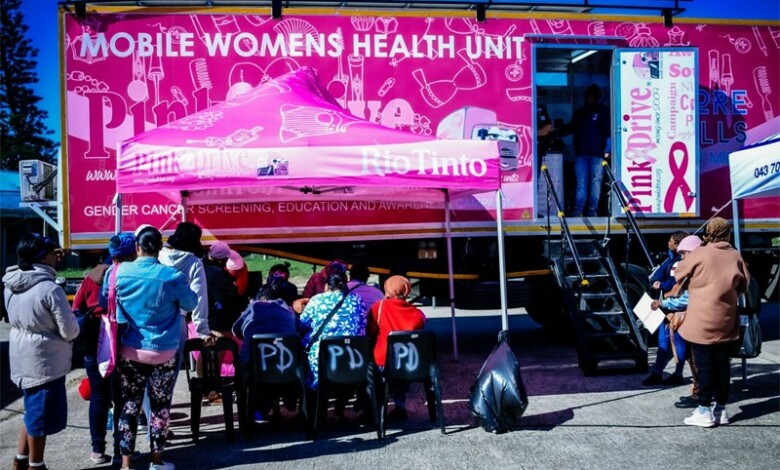
Hosted by The Pink Drive, this event offers 150 free clinical breast examinations and 30 free PSA (prostate-specific antigen blood tests). It is an opportunity for the community to take proactive steps for their health and to support breast cancer awareness. Participants are encouraged to wear pink to show support.
ALSO READ: High Court action launched over illegal building work in Meyerspark
Do you have more information about the story?
Please send us an email to bennittb@rekord.co.za or phone us on 083 625 4114.
For free breaking and community news, visit Rekord’s websites: Rekord East
For more news and interesting articles, like Rekord on Facebook, follow us on Twitter or Instagram or TikTok.


