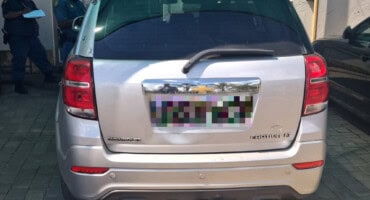
City faces service delivery risks as debt burden escalates
Enforcement and legal action have been intensified to claw back billions in unpaid accounts, warning defaulters of disconnections and stricter penalties.

The Tshwane Metro has been called upon to implement more stringent measures to prevent further accumulation of municipal debt, as the debtors’ book has ballooned to R25.9-billion.
This is compared to 2021, when the debtors’ book stood at R17-billion and 2024, when it had increased to R23.3-billion.
However, the latest debt report reveals that defaulters – including residents, businesses, and even government departments – owe Tshwane R25.9-billion for services such as electricity, water, and property rates.

According to Mark Surgeon, a Freedom Front Plus (FF Plus) councillor, this is a slight improvement from R26.4-billion in June, but the debt burden remains extraordinarily high. This undermines the metro’s ability to effectively deliver basic services such as power and water.
“The largest portion of the debt consists of interest on historical debt, accounting for 28.6% of the total. This indicates that payments are customarily late, leading to ever-accumulating interest,” Surgeon explained.
He said unpaid water bills comprise 21.9% of the debt, while arrears on property rates make up 19.3%.
“Outstanding electricity bills represent 12.7% of the debt, and other services such as waste removal and municipal fees a further 17.5%.”
Surgeon has described the situation as ‘unsustainable and catastrophic’, warning that ‘Tshwane’s financial heartbeat is fading fast, and service delivery is paying the price’.
Even more alarming is that R17.8-billion has been outstanding for over a year; debt the metro admits is largely non-collectable.
“This is not just a spreadsheet problem. It’s a crisis that directly affects every resident,” said Surgeon.
“When billions remain unpaid, the metro’s ability to deliver water, electricity, and road maintenance collapses. We are already seeing the results in dry taps, power cuts, and deteriorating roads.”
He explained that although more and more residents have started making payment arrangements, it is not enough to avert a full-blown debt crisis.
“If this trend continues, the metro’s financial stability could turn into chaos, and service delivery will deteriorate even further.”
Surgeon said the time has come for the metro to implement more stringent measures to prevent further accumulation of municipal debt, and to take decisive action to recover outstanding amounts.
“Residents who have entered payment arrangements must be held accountable, and the metro simply has to ensure that its debt does not continue to grow. This enormous debt burden is a threat to every Tshwane Metro resident.”
Surgeon stated that without decisive intervention, the metro will not only collapse financially, but also fail to fulfil its constitutional duty to create a liveable environment for its people.
“The FF Plus will not stand idly by and watch as the Tshwane Metro goes over the financial edge, but will keep exerting pressure until accountability and proper service delivery are the norm once again.”
In response, the city insists it has launched an ‘intensified multi-pronged recovery plan’, a mix of credit control enforcement, legal action, and infrastructure protection to claw back the billions owed.
The metro said disconnections will be stepped up in high-risk areas, while accounts in arrears of more than 120 days are already being handed over for legal collection.
The city has also begun installing protective structures on power infrastructure to curb theft and illegal connections, one of the main drivers of spiralling losses.
“The city acknowledges historic challenges, including delayed enforcement and affordability issues among customers,” said city spokesperson Lindela Mashigo.
“But our strengthened credit control and recovery efforts will stabilise revenue and improve financial sustainability.”
Interest on old debt continues to suffocate the metro’s finances, now forming nearly a third of the total owed.
Mashigo said the city will suspend further interest for customers who enter and maintain formal payment arrangements, but warns that failure to comply will trigger immediate disconnections and legal action.
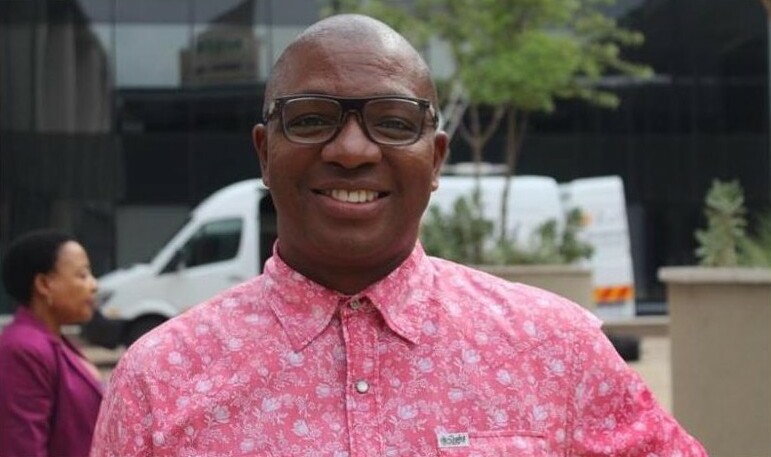
Earlier this year, the city wrote off R4-billion in irrecoverable debt under its debt relief programme, hoping to ‘clean up’ its debtor’s book.
Mashigo stated that this reset was necessary to create a realistic baseline for collections, but critics argue it simply masked deeper structural failures.
“The city has since deployed new teams to enforce stricter payment compliance, promising tighter monitoring, faster disconnections, and penalties for chronic defaulters.”
Mashigo emphasised that service delivery remains its top priority, continuing to pay bulk suppliers like Eskom and Rand Water to ensure communities are not left in the dark or without water.
He said the city is in the process of digitising its payment arrangement system to make it easier for customers to manage and settle their municipal debts.
“This new online platform will allow customers to conclude agreements digitally, supported by debit-check functionality to verify affordability and ensure commitments are realistic and enforceable.”
Customers will receive regular reminders and notifications about their payment arrangement status, helping them stay informed and reducing the risk of default.
Mashigo added that the city’s goal is to create a transparent, enforceable, and customer-friendly system that strengthens accountability and promotes a culture of payment discipline among residents and businesses.
He stated that Tshwane is embedding long-term systems to ensure that debt does not accumulate unnecessarily in future. These include stricter enforcement of payment obligations, enhanced use of technology to track accounts, and exploring penalties or deterrents for persistent defaulters where legally permissible.
“These measures are designed to improve revenue collection, support financial sustainability, and ensure that the city’s debt book steadily declines over time.
“The city has systems in place to collect arrears and continues to roll out revenue collection drives such as Tshwane Ya Tima, as well as targeted outreach and communication programmes that encourage customers to settle their accounts.”
He said the metro is also intensifying efforts to reduce losses on water and electricity networks by addressing illegal connections, theft, and infrastructure inefficiencies.
“Defaulting customers face credit control and, where necessary, legal enforcement measures to safeguard municipal revenue and ensure fairness for paying customers.”
He added that to ensure that debt recovery translates into real service improvements, the city has introduced new accountability mechanisms.
“To reassure residents that revenue recovery leads to visible results on the ground, the city has established a service delivery war room, known as RepCo, led by the Executive Mayor and the mayoral committee. This structure provides strategic oversight and co-ordinates all key service delivery initiatives.”
He said each department reports directly to RepCo on the implementation of projects outlined in the service delivery implementation plan.
“These projects are subject to strict monitoring and evaluation to ensure they are delivered on time, within budget, and in line with community expectations.”
Mashigo added that the framework ensures that revenue recovered from debt collection is reinvested into visible improvements such as better water supply, reliable electricity, and improved road maintenance, while strengthening accountability and restoring public confidence in the city’s governance.
Responding to the Auditor-General’s (AG) previous findings that called for stricter enforcement and stronger internal controls, Mashigo said management is fully committed to implementing those recommendations.
“The city acknowledges the AG’s concerns and has prioritised addressing these weaknesses. We are committed to measurable improvements in governance, financial control, and service delivery performance.
“To reinforce institutional capacity, strategic vacancies have been filled at senior, middle, and operational levels to ensure that the right expertise is in place to drive accountability.
“Individual performance agreements have been concluded across the management structure to link responsibilities directly to measurable outcomes,” Mashigo explained.
He said enhanced oversight and monitoring mechanisms have been introduced to ensure that all recommendations from oversight bodies, including the AG, are implemented and not left unattended.
Do you have more information about the story?
Please send us an email to bennittb@rekord.co.za or phone us on 083 625 4114.
For free breaking and community news, visit Rekord’s websites: Rekord East
For more news and interesting articles, like Rekord on Facebook, follow us on Twitter or Instagram or TikTok.