Residents petition against church rezoning in Lynnwood Ridge
Residents fear that a proposed 78-unit development could change the suburb’s character and strain local infrastructure.
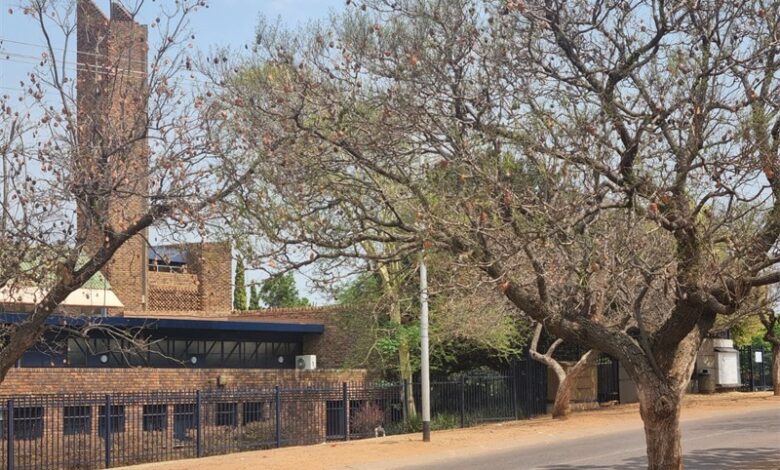
More than 300 Lynnwood Ridge residents have signed a petition opposing a proposed high-density development on the Nederduits Gereformeerde Kerk (NG Kerk) property in Lancia Street.
In the petition, the residents are objecting to an application submitted on behalf of the property owner of Erf 503, Lynnwood Ridge.
The proposal seeks to rezone the land from ‘Place of Public Worship’ to ‘Residential 4’ and amend existing restrictions in the title deed to allow for the construction of 78 dwelling units at a density of 121 units per hectare.
The residents argue that such a drastic change is incompatible with the suburb’s established low-density, family-oriented character and would set a precedent for uncontrolled densification in an already constrained area.
“The proposed ‘Residential 4’ zoning is fundamentally incompatible with the surrounding single-family residential character of Lynnwood Ridge,” reads the petition.
“This drastic change undermines the principles of the existing town planning scheme and threatens the long-term stability and safety of our neighbourhood.”
The petition highlights several major concerns, including the impact on infrastructure, traffic congestion near schools, and the loss of a community landmark.
The NG Kerk, which has been part of the Lynnwood Ridge landscape for more than five decades, holds social and cultural significance for many residents.
The petition states, “While it may not have automatic heritage protection, its long-standing presence gives it immense community value. Its removal would diminish the historical and cultural character of our neighbourhood”.
Residents are also raising alarm about the safety implications of introducing dozens of new residential units opposite Lynnwood Ridge Primary School.
“A 78-unit block will cause much more traffic opposite the school. This creates danger for children during drop-off and pick-up and will worsen congestion without proper parking and traffic plans,” they explain in the petition.
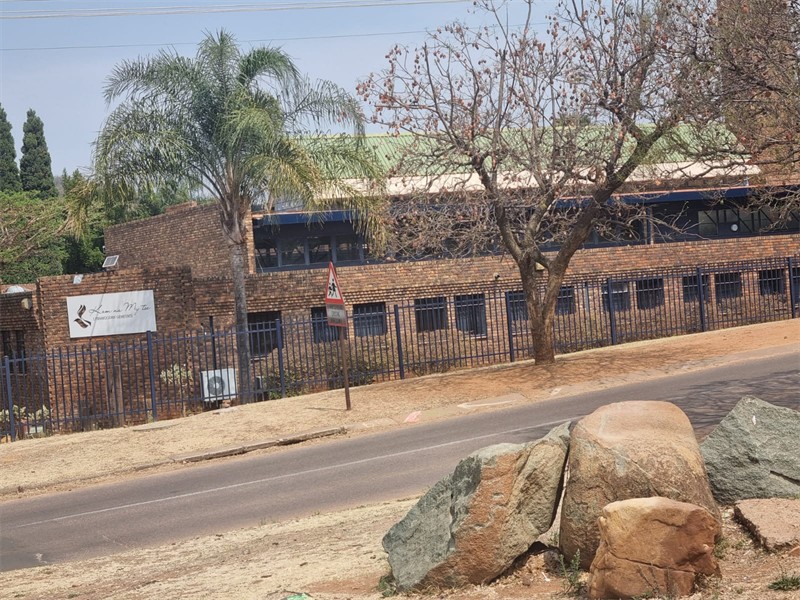
Concerns extend to the suburb’s existing infrastructure.
Many residents believe the area’s water, sewage, electricity, and stormwater systems are already under strain and cannot support such a dense development.
“Adding 78 flats will overload these services and increase the risk of outages, flooding, and additional costs to residents,” reads another section of the petition.
Beyond infrastructure and traffic, residents say the proposed development would change the face of Lynnwood Ridge.
“A 78-unit, multi-storey block does not fit with the family-style homes of Lynnwood Ridge.
“It will block sunlight, reduce privacy for neighbours, and change the look and feel of our suburb.”
Home owners are also worried that property values could drop if the development goes ahead.
“Large-scale, high-density developments are known to negatively affect the property values of adjacent single-family homes.
“This proposal threatens the financial investment we have made in our community.”
The petition further criticises the process, claiming residents have not been given sufficient access to the developer’s supporting studies, including traffic, environmental, and infrastructure impact assessments.
“We believe decisions should be fair and transparent, with proper input from the community and the school,” it states.
Residents are now calling for a formal public meeting before any decision is made, urging the city to reject the rezoning application in its entirety.
In response, the NG Kerk said the decision to rezone an unused portion of the property was made to help fund their mission and community outreach.
“Lynnwood Ridge Faith Family is a Christian congregation that has been sharing the love of our Lord Jesus Christ with the community for many years.
“We embrace the reality of the context in which we are placed from those who live here alongside us, as well as the thousands who enter our community every day,” the church said.
The church said the congregation is rezoning an unused portion of their property, which will then be sold.
“The income from this process will be used to give hands and feet to our vision, dream and calling. We believe we are called to be builders in the community, and we are building a community of hope.
“The rezoning takes place within the municipal by-laws and regulations. These provisions allow for input from the community.”
The church said it trusts that community members who have concerns will use the formal channels provided so that any objections can be addressed in an orderly and respectful manner.
City spokesperson Lindela Mashigo confirmed that the metro received the rezoning application on August 8.
“The application is from ‘Special’ to ‘Residential 4’ at a density of 120 dwelling units per hectare, for a total of 78 dwelling units on the property,” Mashigo said.
He explained that the application is still within the 90-day public participation period, during which different departments, including those responsible for infrastructure and traffic, are expected to comment.
According to Mashigo, the site falls within an area identified for densification under the Regional Spatial Development Framework (RSDF) 2018 for Region 6 (eastern), which classifies parts of Lynnwood Ridge as a ‘concentration zone’.
“According to the approved development guidelines contained in the RSDF 2018 Region 6, the property is situated in an area earmarked as a concentration zone where residential densities of up to 200 dwelling units per hectare may be allowed,” he explained.
He added that development proposals can only be supported if municipal infrastructure is deemed adequate.
“In terms of legislation, land development proposals can only be supported if infrastructure to the satisfaction of the municipality, with reference to the Spatial Planning and Land Use Management Act, can be provided in line with the overall integrated development plan,” Mashigo said.
Asked about traffic and safety concerns, Mashigo said the metro awaits the outcome of traffic impact assessments, which are mandatory for developments generating more than 50 trips during peak hours.
“The metro awaits the comments from the applicable department regarding the traffic impact assessment or study,” he confirmed.
Mashigo also outlined the public participation process, saying it is guided by legislation.
“If objections are received, one of the requirements of the applicable legislation is that the applicant has to meet with objectors prior to the Municipal Planning Tribunal taking place,” he said.
He said residents’ concerns about declining property values will also be taken into account.
“If objections are received, the Municipal Planning Tribunal will consider all objections received and proof provided, for example, relating to the valuation of property,” Mashigo added.
He explained that should the application eventually be approved, development controls would be enforced under the Tshwane Town Planning Scheme, 2008 (Revised 2014), and the Tshwane Land Use Scheme, 2024, which regulate height, privacy, and other development standards.
Mashigo said for now, the metro says it is still in the consultation phase, and no decision has been made.
Do you have more information about the story?
Please send us an email to bennittb@rekord.co.za or phone us on 083 625 4114.
For free breaking and community news, visit Rekord’s websites: Rekord East
For more news and interesting articles, like Rekord on Facebook, follow us on Twitter or Instagram or TikTok.