Record revenue collection in October – metro
For the first time, according to deputy mayor and MMC of Finance Eugene Modise, the metro’s revenue collection in a single month exceeded R4-billion. However, the DA pointed out a 12% drop confirmed in the service delivery and budget performance report tabled in council on October 30.
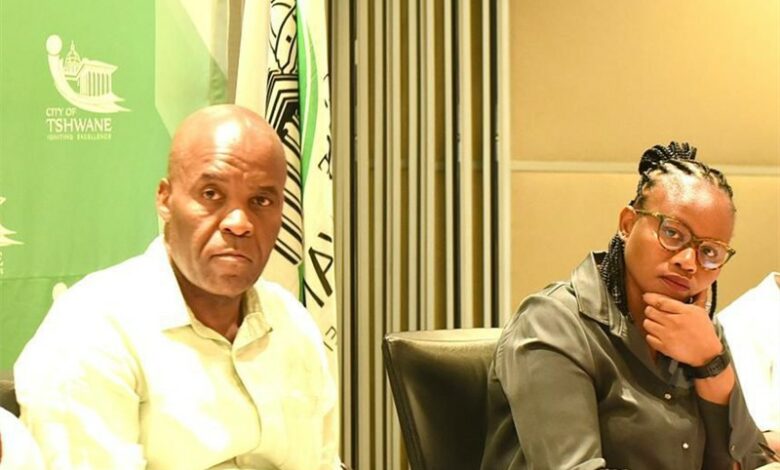
The Tshwane metro said it surpassed the R4-billion mark in collections in a single month, despite ongoing criticism from the DA that claims that revenue collections have dropped by 12%.
Deputy mayor and MMC for Finance, Eugene Modise, announced that for the first time, Tshwane’s revenue collection for a single month has exceeded R4-billion – a remarkable milestone achieved in October.
“As at October 31, the city’s income stands at R4.088-billion, with R427-million collected over the past weekend, contributing to cumulative collections that have exceeded expectations across all major revenue streams,” said Modise.
“This performance represents the collective effort of our teams, stakeholders, and the residents who continue to support the city’s financial sustainability.”
According to Modise, the metro’s performance for October reflects strong financial discipline and a focused approach to revenue management.
Modise said the metro reached the following milestones: R19.5-million collected, which is above the Funding Plan Target, achieving 100.4% of the goal; and exceeding the forecast by R56.3-million, reaching 101.3% of the projected outcome.
He explained that the city has not only met, but outperformed its financial objectives, demonstrating that its strategies for collection efficiency, debt management and service delivery integration are yielding tangible, positive results.
“This success is a direct outcome of focused efforts to modernise financial systems, strengthen governance processes, and build a culture of accountability and service excellence,” he said.
“Through innovative approaches to revenue collection, enhanced digital platforms, and proactive engagement with customers, the city continues to improve accessibility, efficiency, and trust in its operations.”
Modise emphasised that financial performance of this magnitude is not an end in itself, but rather a foundation for delivering on the city’s commitments to the people it serves.
“The resources collected enable the city to continue investing in critical infrastructure, improving essential services, and expanding opportunities for growth and inclusion,” he said.
He added that surpassing the R4-billion mark is a reflection of resilience, strategic foresight, and a shared belief in the metro’s capacity to deliver excellence.
“It also reinforces our position as a financially stable and forward-looking municipality capable of navigating challenges while driving sustainable development,” Modise said.
“We express our sincere appreciation to every resident, business, and partner who contributed to this achievement. Your continued trust, co-operation, and sense of civic responsibility make this success possible.”
According to Modise, the city also recognises the dedication of the finance and revenue teams, whose professionalism and hard work continue to set new benchmarks for public sector performance.
“As we celebrate this historic milestone, we remain focused on the future, committed to maintaining momentum, improving efficiency, and ensuring that every rand collected translates into visible progress for our communities. Together, we are shaping a city defined not only by sound financial management but by opportunity, growth, and shared prosperity,” he said.
DA Tshwane mayoral candidate Alderman Cilliers Brink has however raised serious concerns about the metro’s financial position, claiming that municipal revenue collection has collapsed under the current coalition government.
“Revenue collection by the Tshwane Metro has collapsed from a high of 93% in September 2024, under a DA coalition, to 81% in September 2025 under an ANC/EFF/ActionSA coalition,” said Brink.
He said the 12% drop in revenue collection is confirmed in the service delivery and budget performance report tabled in council on October 30.
Brink said improved revenue collection is one of the key drivers of the metro’s financial recovery, and warned that if it cannot collect on its bills, it will once again fall behind on payments to Eskom.
“The metro’s budget, passed in July 2025, is based on a revenue collection of 93%. Unless this trend is reversed, the metro will not be able to cover its expenditures.”
He added that the 12% under-collection worsens the metro’s already precarious financial position. At the financial year ending June 2025, the metro had recorded a R857-million deficit.
“To plug the deficit, the ANC/EFF/ActionSA coalition introduced a city cleansing levy without allocating the new revenues to city cleansing expenses,” Brink said.
He argued that raising taxes on already overburdened consumers, instead of achieving financial efficiencies, does not work.
“Beyond a certain point, it just worsens payment delinquency,” he added.
In August, the Gauteng High Court set aside the city cleansing levy, effectively rendering the metro’s budget unfunded.
“The metro has decided to appeal the judgment to the Supreme Court of Appeal. But given the admission by Mayor Nasiphi Moya that the tariff is not linked to the actual costs of city cleansing, it is difficult to see how the city’s appeal will succeed,” said Brink.
He concluded by saying: “As Tshwane’s Mayor and Deputy Mayor, who is also the Finance MMC, stumble from one scandal to another, the city lacks the leadership needed to steer it to financial recovery.”
Brink added that the DA reiterates its call for the metro to prepare a budget funding plan to deal with the consequences of its deteriorating financial position.
Do you have more information about the story?
Please send us an email to bennittb@rekord.co.za or phone us on 083 625 4114.
For free breaking and community news, visit Rekord’s websites: Rekord East
For more news and interesting articles, like Rekord on Facebook, follow us on Twitter or Instagram or TikTok.