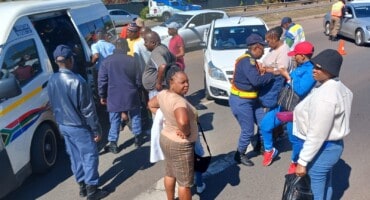
Sewage crisis sparks accountability demands
An ageing sewer pipeline between Cultura Park and Verster Park is causing sewage to overflow, threatening homes and the Bronkhorstspruit River. Sanral’s Lwando Mahlasela says the line predates the N4 operator’s concession and remains the metro’s responsibility.
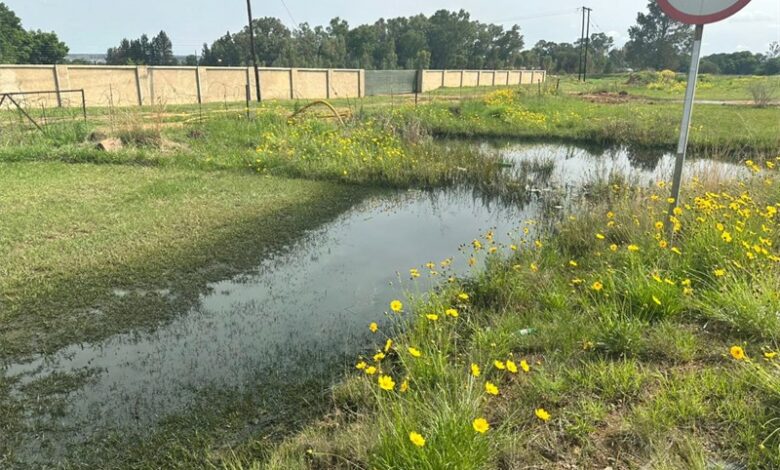
The ongoing sewage overflow because of a failing pipe between Cultura Park and Verster Park, Bronkhorstspruit, has escalated into a major public health, environmental, and infrastructure crisis.
What began more than a year ago as an attempt to repair a damaged sewer line has now exposed deep uncertainties about accountability, possible engineering failures, and institutional co-ordination.
At the centre of the problem is an ageing sewer pipeline that runs beneath the N4 freeway between Verster Park and Cultura Park.
The line crosses underneath the N4 within a protective sleeve and lies partly within the N4 road reserve, which falls under Sanral (South African National Roads Agency) and its concessionaire Trans African Concessions (TRAC).
According to long-standing engineering drawings dating back to 1991, the recent pipeline alignment has not changed substantially in decades, yet the most recent realignment and repair attempts have possibly created structural issues.
This allegedly led residents having to endure repeated sewage spillages into their homes, gardens, and stormwater channels, eventually reaching the Bronkhorstspruit River.
The spillages come at a time when the metro has been grappling with heightened bacterial contamination in its waterways, making the crisis not only an infrastructure failure but also a public health hazard.
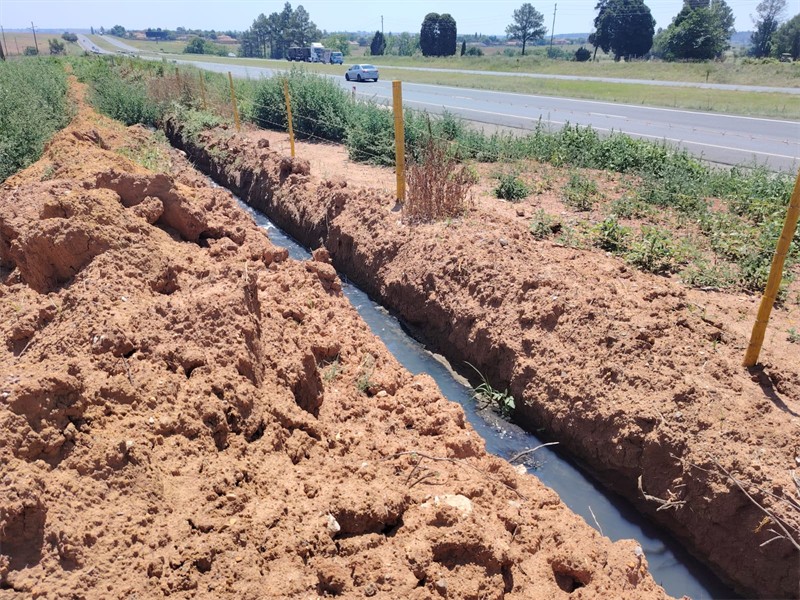
Many residents, frustrated by the slow response from authorities, have resorted to constructing makeshift dykes, digging trenches, and pumping out waste themselves to protect their homes.
While affected communities argue that the metro bears primary responsibility for sewer infrastructure, they insist that Sanral’s alleged prior involvement in a failed realignment makes its role crucial in preventing repeat failures.
Sanral says its role is limited.
Spokesperson Lwando Mahlasela clarified the agency’s position on the matter.
“The portion of the road in question belongs to TRAC, which manages the N4 Toll Route on Sanral’s behalf,” said Mahlasela.
Mahlasela said the sewerage line is very old and crosses underneath the N4.
“TRAC’s involvement only concerned the leakage within the N4 road reserve. The metro submitted an application for the repair of the sewerage pipe crossing underneath the N4 required on the edge of the road reserve within the Bronkhorstspruit Golf Course to TRAC and Sanral,” he said.
“Seeing this was a maintenance and operational issue, TRAC allowed the contractor access to the N4 road reserve to check and inspect the pipe and to perform the required repairs.”
Mahlasela stressed that Sanral and TRAC were not responsible for the original installation or redesign of the pipeline, noting the sewer line was in place long before TRAC’s concession contract.
He added TRAC does not undertake follow-up assessments of municipal sewer systems but has repeatedly pressured the metro to repair any sections that leak into the N4 reserve.
“This has not affected road safety on the N4. TRAC has put pressure on Tshwane Metro to conduct the required repairs affecting leakage within the N4 reserve. TRAC has not been aware of design issues relating to the alleged pipe not being large enough,” Mahlasela explained.
He further confirmed that Sanral cannot commit to funding any redesign or reconstruction of the sewer infrastructure, noting that sewer maintenance remains solely the responsibility of the metro.
Residents and elected officials including councillors say the realignment was carried out years ago which allegedly resulted in an undersized replacement pipe directly contributed to the recurring blockages and failures.
The DA in Tshwane has joined residents in calling for swift intervention.
The party said the health and environmental consequences of inaction are now too severe to ignore, especially with contamination repeatedly entering local waterways.
The DA highlighted the commitment of Ward Councillor Reyaan Uys, who has spent more than a year escalating the matter through municipal and intergovernmental channels.
The party insists that restoring the dignity of affected homeowners requires more than piecemeal repairs but requires a permanent engineering solution that prevents sewage from ever entering the N4 reserve or nearby homes again.
DA Caucus leader Cilliers Brink underscored the metro’s responsibility while calling for stronger co-ordination between all stakeholders.
“The city cannot allow a situation where residents live with sewage flowing past their homes and into the Bronkhorstspruit River. This is a long-standing infrastructure failure that requires a permanent fix, not temporary patch-ups,” said Brink.
He explained that while the sewer network is a municipal responsibility, co-operation with Sanral and TRAC is essential, because any infrastructure running under a national road must be properly designed, maintained, and monitored.
“We will continue to push for the complete replacement of the undersized pipeline and for a long-term engineering solution that protects both residents and the environment,” Brink stressed.
The metro says it has completed major sewer-line repairs beneath the N4 highway, a project carried out between January and May 2025 in consultation with SANRAL, which monitored construction throughout.
According to Lindela Mashigo, metro-spokesperson, following the repair, maintenance teams successfully cleared a blockage on the Cultura/Verster Park outfall line between June and July, using jetting and vacuum equipment to restore flow through the section running into the Golf Course.
According to him, sewer blockages remain unpredictable and are worsened by long-standing challenges.
These include rapid population growth that exceeds the pipeline’s original capacity, stormwater intrusion, root ingress from nearby properties, ageing infrastructure and foreign objects such as clothing, rocks and sand entering the system.
He confirmed the line is under constant observation, adding: “Our regional maintenance teams have been working since Friday, jetting and vacuuming the pipeline to manage the impact of the heavy rains.”
The city’s Water and Sanitation Business Unit has prioritised upgrading the pipeline in the current financial year as it works toward a long-term solution to recurring spills.
- The comment of the metro was added as received on 18 November.
Do you have more information about the story?
Please send us an email to bennittb@rekord.co.za or phone us on 083 625 4114.
For free breaking and community news, visit Rekord’s websites: Rekord East
For more news and interesting articles, like Rekord on Facebook, follow us on Twitter or Instagram or TikTok.