2026 Elections: No confirmed date yet, e-voting off the table
The Electoral Commission has allocated R2.1-billion for the 2026 Local Government Elections, focusing on readiness, voter registration, and system upgrades. While e-voting remains off the table, preparations continue amid consultations on election timing. Citizens are urged to register early using digital platforms ahead of South Africa’s next municipal polls.
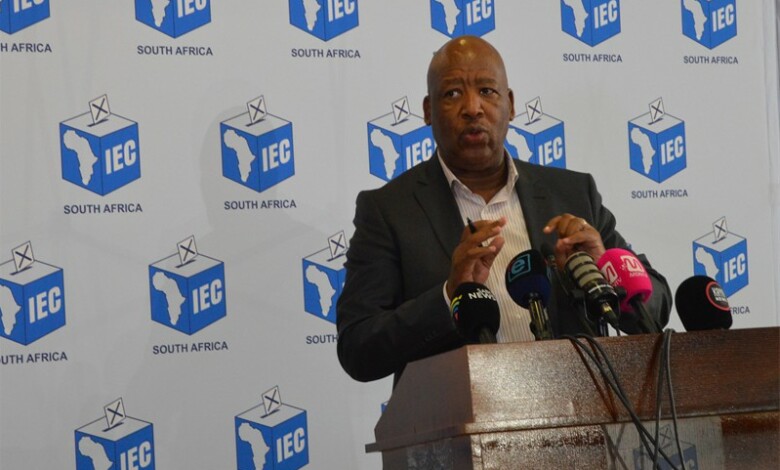
Preparations for the 2026 Local Government Elections are firmly underway, with the Independent Electoral Commission (IEC) announcing steady progress across key operational areas.
The National Treasury has allocated a R2.1-billion budget, but e-voting is currently off the table.
According to the IEC, its focus remains squarely on ensuring a credible, transparent, and efficiently run election, one that meets constitutional standards and public expectations, regardless of when the elections are proclaimed within the designated window between November 2026 and January 2027.
Speaking at a media briefing, Deputy Chief Electoral Officer Masego Sheburi outlined the commission’s readiness plans, ongoing registration drives, and the logistical and financial frameworks guiding preparations.
He emphasised that while the commission does not determine the election date, consultations with Cabinet are ongoing.
“It is not the commission’s role to announce the date but to be ready when the date is announced and the election is called,” said Sheburi.
The IEC, however, is targeting the first Wednesday in November for the 2026 elections.
The determination of the final election date will depend on several external considerations. Among these are summer rains, the national matric examination schedule, and the potential for other inclement weather, all of which could impact voter turnout and logistical efficiency.
Holding elections during heavy rainfall or overlapping with exams has historically created challenges for both electoral staff and the public.
Officials note that calling elections earlier than November 2026 would require municipal councils to adopt motions formally unbinding their current terms.
He said another significant milestone in the build-up to the elections will be the completion of the ward delimitation process by the Municipal Demarcation Board (MDB).
The MDB has confirmed that final ward boundaries will be handed over in early December 2025, giving the commission nearly a year to finalise operational planning and logistical deployment across the country’s municipalities.
The R2.1-billion allocation underscores the magnitude of the event and the country’s commitment to free and fair elections.
This funding covers staffing, logistics, voter education, technology systems, and security co-ordination with state institutions.
Sheburi indicated that the IEC is already working with planning centres and a joint state committee to assess potential risk areas and ensure that every component of the electoral machinery is in place.
“At present, there are no concerns, but we are working closely with state institutions that have a separate joint committee working with planning centres, and they will give us an indication where the concerns lie,” he explained.
Between January and September this year, more than 305 206 new voters registered, while 60 752 existing voters updated their details.
Although these figures demonstrate healthy engagement, Sheburi noted that many more citizens still need to register or update their information before election day.
Despite a monthly attrition rate of about 31 000 voters due to deaths and other removals from the roll, the commission expects to balance these losses through targeted registration drives.
Technological systems have been strengthened since the last election, ensuring that the infrastructure can manage millions of voter interactions seamlessly.
“Systems at the commission have been maintained and updated so that if an election is called, it can be all systems go on the next day,” he confirmed.
While the concept of e-voting continues to generate public interest, the IEC has clarified that digital voting will not feature in the 2026 municipal elections.
“The introduction of e-voting would require significant public investment in digital infrastructure across the country and the development of a robust legislative framework before such technologies could be implemented,” Sheburi said. “If e-voting is to be introduced in the future, it will be done in planning phases.”
Ahead of the elections, the IEC has submitted proposals for amendments to Section 15 of the Electoral Act.
The proposed changes aim to limit objections to the provisionally compiled voters’ roll and to outline remedies available in cases of disputes.
This would streamline processes and minimise last-minute challenges that could delay election preparations.
In addition, the commission reported a 90% compliance rate among represented political parties, with 18 out of 20 submitting audited financial statements for 2024/25. Build One SA and the National Coloured Congress have been formally directed to comply following late submissions.
President Cyril Ramaphosa’s recent appointment of Joyce Pitso, Judge Dhaya Pillay, and Mosotho Moepya as commissioners of the Electoral Commission was warmly welcomed.
“We welcome the finalisation of this important process, which ensures stability and continuity as we enter the crucial final year before the elections,” said Sheburi.
By-elections, which are normally held within 90 days of a council seat becoming vacant, will cease from April 2026 in preparation for the general municipal elections.
This ensures that resources and attention are redirected toward the larger electoral event. However, proportional representation councillor vacancies may still be filled until the eve of the general elections.
As preparations accelerate, the commission is calling on all eligible voters to act now.
For those yet to register, visit registertovote.elections.org.za, send ‘Hi’ to 0600 88 0000 on WhatsApp or call the toll-free line at 0800 11 8000.
Do you have more information about the story?
Please send us an email to bennittb@rekord.co.za or phone us on 083 625 4114.
For free breaking and community news, visit Rekord’s websites: Rekord East
For more news and interesting articles, like Rekord on Facebook, follow us on Twitter or Instagram or TikTok or WhatsApp Channel