Metro needs to implement tighter controls – Auditor-General
While Tshwane shows signs of governance improvement, the Auditor-General warns that weak financial controls, infrastructure losses and poor consequence management continue to hinder the metro’s path toward a clean audit.
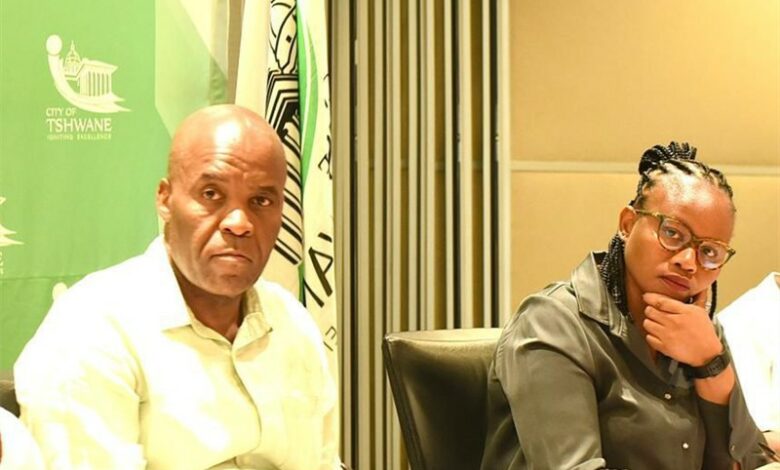
The Auditor-General (AG) has urged the Tshwane metro to strengthen consequence management, improve its financial health and maintain stronger oversight.
The AG report was presented during a Council sitting on January 29.
This follows after the metro again received a qualified audit for the 2024/25 financial year. It is the third consecutive year with such an outcome.
A qualified audit means that while financial statements are largely credible, material misstatements or compliance issues remain.
Although some improvement was recorded compared with previous years, the AG said major challenges still need urgent attention before the metro can achieve a clean audit.
Despite the AG flagging the metro’s unauthorised, irregular, fruitless and wasteful expenditure increased by R5-billion, the audit report is stated to be better than last year’s.
Presenting the findings to Council, senior AG auditor Xolani Zicwele said progress was noted in certain areas, including reductions in fruitless and wasteful expenditure, better creditor management and containment of employee-related costs.
“However, weaknesses remain in consequence management and financial discipline.”
He said that infrastructure maintenance spending remains below acceptable levels, while losses continue to drain municipal finances, with water losses rising to 39.1% of total supply and electricity losses exceeding 21%.
Zicwele also flagged irregular expenditure incorrectly recorded and infrastructure projects in Mabopane and Winterveldt that remain incomplete, while some customers were not billed for services received.
He said these are some of the reasons metro obtained a qualified opinion for three consecutive financial years.
“Overall, from a performance information point of view, we are noting that the number of indicators affected by either material misstatements or measurability issues is reducing; however, the extent of the remaining ones still remains concerning.”
Despite this, the AG acknowledged progress in addressing historical issues, including legal action against officials implicated in the Rooiwal matter.
Tshwane Mayor, Dr Nasiphi Moya, said the latest outcome shows a municipality making measurable progress in stabilising governance and improving service delivery.
Moya noted that the metro received a qualified audit opinion with two qualification areas, improving from six in the previous year and thirteen before that.
“This demonstrates steady progress in restoring financial controls, governance and oversight after a prolonged period of institutional strain,” she said.
She added that governance improvements are translating into services on the ground, with thousands of households receiving new water and electricity connections, upgrades to pipelines and substations, faster responses to water leaks, and near-universal weekly waste collection in formal areas.
She stressed that governance improvements are translating into better services for residents, pointing to expanded access to basic services and infrastructure upgrades during the reporting period.
“More than 2 200 households received new water connections, nearly 10km of water pipelines were replaced or upgraded, and response times to water leaks improved significantly. In addition, almost 500 households were connected to electricity, while key substation upgrades were completed in Soshanguve and Wapadrand,” she said.
Moya also highlighted increased accountability, with 146 investigations into unauthorised and irregular expenditure completed and recovery recommendations worth about R3.2-billion submitted to Council.
She acknowledged ongoing challenges, particularly in revenue collection, and said corrective plans and stronger oversight mechanisms are in place.
“The city is not yet where it needs to be, but Tshwane is no longer standing still. We are rebuilding financial discipline and steadily improving services. The momentum is real,” Moya said.
However, DA Tshwane caucus leader Cilliers Brink said the AG’s latest findings show the metro has regressed under the current ANC-led coalition, despite claims of recovery by the metro’s leadership.
Brink argued that the report reflects deterioration in key financial indicators, including cash coverage, trade payables and revenue collection, which he said declined from 93% to 85%.
He added that unauthorised, irregular, fruitless and wasteful expenditure has risen to about R23-billion, indicating a failure to act on investigations already completed.
“The metro’s inability or unwillingness to implement consequence management has placed it on a collision course with National Treasury,” Brink said, referring to warnings that grant funding could be withheld if irregular expenditure is not addressed.
He further criticised what he described as the inconsistent application of credit control policies, arguing that outstanding debt linked to politically connected individuals undermines the credibility of the city’s revenue collection efforts.
Freedom Front Plus leader Grandi Theunissen echoed these concerns, saying the AG’s report reflects serious weaknesses in financial management, accountability and service delivery under the ANC/ActionSA/EFF coalition.
Theunissen pointed to findings of incorrect asset valuations that inflated financial statements and the understatement of contingent liabilities by more than R4.3-billion. He also warned that weak internal controls and procurement management increase corruption risks and reduce transparency.
He further argued that consequence management has stalled, allowing irregularities to go unpunished while political pressure undermines administrative independence.
Beyond financial issues, Theunissen highlighted growing service delivery challenges, including illegal electricity connections, cable theft and vandalism of substations, which continue to disrupt power supply and reduce municipal revenue.
He warned that progress made under the previous multiparty administration has been reversed and criticised plans to allocate R2-billion for salary increases and back payments, saying this could worsen the metro’s financial outlook in the next audit cycle.
The ANC Greater Tshwane Regional Executive Committee (REC) welcomed the improved audit outcomes of the metro.
Spokesperson for the REC, Joel Masilela ka Mahlangu, said these audit outcomes reflect the commitment of the ANC-led coalition government to turn around the capital.
He said this follows eight years of mismanagement under the DA, which resulted in financial difficulties, tensions with organised labour and a general collapse of service delivery, particularly in areas where black people reside.
The ANC urged its deployees in the municipality to continue attending to the recommendations and areas of concern raised by the AG, including water leaks that are costing the city millions of rands and unresolved labour disputes that drag on for long.
Also read: North community takes back their street
Do you have more information about the story?
Please send us an email to bennittb@rekord.co.za or phone us on 083 625 4114.
For free breaking and community news, visit Rekord’s websites: Rekord East
For more news and interesting articles, like Rekord on Facebook, follow us on Twitter or Instagram or TikTok or WhatsApp Channel