Ageing sewer line leaves Menlo Park residents wading through sewage
The Tshwane metro’s acknowledgement over ageing sewer line requiring upgrades raises serious questions about public health risks, infrastructure planning and whether interim measures are adequate as high-density developments continue.
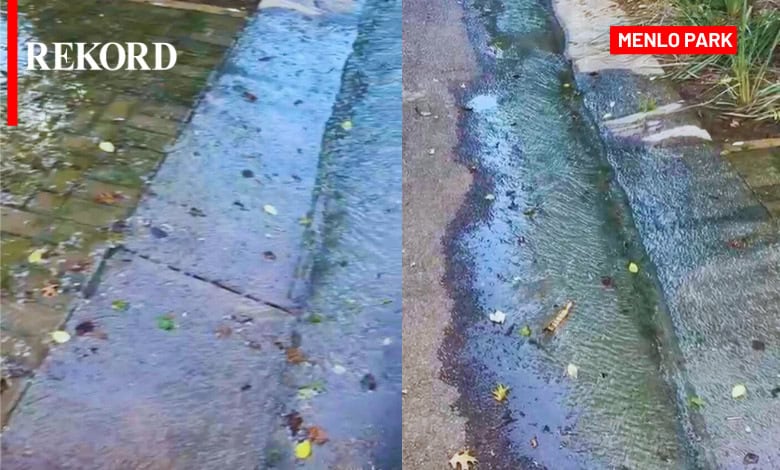
Residents of 21st Street in Menlo Park say raw sewage continues to flow down their street, despite repeated complaints to the Tshwane metro and assurances that the problem is being addressed.
For many, the situation has evolved beyond inconvenience and become a daily concern, affecting safety, dignity, and quality of life.
Resident Michelle Simão said that the ongoing sewage overflows have become a recurring feature on the street, leaving residents frustrated and worried about the health implications.
“Other frustrations are that we regularly have sewage water flowing down our street on 21st Street,” Simão said.
She added that what angers residents most is the perception that infrastructure upgrades are not keeping pace with development in the area.
Simão said the metro continues to approve new high-density developments, but uses the bulk payment money for other purposes.
According to Simão, the problem directly affects not only homeowners but also domestic workers and pedestrians, who must navigate the street daily.
“Now our nanny needs to walk through that horrible water in the mornings to get to our house,” she said.
The sewer issue is compounded by unreliable basic services, Simão said, which adds to the sense that the area is being neglected.
“In a street where the streetlights also work on an ad-hoc basis, it really makes one wonder what they do with the money,” Simão said.
In response to questions from Rekord, metro spokesperson Lindela Mashigo confirmed that the metro is aware of the recurring sewerage blockages affecting Menlo Park, including 21st Street.
He added that a report detailing sewerage blockages in Menlo Park over the past year shows that incidents have been reported and resolved during that period.
However, he acknowledged that the underlying cause of the problem is structural rather than incidental.
“The water sewerage water flowing down 21st Street is caused by root intrusion into the sewer system, as well as a pipeline that needs to be upgraded to a larger capacity due to growing development in the area,” said Mashigo.
This admission has reinforced residents’ concerns that existing infrastructure is no longer adequate to support the level of densification being approved in the suburb.
While residents have raised concerns about potential health risks associated with exposure to raw sewage, Mashigo maintains that the situation is being managed.
He said sewer blockages are attended to ‘immediately or within 48 hours’ once reported.
Mashigo further stated that the blockages are not considered severe.
“The blockages aren’t severe and therefore do not hamper access to different sites,” he said.
Residents, however, disputed this characterisation. They argue that the presence of sewage flowing openly along a residential street poses an obvious health risk, particularly for children, domestic workers and pedestrians who have no choice but to walk through the affected areas.
Despite these differing views, the metro has conceded that a long-term solution is necessary.
According to Mashigo, the urgency of upgrading the sewer line to a larger capacity has been escalated to the Sanitation Services Technical Investigation and Design Management Section, which is responsible for capital expenditure (CAPEX) projects.
“In the interim, preventative maintenance is done by rodding the line once every three months.”
Concerns have also been raised about the continued approval of high-density developments in the area, which residents believe is placing additional strain on already overburdened infrastructure.
While the metro has acknowledged that the sewer line requires upgrading due to growing development, another point of contention is the use of bulk service contribution payments made by developers.
When asked how the metro responds to residents’ broader concerns about value for money and the effective use of municipal funds, particularly in light of sewer overflows, inconsistent streetlighting and ongoing development approvals, Mashigo reiterated the city’s position.
“All reported sewer blockages are attended to within 48 hours or immediately if possible,” he said.
Also read: Confusion over repair teams delays fix to persistent Mahube street water leak
Do you have more information about the story?
Please send us an email to bennittb@rekord.co.za or phone us on 083 625 4114.
For free breaking and community news, visit Rekord’s websites: Rekord East
For more news and interesting articles, like Rekord on Facebook, follow us on Twitter or Instagram or TikTok or WhatsApp Channel