New Clydesdale plan approved amid road safety fears
As the metro moves forward with its vision for a compact, connected and people-centred city, residents say the first step toward that future is ensuring that existing roads are safe before more people are encouraged to live, walk and travel through the area.
The Council approved the Clydesdale Precinct Plan, which covers the eastern portion of Sunnyside bordered by Park, Wessels, and Jorissen streets, the Walkerspruit corridor and the Loftus Versfeld precinct at the council meeting in January.
According to the metro, the plan provides a detailed local framework for land use, infrastructure, urban design and investment aimed at accommodating growing demand for student and rental housing in well-located areas.
MMC for Economic Development and Spatial Planning, Sarah Mabotsa, said the plan would help bring residents closer to places of study, work and recreation, while supporting spatial justice and reducing traffic congestion.
“[The approval unlocks] a clear framework to accommodate more residents within walking distance of major schools, sports facilities and transport routes,” Mabotsa said.
She explained that the precinct sits alongside major institutions, including Pretoria Technical High School, Pretoria High School for Girls, Afrikaanse Hoër Seunskool, as well as the Loftus precinct.
The plan enables higher-density, mixed-use development on 16 city-owned properties while safeguarding heritage resources, improving parks, prioritising urban safety and strengthening pedestrian access.
“The long-term vision is a village-like, predominantly residential neighbourhood with clean and active streets, quality open spaces and a revitalised Walkerspruit green corridor functioning as a central ecological and recreational spine,” Mabotsa said.
Residents living along Walton Jameson Street, one of the roads identified in the precinct plan, say the metro, however, is focusing on future development while failing to address immediate safety threats already endangering lives.
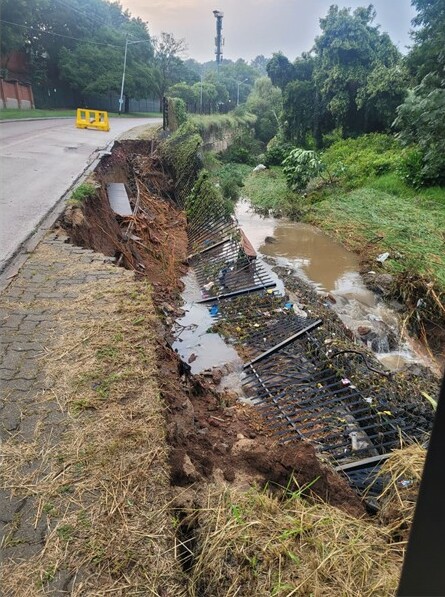
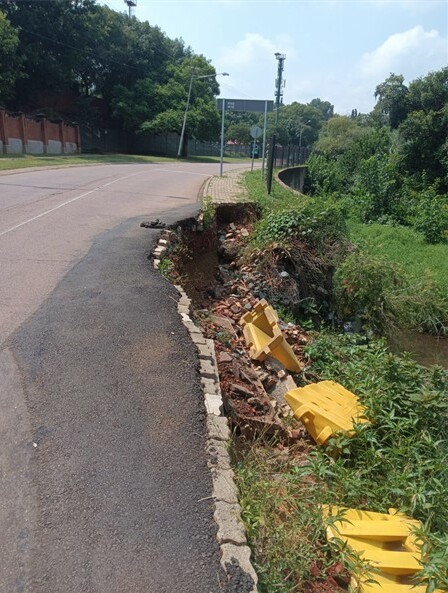
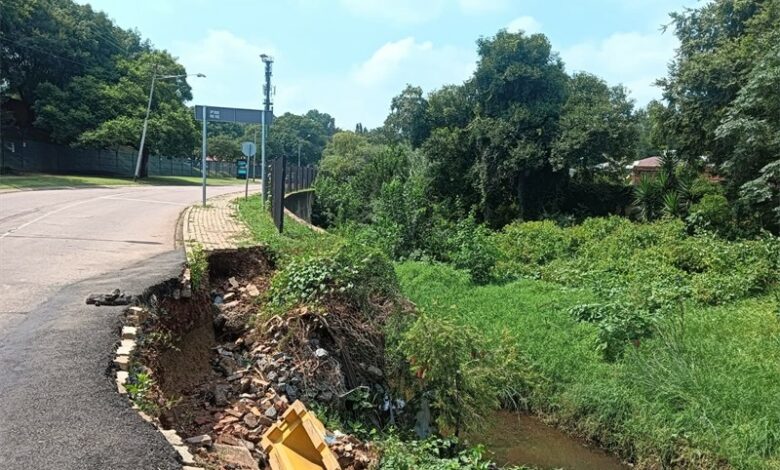
Opposite Afrikaanse Hoër Seunskool and near its Klub 600, a deep trench has formed after a structure supporting the road embankment collapsed along the Walkerspruit.
According to residents, there are no adequate warning signs or barriers at the site, creating a serious hazard for motorists and pedestrians, particularly at night.
They fear vehicles could easily leave the roadway and plunge into the trench, and that the remaining road surface could collapse further.
Residents say the hazard was first reported more than a year ago and has repeatedly been raised at ward meetings, with little progress made.
DA ward councillor Shimmy Mashamaite confirmed that the matter has been escalated several times since 2024.
“This issue has been reported throughout the year,” Mashamaite said. “The unsafe area opposite Klub 600 was first escalated in October 2024, and we followed up again early last year. The department of roads communicated that the road would be closed because the city would be fixing it, but we are not happy with what they did and leaving everything incomplete.”
Mashamaite said a meeting scheduled with metro officials and the MMC to address this and other infrastructure issues in his ward in the first week of February was cancelled without explanation.
“The meeting was cancelled and the MMC and officials were not there, with no apology,” he said. “This is unacceptable. This is the capital city, and things must be running smoothly.”
In a written response, the metro confirmed that the complaint was formally logged on its system on February 2 this year, under reference number 6001360628.
Officials identified the hazard as the collapse of the structure that had been providing support to the road embankment.
Responsibility for the repair falls under the metro’s Regional Operations and Co-ordination Department.
Metro spokesperson Lindela Mashigo said a warning sign was initially placed at the site to allow traffic to continue using the affected lane due to budget constraints, rather than implementing permanent repairs.
He added that the metro was not aware that the warning sign had been removed or lost, but that the area would now be monitored to ensure safety measures are in place.
According to the metro, no accidents, near-misses or vehicle damage linked to the hazard have been recorded.
However, officials acknowledged that no contractor has been appointed to undertake repairs and that there is currently no concrete timeline for a permanent solution, again citing budget constraints as the cause of delays.
Residents have expressed deep frustration with the metro’s response.
Jan Vermaak described the metro’s comments as inadequate and dismissive of the risks faced by the community.
“The city’s response is a poor one,” Vermaak said. “There is no real plan to fix the problem. All we hear is budget constraints, the magic word used to explain away so many life-threatening conditions in our city.”
Residents argue that approving ambitious precinct plans while failing to maintain existing infrastructure undermines public trust and places communities at risk.
They say promoting walkability and higher density without first addressing known hazards is irresponsible, particularly in an area with heavy pedestrian traffic and nearby schools.
The metro has advised residents to report service delivery issues via its call centre or escalate them through their ward councillors.
ALSO READ: Storm damage at Menlo Park garden refuse site receives attention after brief shutdown
Do you have more information about the story?
Please send us an email to bennittb@rekord.co.za or phone us on 083 625 4114.
For free breaking and community news, visit Rekord’s websites: Rekord East
For more news and interesting articles, like Rekord on Facebook, follow us on Twitter or Instagram or TikTok or WhatsApp Channel