Emergency repairs mount as ageing pipelines trigger wave of water outages
Nine pipe bursts within six days exposed serious strain on ageing asbestos pipelines, with residents facing repeated outages and road damage. The metro says large portions of the reticulation system have exceeded their lifespan, requiring long-term upgrades.
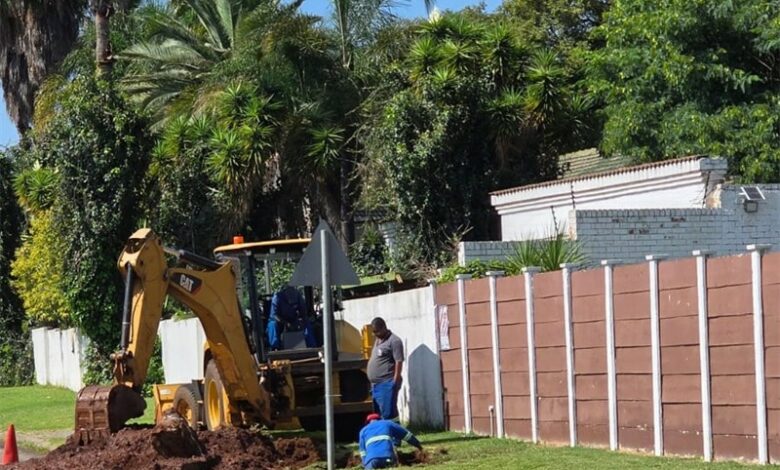
A series of pipe bursts plagued Lyttelton Manor and parts of Doringkloof in late January and early February.
The Tshwane municipality has acknowledged that the area’s water network is aged and deteriorating, with large portions of the reticulation system now beyond its useful life.
Nine bursts were recorded within six days, between January 29 and February 3, raising concerns about the network’s reliability and the risks associated with continuous leaks in a suburb situated on dolomitic land.
Freedom Front Plus Councillor Wesley Jacobs said the incidents highlight what he believes is a deeper infrastructure crisis in the area.
He confirmed that the bursts were reported at multiple locations in quick succession, starting with a burst in Amkor Road on the morning of January 29, followed later that afternoon by another at the corner of Robyn Road and Jasper Avenue.
He said the following day saw several more incidents, including a burst at a resident’s home on Turkoois Road around 04:00, followed by another one at a different resident’s home on Robyn Road around 05:30.
A further burst was recorded at the corner of Turkoois Road and Jasper Avenue on the same day, while another occurred in Opaal Road just after 12:30. Later that afternoon, a pipe burst was reported at another resident’s home on Robyn Road.
“The pattern continued into the early hours of January 31 when another burst was recorded again at Turkoois Road, before the final incident in the series was reported on February 3 on Jasper Avenue.”
Jacobs said the repeated failures are placing strain on residents and municipal resources, particularly in an area where infrastructure is already under pressure. He said after one of the incidents on Jasper Avenue, the municipality was forced to replace a valve due to constant repairs along that section.
However, he argued that the broader problem cannot be solved through repeated emergency interventions.
“Our water system is a systemic failure. The situation in Lyttelton is no longer a matter of routine maintenance; it is a structural emergency,” said Jacobs.
He added that money and resources should not continue being spent on reactive repairs that do not address the root cause.
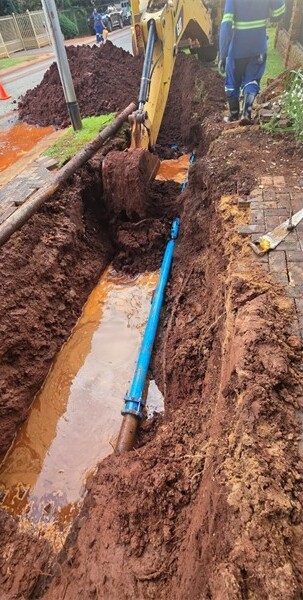
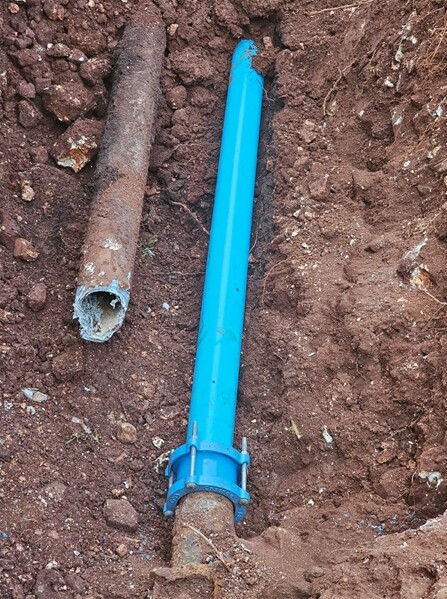
Jacobs warned that patching a 60-year-old pipe is scientifically futile, adding that pressure often shifts along the line, causing the next brittle point to fail.
Resident Ronald Davids voiced concerns about the ongoing disruptions, saying constant leaks have become a major issue for households in the area.
Davids said repeated bursts not only damage roads and create safety hazards but also leave residents without water for extended periods while repairs are carried out.
“Each time the municipality has to respond to a pipe burst, the supply is often switched off to isolate the area, which means residents must cope with dry taps and uncertainty around when water will be restored.”
He added that the repeated excavations and repairs have become frustrating and disruptive, particularly when incidents happen back-to-back, as seen during the six days in question.
He also raised the issue of sinkholes, noting that Lyttelton is already an area with a history of dolomitic instability and ground collapse.
“Continuous leaks and bursts cause unnecessary anxiety among residents, who worry that another major leak could contribute to the next sinkhole forming in the area.”
In response to the concerns, Tshwane Metro spokesperson Lindela Mashigo confirmed all nine reported pipe bursts between January 29 and February 3.
He said the pipelines affected in Lyttelton Manor and Doringkloof consist primarily of asbestos cement material.
“Most of the failures were linked to age-related deterioration and brittleness after decades of service beyond the pipes’ designed lifespan. The asbestos pipes are also vulnerable to pressure variations and surges, while ground movement related to dolomitic conditions in the broader Ward 57 area is also a contributing factor.”
Mashigo confirmed that in each of the nine incidents, the damaged sections were replaced with unplasticised polyvinyl chloride (uPVC) pipes, which he said is the city’s current preferred material for maintenance work.
However, he explained that the required material for upgrades is high-density polyethylene (HDPE), describing it as a strong, flexible and durable plastic material.
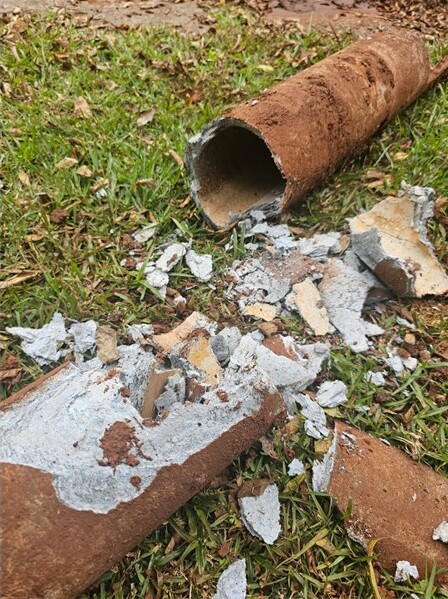
According to Mashigo, the length of pipe replaced per incident ranged between 1.5m and 6m, depending on the extent of each burst and the structural condition of the surrounding pipe.
“The municipality acknowledges that the overall water network in Lyttelton Manor and Doringkloof is aged and deteriorating. Large portions of the network consist of old asbestos pipes that no longer meet modern pressure handling standards, making them prone to repeated failures,” he confirmed.
He added that much of the asbestos cement network in the area was installed between the 1960s and 1980s, and based on the city’s asset management records, an estimated 55% to 65% of the network is beyond its remaining useful life.
“Although Lyttelton Manor is recognised as a high-priority area, a full replacement programme has not yet been implemented due to the scale of investment required, the need to prioritise projects across Tshwane, and the completion of technical studies and feasibility assessments.”
“Budget constraints and the demand to address major failures in other parts of the city have also delayed a full-scale replacement programme,” stated Mashigo.
The metro also conceded that patch and repair work on ageing asbestos cement pipelines can be ineffective, as pressure redistribution may trigger further bursts along the same line.
The city said it is attempting to break this cycle through targeted replacement of sections with uPVC, pressure management interventions that are expected to be installed soon, and a phased approach toward a future full network replacement.
Mashigo revealed that over the past 12 months, the metro has spent around R3-million on reactive repairs in the Lyttelton and Doringkloof areas alone.
By comparison, he said a structured replacement programme for the area would require an estimated R250-million to R350-million, depending on final design requirements and dolomitic mitigation measures.
“The city is actively transitioning away from asbestos cement pipes and is moving toward modern materials such as HDPE and uPVC. These materials offer higher durability, greater resistance to pressure surges, and lower long-term maintenance requirements.”
Mashigo added that all new installations and burst replacements in the area already use uPVC, with HDPE being utilised in some areas as well.
On the issue of sinkhole risk, he noted that the city, together with geotechnical specialists, last conducted a dolomitic risk scan in 2024 for the broader Centurion dolomite belt.
“Localised ground movement monitoring is ongoing, and updated assessments are planned for 2026, which will help inform future infrastructure planning,” he said.
Mashigo acknowledged that continuous water leaks in a dolomitic environment can increase the risk of subsidence or sinkhole formation. He said this risk is a major factor driving the urgency behind improving maintenance response times, installing pressure management systems, and prioritising pipeline upgrades in dolomite-prone zones.
He added that the metro uses several measures to reduce prolonged water outages during recurring bursts, including the rapid deployment of repair teams, isolating smaller zones to limit the number of affected consumers, and using water tankers during extended repairs.
Mashigo said the city also attempts to reroute supply through alternative lines where feasible.
“Tshwane’s long-term strategy to stabilise water supply reliability in the broader Centurion area includes progressive replacement of asbestos cement pipes with modern materials, expanding pressure management districts, upgrading valves, and enhancing geotechnical monitoring in dolomitic areas. A capital project for the phased replacement of ageing asbestos cement pipelines in Lyttelton Manor and Doringkloof is currently under technical consideration.”
He added that the project is in a pre-feasibility and design scoping stage, with implementation dependent on budget allocation in the Medium Term Revenue and Expenditure Framework (MTREF).
According to him, for a replacement programme to be formally prioritised and funded, it must go through engineering assessments and feasibility studies, cost modelling, and prioritisation based on risk and impact before being submitted for inclusion in the metro’s capital budget and approved by the council.
He added that community complaints and high incident frequency strengthen the case for prioritisation.
In a message to residents, Mashigo said the city understands the frustration caused by repeated pipe bursts, repair work, road excavations and water outages.
“We want residents to know that the bursts are a result of ageing asbestos cement infrastructure and that the city is working to install a water pressure management system to reduce the risk of further failures.
“We remain committed to progressively replacing the old network with durable modern piping and stressed that every burst is treated with urgency to restore supply as quickly as possible,” he added.
Also read: Learners’ lives jeopardised by unsafe transport, reckless driver
Do you have more information about the story?
Please send us an email to bennittb@rekord.co.za or phone us on 083 625 4114.
For free breaking and community news, visit Rekord’s websites: Rekord East
For more news and interesting articles, like Rekord on Facebook, follow us on Twitter or Instagram or TikTok or WhatsApp Channel