High Court blocks Eskom bid to power Mooikloof Mega City
The judgment prevents the potential loss of about R125-million a month in future electricity revenue linked to the planned 50 000-unit Mooikloof Mega City development.
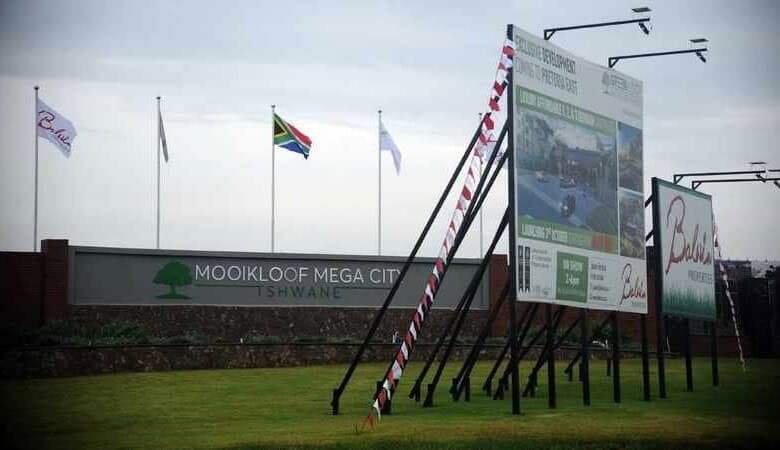
The Tshwane metro has won a legal battle against Eskom and the National Energy Regulator of South Africa (Nersa). The Gauteng High Court set aside a decision that would have allowed the power utility to supply electricity directly to the R84-billion Mooikloof Mega City development in the east of Pretoria.
The high court ruling in favour of the metro has potentially spared the metro from losing an estimated R125-million a month in electricity revenue to Eskom.
The court on June 8 declared it unlawful and set aside a decision that had granted Eskom the right to supply electricity to the Mooikloof Mega City development, finding that the area already falls within the Tshwane metro’s licensed supply area.
The case stemmed from a decision by Nersa in February 2023 to amend Eskom’s electricity distribution licence to include the Mooikloof Mega City development, despite the area already forming part of the metro’s licensed electricity supply area.
The court found that the land on which the development is situated, Farm Rietfontein 375-JR, has been included in the city’s electricity distribution licence since September 22, 2011, when Nersa granted the city a licence covering the area.
Although Eskom continued supplying a limited number of existing customers on the farm, the remainder of the area fell under the metro’s licensed area of supply.
According to court papers, Eskom applied on March 25, 2021, to have its licence amended to supply the planned Mooikloof Mega City development, which is expected to include around 50 000 residential units.
Metro spokesperson Selby Bokaba said the city only became aware of Eskom’s application nearly a year later through media reports and subsequently opposed it, arguing that it already had the legal authority and infrastructure plans to supply the development.
In its submissions to Nersa, Bokaba said the metro warned that losing the development could cost it about R125-million per month in electricity revenue once fully developed.
Bokaba added that the remainder of the farm, predominantly underdeveloped land, was licensed to the metro.
“Tshwane argued that it was investing in infrastructure upgrades, including the Wildebees Infeed Station, to ensure sufficient electricity capacity for the area.”
He said Eskom’s application conflicted with the metro’s executive and legislative authority under both the Constitution and the Municipal Structures Act.
“Tshwane’s licence covered all portions of the farm where there were no historical Eskom customers, while Eskom’s licence was limited exclusively to those specific legacy customers.”
He said as part of the ruling, the court emphasised that as a matter of logic, any extension of Eskom’s licence to additional areas of the farm required a corresponding amendment to the metro’s licence to remove those areas from its scope.
“This process was not followed by Nersa when it approved Eskom’s licence amendment in February 2023.”
Bokaba said the metro challenged Nersa’s decision and on Tuesday, Justice Millar ruled that Nersa’s decision in February 2023 was unlawful, invalid and reviewed and set aside.
“The loss of revenue, if the licence had been granted to Eskom, would have been significant for the City of Tshwane.”
He said this was calculated in an average household consumption of R2 500 per month.
“The city views this significant judgment as a massive victory, considering the financial loss it would have suffered had it not legally challenged Nersa’s decision.”
Justice Millar of the Gauteng High Court found that Nersa acted unlawfully by approving Eskom’s licence amendment without first amending or revoking the metro’’s existing licence.
“The court held that allowing both entities to hold overlapping licences over the same area was impermissible and that Nersa failed to properly consider Tshwane’s constitutional authority over electricity reticulation within its municipal boundaries.”
Millar said the court also rejected Nersa’s argument that the development constituted a ‘greenfield’ area outside Tshwane’s licensed supply area, finding that the land had already been licensed to the municipality since 2011.
He said as a result, the court confirmed that the Mooikloof Mega City development, located on Farm Rietfontein 375-JR, falls within Tshwane’s electricity licence area.
Nersa and Eskom were further ordered to pay the municipality’s legal costs, including the costs of two counsel.
Justice Millar said this judgment effectively restores Tshwane’s rights to supply electricity to the affected portion of the Mooikloof Mega City development and reinforces municipalities’ constitutional authority over electricity reticulation within their jurisdictions.
Millar’s judgment found that Nersa had failed to properly consider the constitutional and legal implications of its decision to grant Eskom the right to distribute electricity within Tshwane’s licensed area.
The court noted that during Nersa’s Electricity Subcommittee meeting on 1 December 2022, concerns were raised that Eskom’s application did not address Tshwane’s constitutional powers and responsibilities over electricity distribution within its municipal boundaries.
Although the issue was identified, it was not pursued further after legal advice suggested that the concept of electricity reticulation had not yet been sufficiently defined in constitutional law.
Justice Millar held that the central issue was whether the Tshwane metro, by virtue of its existing distribution licence, enjoyed the exclusive right to supply electricity to all parts of the Mooikloof Mega City development that were not already serviced by Eskom’s historical customers.
He further observed that while Eskom had relied on additional information, including township establishment conditions directing Balwin Properties to obtain electricity from Eskom, this did not remedy the legal defect in Nersa’s decision-making process.
The judgment concludes that where Eskom wishes to provide electricity within a municipal distribution area, the lawful mechanism is through a Distribution Agency Agreement, whereby Eskom acts as the municipality’s agent under the municipality’s distribution licence.
He added that in such an arrangement, Eskom can provide its technical expertise and operate the network, but the municipality retains its constitutional authority, customer base and electricity revenue.
Rekord approached Eskom for comment on the judgment and whether it would appeal the ruling. No response had been received by the time of publication.
Do you have more information about the story?
Please send us an email to bennittb@rekord.co.za or phone us on 083 625 4114.
For free breaking and community news, visit Rekord’s websites: Rekord East
For more news and interesting articles, like Rekord on Facebook, follow us on Twitter or Instagram or TikTok or WhatsApp Channel