
How dyslexia can be corrected
Bosveld met with Ronita Engelbrecht to find out more about dyslexia, the symptoms and how it can be addressed.
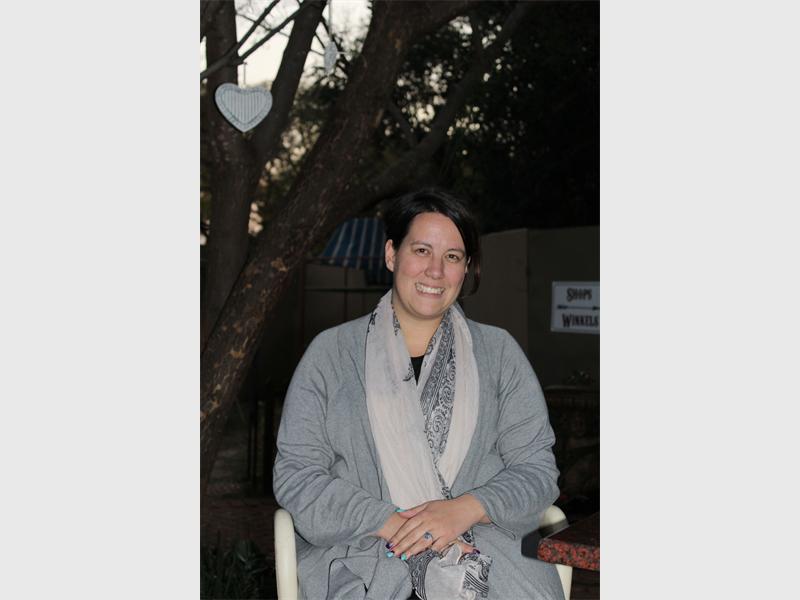
MOKOPANE – Is your child labelled as lazy, dumb, careless, immature or “not trying hard enough,”?
Does your child have a high IQ, yet he does not test well academically? Your child may be part of the 20% of children affected with dyslexia.
“Dyslexia can be more than just a reading problem, it can also affect mathematics and attention skills. A child with dyslexia appears verbally bright, but struggles to read or write (often mistaking a b for a d or vice versa). They are often labelled as lazy or unintelligent in the class setting due to a tendency to daydream. They struggle to comprehend the concept of time and are often late or unable to read the time on a clock and they often struggle identifying left from right. However, dyslexic students are often very intelligent, sometimes even far above the class average,” said Ronita Engelbrecht, Davis Dyslexia correction provider.
Bosveld met with Engelbrecht to find out more about dyslexia, the symptoms and how it can be addressed
Engelbrecht obtained her BSc (Hons) Psychology and PGCE in mathematics at the University of Johannesburg after which she was a math teacher at a high school for seven years. It always struck her that 80% of the class would grasp what she was explaining while the other 20% would not and they would usually be labelled us “lazy.” She heard about dyslexia through a friend and after a lot of research on the subject she enrolled in the Davis course in the UK in 2013 where she qualified as a Davis correction facilitator and today she is one of only three Davis Dyslexia correction providers in South Africa.
“To have dyslexia is such a gift, because you have a visually conceivable brain”
She explained that a dyslexic person will think in pictures, not words. Therefore, when you say the word horse, a picture of a horse pops into their minds. When you say: “The horse runs” they see the same picture of the horse running around. You may then say: “The horse jumps over the fence.” Easy! The dyslexic person sees the horse, they also see the fence, and they can imagine the horse jumping, but they will struggle with the word over as well as with words such as “the”. This means they do not comprehend 50% of the sentence and often struggle to understand what they just read. How do you represent the word over in pictures? How do you represent other similar words in pictures? Words like “for”, “about”, “to” and “or”. Symbols and numerals also fall into this category. Not being able to represent these problem words, symbols or numbers confuses and frustrates the dyslexic person leading to their perceptions being distorted. “The letters may start to float or get reversed or switched around. Eventually this all leads to life-long learning problems and blocks.” she explained.
Davis Dyslexia correction programme:
This is where the the Davis Dyslexia correction programme comes in, “a fundamental to the Davis approach is viewing dyslexia as a gift or talent, not as a deficiency or disability”. The Davis Dyslexia correction programme uses your child’s existing skills to overcome learning problems. Because dyslexics think in pictures and not words they learn and perceive differently. This picture thinking allows them to solve problems by seeing the bigger picture. Once they learn how to use their talent to study, they excel rather quickly.
“In 1980, at age 38, Ron Davis overcame his own severe dyslexia when he found a way to quickly eliminate common perceptual distortions. For the first time in his life, he could read and enjoy a book without struggling. After independent clinical research and working with experts in many fields, Davis perfected his programme for correcting dyslexia in adults and children. In 1982, Davis and Dr Fatima Ali, Ph.D, opened the Reading Research Council Dyslexia Correction Centre in California, achieving a 97% success rate in helping clients overcome their learning problems. In 1994, the first edition of the book, The Gift of Dyslexia was published, and a year later DDAI was launched and began formally training others to provide the same programme.” The programme offers a one-on-one 30-hour programme provided by a qualified Davis Dyslexia Correction Facilitator.
What is your advice to teachers:
“I know from experience how busy a teacher’s curriculum is, but if they could adjust it by being more visual in their presentation more children would relate and understand. Gr 1 teachers should teach the children the alphabet by letting them craft it out of clay, for instance, and if you suspect a child has dyslexia or any learning problem be honest with the parents about it, no matter how hard it is.”
What is your advice to parents:
“If you suspect your child is affected by dyslexia have him tested. Empower yourself on the subject so that you can support your child.
“Do your homework so that you choose the right remedial programme, talk to the teacher and set clear goals for you and your child.
“To have dyslexia is such a gift, you are blessed with so many qualities that makes you unique. Interestingly, Albert Einstein, known as the smartest man in the world, had dyslexia, Richard Brandson, Will Smith, Mohammed Ali are also part of the 20% of people affected by dyslexia. Do not let the fact that you are dyslexic get you down, at the moment NASA are employing roughly 50% of their staff with dyslexia, because of their alternative thinking compared to the ordinary thinker. Dyslexia is not something to hide but something that if managed correctly can be an advantage in life.” Engelbrecht told Bosveld that if you suspect your child is affected by Dyslexia, there is a free online test on their website that will help you determine it at learn.familyzone.co.za. Parents with children with dyslexia of even dyslexic people themselves can visit the site to empower them on the subject.
For more information contact Engelbrecht at 084 589 2011 or send her an e-mail at ronita@learn.familyzone.co.za.