
Limpopo growth performance disappointing – Reserve Bank
At a breakfast session hosted by the Foundation for Leadership Excellence at Limpopo Guest Manor last Wednesday, Deputy Governor of the South African Reserve Bank (SARB) Daniel Mminele highlighted that Limpopo’s growth performance for the period 2009 to 2014 has been disappointing. “The growth performance of the province, like that of the South African economy, …
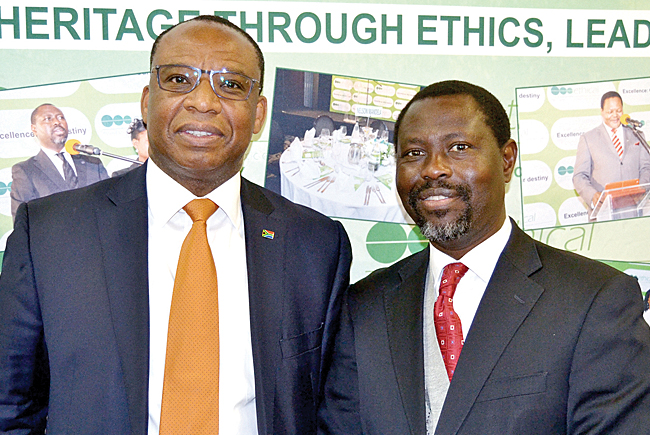
At a breakfast session hosted by the Foundation for Leadership Excellence at Limpopo Guest Manor last Wednesday, Deputy Governor of the South African Reserve Bank (SARB) Daniel Mminele highlighted that Limpopo’s growth performance for the period 2009 to 2014 has been disappointing.
“The growth performance of the province, like that of the South African economy, has been disappointing. The average growth rate for the period 2009 to 2014 averaged 1,3 per cent as compared to the national average of 1,8 per cent. Unfortunately, statistics are not available to assess the most recent economic growth performance of Limpopo in relation to the national growth rate. However, an assumption can be made that, given the dominant role of mining and agriculture in the province, developments will likely have mirrored national trends,” Mminele said.
According to Mminele, the inflation rate in Limpopo has declined from 8,2 per cent in May 2016 to 7,4 per cent in June 2016 and it is nevertheless still over one percentage point higher than the national average and significantly above the top end of the inflation targeting rate. “This has both adverse welfare and competitiveness effects and is something that warrants attention at the provincial level particularly in terms of addressing the bottlenecks that are adversely affecting the price formation process in the province,” Mminele informed and added that with an estimated share of national GDP of just over seven per cent, Limpopo makes an important contribution to the economy of South Africa.
Mminele explained that the primary sector has always played a key role in the province, with its contribution growing from 17 per cent in 1996 to just over 27 per cent in 2014. This has in large part been due to the mining sector, with its contribution increasing from around 15 per cent in 1996 to around 25 per cent currently. Approximately, 41 per cent of South Africa’s platinum group metals (PGMs), 90 per cent of red-granite resources and approximately 50 per cent of the country’s coal reserves are located in the province. In addition, it has been found that antimony, a highly strategic mineral found in large quantities in China, is another of Limpopo’s major assets.
Mminele said that, in addition to mining, agriculture and tourism are the other pillars of the Limpopo economy, with the province having identified infrastructure development, industrialisation and manufacturing as potential new game changers that will enable it to achieve higher growth rates in the future. “The potential of this province is beyond question. The province is well-endowed with minerals. While the fortunes of the mining industry are subject to international commodity price movements, the policy challenge is to ensure that the potential benefits that could be derived from the natural resource endowment are optimised.
In conclusion, Mminele said that it is clear that the global and domestic economies face challenging times ahead, riddled with uncertainty which could exacerbate volatility and dampen confidence, and thus undermine consumption and investment required to support sustainable and balanced growth. What the impact of the added complication of Brexit will bring, will only become clear over time. “While we may have little control over many of the external factors, we need to decisively tackle some of the local impediments that are well within our control through collaborative leadership from Government, business and labour. The SARB remains fully committed to making a constructive contribution in line with its mandate of achieving and maintaining price stability in the interest of sustainable and balanced economic growth,” Mminele advised.
Mminele’s message to the guests was, while many studies have highlighted the economic and social costs of bad leadership in various spheres of society, they should not under-estimate the important role that ethical leadership can play in addressing the economic challenges that the world, including South Africa, currently faces.
Story and photo: BARRY VILJOEN
>>barryv.observer@gmail.com
Featured photo: Daniel Mminele, Deputy Governor of the South African Reserve Bank and Mautji Pataki, Chairman of the Foundation for Leadership Excellence at the breakfast session.