
Prevent the spread of disease – vaccinate your kids!
MEC for Health, Dr Phophi Ramathuba, led the roll-out campaign for measles vaccination for children between 6 months and 5 years recently
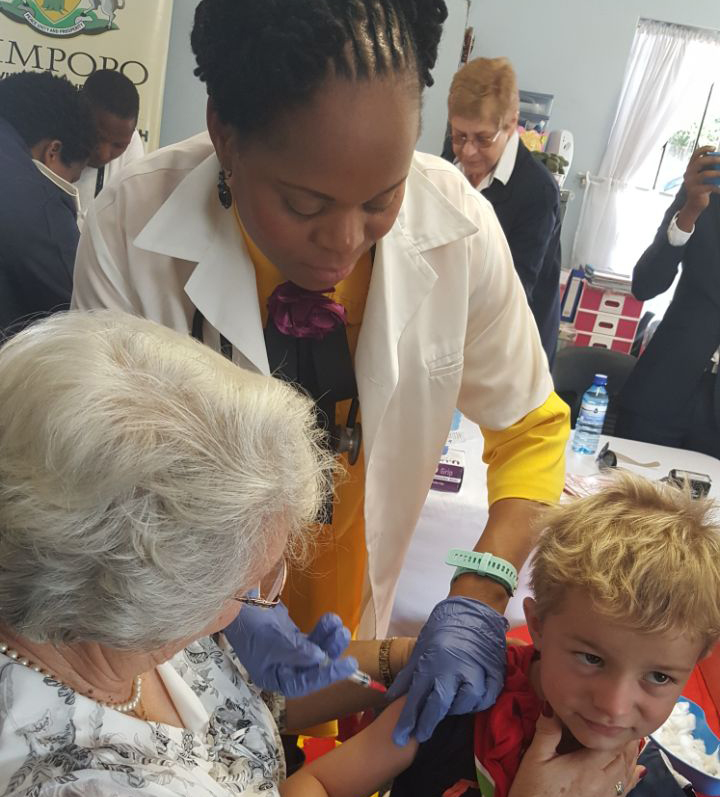
LIMPOPO – MEC for Health, Dr Phophi Ramathuba, led the roll-out campaign for measles vaccination for children between 6 months and 5 years in Modimolle in the Waterberg District of Limpopo.
The Department gave all the children at the gathering an additional dose of the measles vaccine in order protect them and further prevent the spread of measles infections. The campaign also aims to avoid any potential outbreak, which recently affected parts of Gauteng and Western Provinces.
Today we launched the Provincial Measles Immunisation Campaign in Modimolle, pic.twitter.com/UV8ZjPOh3o
— Dr Phophi Ramathuba (@PhophiRamathuba) June 20, 2017
According to the World Health Organization (WHO), measles is a highly contagious and a serious infection caused by a virus which is normally spread through direct contact or from person to person through saliva, air-droplets or by coughing or sneezing. Measles remains one of the leading causes of death among young children globally.
“All parents and caregivers are advised to take their children, together with their Road to Health booklet to their nearest clinic or Mobile clinic. Children without the booklet will be assisted, and a duplicate will be issued to them for the duration of the campaign which is currently being rolled out throughout the province and will continue until the end of June 2017,” Spokesperson for the Department of Health, Derick Kganyago, told Review.
The symptoms of measles generally appear about seven to 14 days after a person is infected.
Signs of a measles infection:
• high fever
• cough
• runny nose (coryza) and
• red, watery eyes (conjunctivitis).
Two or three days after symptoms begin, tiny white spots (Koplik spots) may appear inside the mouth.
Three to five days after symptoms begin, a rash breaks out. It usually begins as flat red spots that appear on the face at the hairline and spreads downward to the neck, trunk, arms, legs, and feet. Small raised bumps may also appear on top of the flat red spots. The spots may become joined together as they spread from the head to the rest of the body.
There’s no specific treatment for measles, but the condition usually improves within seven to 10 days after treatment.
If the symptoms of measles are causing discomfort, here is a list of things you can do for the patient:
Controlling fever and relieving pain – Paracetamol or ibuprofen can be used to reduce a high temperature (fever) and relieve any aches or pains if your child is uncomfortable.
Drinking plenty of fluids – If your child has a high temperature, make sure they drink plenty of fluids as they may be at risk of dehydration.
Treating cold-like symptoms – If your child has cold-like symptoms, such as a runny nose or a cough, treat it immediately.

Spotting signs of serious illness
“If you or your child has measles, you should keep an eye out for any signs of the serious complications that can sometimes develop,” MEC Ramathuba told parents.
These include:
• shortness of breath
• a sharp chest pain that feels worse with breathing
• coughing up blood
• drowsiness
• confusion
• fits (convulsions)
“The Department is calling on all parents to ensure that they keep a close eye on their children and ensure they get the best care, especially when it comes to prevention of illnesses,” Kganyago said.