
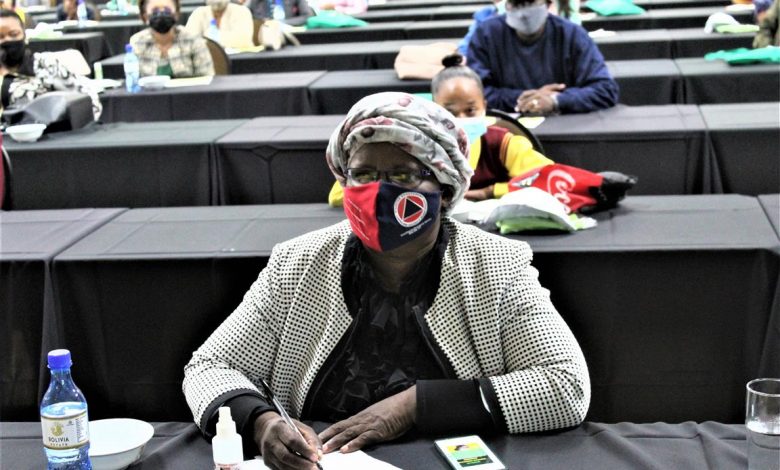
POLOKWANE – The competition was held at Bolivia Estate on Tuesday, 11 May, as part of the municipality’s resolve to involve schools in building disaster-conscious and disaster-resilient communities. The competition is hosted in partnership with SA Weather Services, Department of Education, Coca-Cola and Sanlam in putting disaster risk reduction on the agenda of schools, so that learners will champion and pass it on among their peers and ultimately families, in order to make a difference in their communities.
The theme of the event was: “Substantially increase the number of disaster risk reduction strategies at schools to combat the effects of natural and man-made disasters” and delegates from Sanlam, Nedbank, Coca-Cola, the South African National Space Agency, SAWS, the Department of Cooperative Governance and Traditional Affairs (Cogta) National Disaster Management Centre and the Department of Education, delivered messages of support.
Officials from CDM took delegates on a journey of the competition, where after exhibitors made presentations.
Winners:
Essay category for primary schools – Komane Primary. The school received R20 000 and a trophy, while the learners received medals and certificates.
Essay category for secondary schools – Ngwana Mohube Secondary School. They received R30 000, a trophy, medals and certificates. Phala Primary School was the runner-up.
Oral category for primary schools – Phala Secondary School. Their learners received medals and certificates while the school received R20 000 and a trophy.
Oral category for secondary schools – Raphogo Secondary School. The school received R30 000 and a trophy, while the learners received medals and certificates. Ngwana Mohube Secondary School was the runner-up.
Member of the Mayoral Committee, Betty Kgare addressed the guests on behalf of Executive Mayor John Mpe. She said the event served to show the municipality’s commitment to disaster risk reduction by stretching its collective responsibility and put all its resources together as spheres of government.
“This is one of the models we explore to intensify and promote the knowledge of disaster risk management at school level. We explore this initiative in fulfilment of the National Disaster Management Framework which requires that disaster risk reduction education be integrated into primary and secondary school curricula with a consideration that schools should be regarded as focal points for raising awareness about disaster risk management and disaster risk reduction,” Kgare explained.
She added that the municipality needs the positive energy of learners to foster education-based solutions to achieve this.
“We firmly believe that putting disaster risk reduction on the agenda of our schools, learners will champion and pass it on among their peers and ultimately families, in order to make a difference in their communities,” Kgare concluded.