Department of Water and Sanitation to assess water challenges in province
The Minister of Department of Water and Sanitation visited Limpopo to intervene on water provision issues.
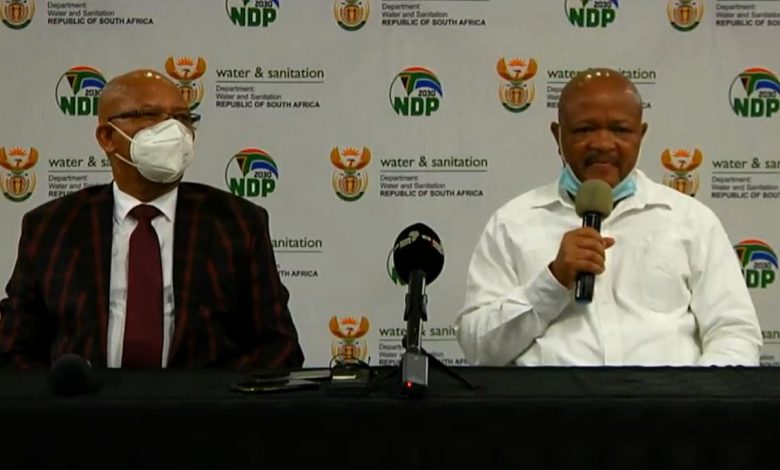
POLOKWANE – The Minister of Department of Water and Sanitation (DWS) Senzo Mchunu’s visit started with a media briefing that was held at Bolivia Lodge on Tuesday.
The three-day visit continued on the second day with a visit to the Giyani Bulk Water pipeline and ended with a stakeholder engagement session at Bolivia Lodge on the last day.
Premier Chupu Mathabatha welcomed the minister saying Limpopo as a rural province has a water scarcity problem that affects the provision of water to its residents. The visit entails discussions on matters of governance, implementation, service delivery and finance towards the provision of water and sanitation.
Mathabatha says the province was at an 84% success rate in 2014 in terms of water provision and down to 74% in 2019 which is a matter of serious concern.
“Our biggest problems are sources of water and reticulation which is due to capacity within municipalities. The visit will help tap into the capacity of the reticulation system in our water schemes.”
Mathabatha added that Limpopo had signed a memorandum of understanding with Matebeleland in Zimbabwe to avert the biggest risk of water shortage in the proposed Musina-Makhado Special Economic Zone.
Mchunu said the media briefing was aimed at introducing the delegation from the national department to the provincial government and to assess the challenges that DWS has noted.
“The department will see where it will be able to intervene. We look at water services, resources and where we are in terms of provision. We shall be interacting with various stakeholders and the premier was the right one to start with.”
Mchunu says Provincial Government made a presentation and agreed on the common approach to tackle these matters as they have heard the issues being raised by communities in particular of water shortages across the province.
Mchunu added that it was important to hold the engagement session as the people are talking about their personal experiences and problems in accessing water and his department will be attending to those matters daily.