Health MEC debunks Covid-19 vaccine myths
From developing blood clots, sterility and the importance of booster shots, the Health MEC sat with Review to debunk myths surrounding the Covid-19 vaccine.
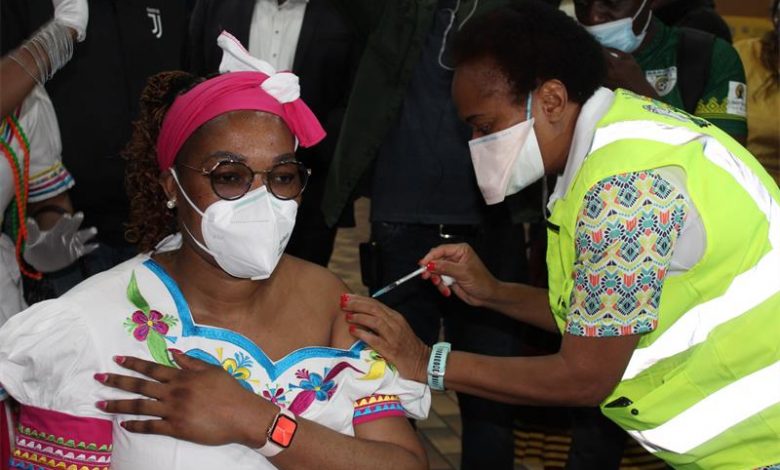
POLOKWANE – Review recently caught up with the MEC for Health, Dr Phophi Ramathuba during the launch of the department’s booster campaign at Limpopo Mall.
“The purpose of this planned campaign is to improve booster uptake amongst the high risk population and improve vaccine uptake to the younger age cohorts. Our current observation is that we are facing decreasing immunity among population from both natural and vaccine induced Immunity as compared to during the fourth wave hence it is important for the people to know that booster doses provides extra protection from breakthrough infections, and that boosted persons are more likely to have mild infection,” she said.
Ramathuba corrected misinformation that is being disseminated regarding vaccinations.
1. Does the jab cause sterility, make limbs fall off or any of the initial fears people may have had?
“By now, I think people should have seen that after administering approximately 3.5 million dosages and the adverse effects have had nothing to do with the vaccine.
We have had people complain of a headache and one or two with serious adverse events but the reality is that it could happen with any medication because our genetic makeup is not the same. These are the myths we will continue to educate people against as a department.”
2. Why is a booster jab important and should I go again if I have already had one?
“Why do you bring your chid to get a vaccine at four weeks, six weeks etc, even if they received the vaccine at birth?
If you have been given a vaccine, you develop immunity. The vaccine fades off after some time and the booster is given to ensure that you are able to fight off the virus.
People must understand that with the fourth wave, we had immunity either natural or through the vaccine but the immunity fades away and once that happens, it is important for us to boost you again.”
3. How common is it that blood clots develop from the J&J and Pfizer jabs respectively?
“It is not common for blood clots to form. Look at the statistics. We have administered almost 3.5 million dosages and how many of those developed clots or died as a result of clotting? The numbers speak for themselves.
Side effects occur because of the genetic makeup and there are more women who develop clotting as a result of oral contraceptives than they would the vaccines and that’s a fact.
I have many patients who are on oral contraceptives to show that it’s not stopping us from taking them because you weigh the benefits. It is important for people to get the correct information and go for regular check-ups.”
3. What is a common misconception people have about the jab and what is your message to them?
“We were lucky to have survived the previous waves. The mortality rate during the fourth wave was very low despite the omicron variant being highly transmittable. Limpopo reached its peak in cases compared to the other three waves but in terms of deaths and hospitalisation it was the lowest because people had been vaccinated and those that hadn’t had natural immunity.
If you are still doubting, the fifth wave is here and the numbers are starting to pick up. We are worried about the people who have a decrease in their immunity because people received dosages last year and we need to boost their immunity once again.
On the question of how many times people will need to get the jab, truly speaking I don’t know as much as I don’t know for how much longer the virus will be with us. There is still uncertainty and the only way we will be able to neutralise and deal with it through vaccines and we have seen it work.
The fourth wave has shown us that if we get more people to be vaccinated, we’ll be able to survive. To the people out there, please go get the jab and the booster shot to boost yourself like you do for flu on an annual basis. I can’t say I was vaccinated for flu last year so I don’t need another one this year.”
5. When can we expect the fifth wave to hit Limpopo and do you feel we have prepared well enough?
“We have been creating awareness as part of preparation for the fifth wave. When dealing with the previous waves, we had the backup of the National State of Disaster, which assisted the department of health because there were restrictions that made it easier for hospitals to focus on Covid-19 cases without the burden of trauma cases. The curfews also helped and as such, the department had that backing up their efforts and now they no longer have that.
The first challenge will be the lack of restrictions and reinforcement of regulations. The health system is starting to rebuild itself. We can’t close the country, we have seen what that has done to different industries. We can’t afford to close again.
It would be good to hear that 30 000 tested positive but only four have been hospitalised and those are people who are not vaccinated. This is in preparation of the fifth wave, I am not going to prepare ICU beds, I am preparing for the fifth wave by making sure that you get vaccinated.”