The lowdown on voting ahead of the 2024 general elections
The senior outreach officer at the IEC Limpopo Provincial Office Sethibo Thobakgale also breaks down myths about voting, spoilt ballots and what happens if you do not vote.
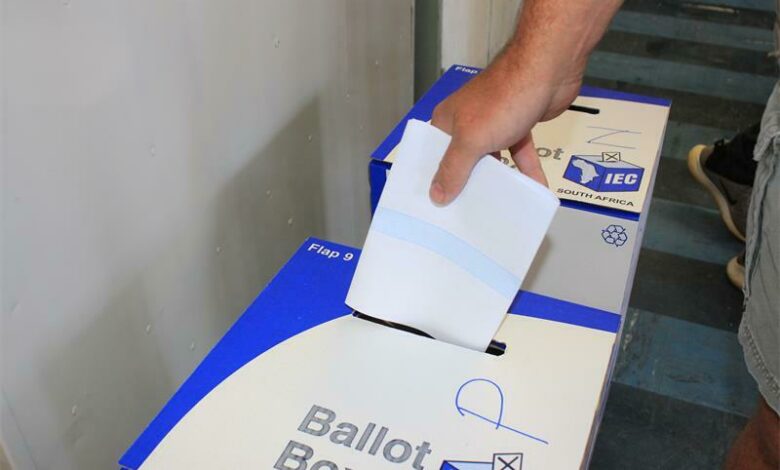
POLOKWANE – With a little under a month left until the 2024 General Elections, the Polokwane Observer approached the Independent Electoral Commission (IEC) to gain insight into the importance of voting, the consequences of not voting and other frequently asked questions.
The senior outreach officer at the IEC Limpopo Provincial Office Sethibo Thobakgale also breaks down myths about voting, spoilt ballots and what happens if you do not vote.
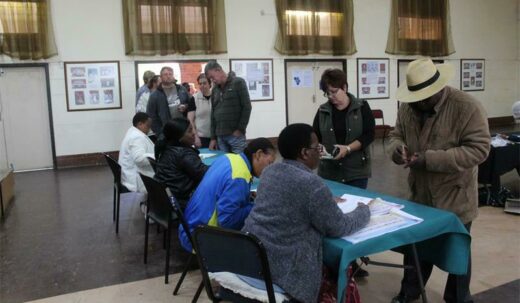
Five reasons why you should vote:
Not only does your vote bring about change, but Thobakgale said you have a right to vote to make your voice heard.
1. It brings about change: “One of the most powerful tools at our disposal to bring about change in our communities is our right to choose who represents us in municipal councils, provincial legislatures, and national assembly.”
2. It keeps the government in check: “The threat of losing voters to opposition parties is perhaps the greatest motivator for governing parties to do the right things and deliver good governance. Your vote is your way of ensuring government competence and accountability,” Thobakgale said.
3. Make your voice heard. “Your vote is your voice. Participating in the elections allows you to shape the future of South Africa. Not voting allows others to use their voice over yours.”
4. Democracy. “Democracy means the will of the people. We can only realise a truly democratic society through the participation of all the people in elections. The true will of the people will be determined by full participation.”
5. You have a right to vote. “We owe it to each as South Africans to exercise our constitutionally entrenched right to vote. Participate and have your say, it’s your right.”
How are the results influenced if you do not vote at all?
“Every vote counts. The Constitution of the Republic of South Africa, Sections 46 and 105, provides that the National Assembly and Provincial Legislatures be elected on a proportional representation (PR) System. This means that political parties and independent candidates will be allocated seats in the National Assembly or Provincial Legislatures based on the number of valid votes that they received. Schedule 1A of the Electoral Act prescribes the method of allocating seats. The total number of valid votes cast in favour of each party or candidate is divided by the determined quota to allocate seats,” Thobakgale said.
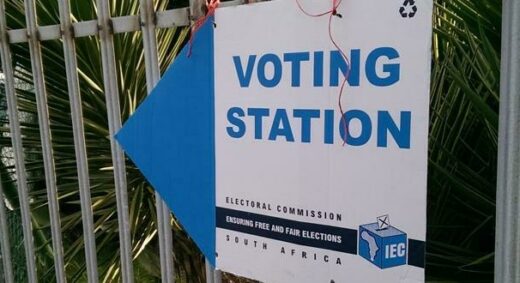
There are three ballots. What happens if you only vote on one?
“Voters who are eligible for the three ballots are encouraged to vote or make their mark on all of them. If for some reason they decide to use only one ballot, it would mean that the total number of valid votes across the three ballots will differ.”
If a voter is issued all three ballots and decides in the voting booth to cast a vote on only one ballot, the voter then proceeds to deposit all three ballots in the ballot box, the two that are not marked will be regarded as spoilt ballots during counting,” Thobakgale explained.
He added that it is therefore important for the voter to inform the ballot paper issuer that only one ballot is required when ballots are issued. The Presiding Officer will record this in the voting station diary.
“This will assist will the reconciliation of the ballot paper statement. While casting a vote on one ballot is the choice of voters and will be reflected as such, it creates an exception that needs to be investigated when capturing the results. The investigation is to ensure that there was no error when capturing the results from the result slips.
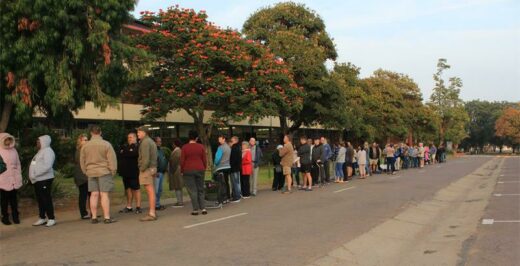
What are the consequences of not voting?
• Not voting allows other people to use their voices over yours.
“The right to vote is a constitutional right bestowed on every eligible citizen of the Republic of South Africa by the Constitution. It is the responsibility of every eligible citizen to vote to determine who and how the country is run. By simply not voting, you allow other people to have a say on who and how the country is run, while your voice is silenced by not voting.”
• Our Constitution envisions a participatory democracy. “One such important form of democratic participation in the functioning of the country is realized through voting, or rather the right to vote, arguably the most democratic right of them all.”
• The government and its decisions reflect our votes. “It thus becomes important to choose people or parties we believe will make the best decisions on behalf either in the municipal councils, provincial legislatures or national assembly.”
What myths are there about voting as well as not voting?
• People will not vote if the dominant idea in their minds is the myth that ‘nothing will change’ or ‘what good is my vote?’ “It thus becomes for people to know that every vote counts so that the myth can be dispelled.”
• There is a myth that if people do not vote in the upcoming elections, their votes in the previous elections will automatically go to the ruling party. “Votes for particular elections are only valid for those particular elections and are not transferable to subsequent elections.”
• There is also a myth that if people who receive government grants do not vote for the ruling party, they will lose their grants. “The Social Assistance Act makes for provision of grants to all eligible people. It is thus not the decision of the ruling party to decide whether people receive grants or not. It should also be noted that your vote is your secret. The secrecy of the ballot should thus not be compromised under any circumstances.”
• There is a myth that when people have cast their votes, the votes can be allocated to parties they did not choose during counting. “This is practically not possible because there are agents from different political parties and candidates who observe the counting process for any irregularities and also sign the result slip. The result slip is completed in duplicate; one copy remains at the voting station and another one is transported to the IEC office for capturing. The captured results are audited by independent auditors from reputable audit firms. The result slip is also scanned and can be seen by political parties at the Results Operation Centre on their allocated desktop computer.”