
Limpopo youths can now apply for DBE employment drive
This national programme is aimed at tackling youth unemployment while improving the quality of education in public schools.
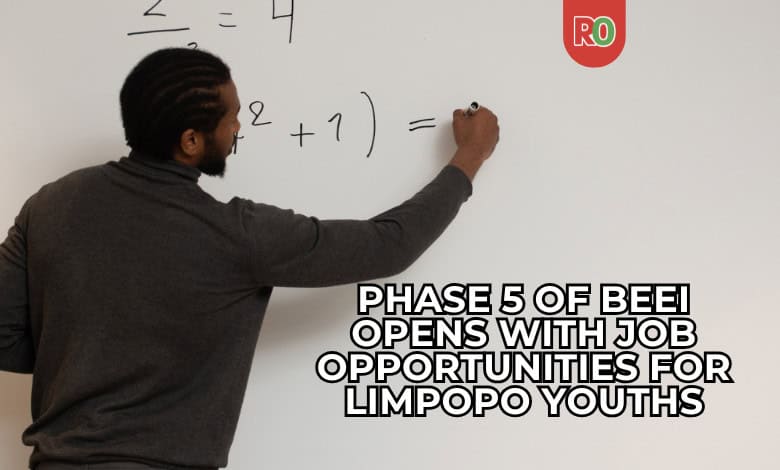
POLOKWANE – A total of 27 366 young people in Limpopo are set to benefit from phase five of the Basic Education Employment Initiative (BEEI), a national programme aimed at tackling youth unemployment while improving the quality of education in public schools.
The initiative is led by the Department of Basic Education (DBE) in partnership with the Department of Employment and Labour and is implemented with the support of the Industrial Development Corporation (IDC), which will handle the disbursement of stipends to beneficiaries.
The programme phases have collectively created over 1.1 million job opportunities for youths across South Africa.
In this latest phase, more than 200 000 positions will be made available nationally, with Limpopo’s share standing at 27 366 posts.
The programme is scheduled to run from June until the end of November.
Eligible applicants must be between 18 and 34 years old (turning 35 by the end of March) and live within 5km of the school they are applying to, or within 30km for those in rural or farming areas.
To qualify, applicants must be classified as NEET (Not in Education, Employment or Training) and must not be receiving any form of income such as stipends, wages or salaries. Additional criteria include:
Education assistants must have passed matric English and hold an NQF level 4, 6, or 7 qualification.
General school assistants may not need a matric certificate for some roles, but relevant trade certificates will be considered an advantage.
Applicants must also have no criminal record (a police clearance certificate is required for interviews), may not benefit unfairly through personal connections at schools, and must possess a valid South African ID.
Those living with disabilities must submit a medical certificate confirming their condition.
The BEEI leverages the widespread presence of public schools to provide work opportunities within communities, reducing the need for youth to travel far in search of employment.
Phase five places a strong emphasis on equipping youths with soft and hard skills. A particular focus will be on recruiting Reading Champions to support foundation and intermediate phase learners in developing literacy skills, ultimately aiming to enhance learning outcomes in schools.
Young people can apply online via SAYouth.mobi between April 22-May 9.
No walk-in applications at schools.