
Healthy Body Means Healthy Feet
Here are some solutions for Plantar Fasciitis
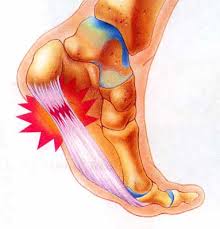
ANATOMY: The plantar fascia is a long, thin ligament that lies directly beneath the skin on the bottom of your foot. It connects the heel to the front of your foot, and supports the arch of your foot.
Cause: The plantar fascia is designed to absorb the high stresses and strains we place on our feet. But, sometimes, too much pressure damages or tears the tissues. The body’s natural response to injury is inflammation, which results in heel pain and stiffness of the plantar fasciitis. Plantar fasciitis is the medical term for inflammation of the plantar fascia, which is the connective tissue that runs along the bottom of your foot. If you’ve ever had pain in the bottom of your foot with the first few steps out of bed in the morning, you’ve probably had some experience with this painful condition. In more sedentary populations, weight gain is usually a major contributor to plantar fasciitis and a weight-loss plan could be of benefit.
Calf Stretching in Bed: As you may already know, the first few steps out of bed in the morning can be the worst of the day. Those first few steps can be enough to re-aggravate your condition putting you into a cycle of inflammation and pain. The best way to help break that cycle is to stretch your calf before taking those first steps in the morning. When the muscles in your calf are tight, they pull on the heel bone, making your plantar fascia very taut and prone to injury. To help loosen those muscles, take a towel or belt and loop it around the ball of your foot. Keeping your leg straight, gently pull towards your body until you feel a stretch in the lower part of your leg. Hold that for 30 seconds and repeat up to five times before taking your first step out of bed.
Plantar Fascia Stretching: Loosening up the tissues that are irritated probably makes sense to you, but you may not know how to do so. All you have to do is pull your toes up with your hand until you feel a stretch along the ball of your foot. You may feel the stretch anywhere from the ball of your foot to your heel. Holding this position for 30 seconds a few times can make a world of difference in your pain levels.
Calf Stretching: There are two main muscles in the lower leg that attach to the heel, so we’ll work on stretching them both out. Stand against a wall and slide one leg back, pushing the heel down towards the floor. When you feel a stretch in the lower part of your leg, hold it for 30 seconds. After those 30 seconds are up, bend your knees until a deeper stretch is felt a bit lower in the leg. Hold this stretch for 30 seconds and repeat this until you’ve done it three times on each leg.
Massage: I suppose you could pay for someone to rub out the tissues in the bottom of your foot, but if you’re looking for a cheaper alternative, look no further than the tennis ball. Placing a tennis ball on the ground and gently rolling it under foot for a few minutes can help loosen up your plantar fascia, making it much less likely to become irritated. Put enough pressure on the ball to get a deep massage. You may feel some soreness, but back off if you feel any pain.
Ice Massage: While using the tennis ball is great for keeping things loose, sometimes it’s worth doing some icing at the same time for some inflammation control. Freezing a water bottle and rolling it under your foot for 10 minutes at the end of the day can be a very effective way to keep inflammation in check while staying loose. One thing to keep in mind is that while these tips have been proven to work, they’re not an instant fix. It can take a few weeks of consistency with them before your pain levels begin to change. If you’re not seeing any improvement after making an honest effort, it may be time to look into some different treatment methods with your doctor, reflexsologist, podiatrist or orthopaedist.
For more information, contact Lizél Britz at 072 2437 707.