
MEC welcomes Swiss Federal Tribunal ruling on testosterone levels
Sport, Arts and Culture MEC, Thandi Moraka has welcomed the decision by the Swiss Federal Tribunal for temporarily suspending an International Association of Athletics Federations (IAAF) ruling that obliges female athletes competing in the 400, 800 and 1 500 m to lower their testosterone levels in order to compete in certain events. The IAAF ruling when …
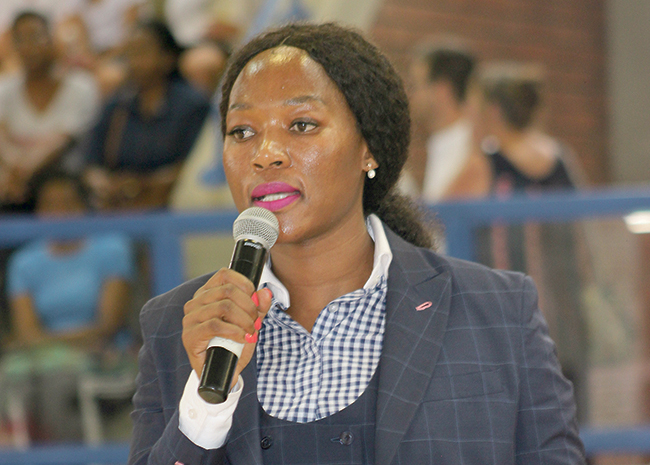
Sport, Arts and Culture MEC, Thandi Moraka has welcomed the decision by the Swiss Federal Tribunal for temporarily suspending an International Association of Athletics Federations (IAAF) ruling that obliges female athletes competing in the 400, 800 and 1 500 m to lower their testosterone levels in order to compete in certain events. The IAAF ruling when applied impacts on South Africa’s double Olympic gold medallist Caster Semenya.
In May the IAAF adopted a policy which required athletes with different sex development (DSD) to take medication to reduce their blood testosterone levels if they wanted to compete internationally at middle-distance events.
Semenya, took her case to the Federal Supreme Court of Switzerland after an appeal was rejected by the Court of Arbitration for Sport (CAS) in May.
In its ruling CAS reportedly announced that its three-person panel had rejected Semenya’s challenge by majority but did add that it had serious concerns as to the future practical application of the new rules.
Under the IAAF’s policy all DSD athletes would have to reduce their blood testosterone to a specific level for a continuous period of at least six months and maintain that for the rest of their athletic career in order to compete in events from
400 m to a mile.
Moraka was quoted to have said: “As department we are very excited and we warmly welcome the decision by Swiss Federal Tribunal ruling. Although a temporary suspension it gives the nation hope that Caster Semenya’s careerin the international arena is no longer limited until a further hearing can take place. This is an important move that has fundamental implications for the human rights of female athletes.”
“We are still against the IAAF ruling, as it is seen as unfair, discriminatory and inhuman decision. Caster Semenya cannot continue to suffer indignity of such a frivolous nature that borders on the biological re-engineering of those that have vested interest in her loss,” Moraka remarked.
Story: Herbert Rachuene
>>herbert.observer@gmail.com