
Lepelle Northern Water celebrates 57 years of service
Lepelle Northern Water (LNW) commemorated a cumulative 57 years of providing bulk water services in Limpopo during a function at Bolivia Lodge last Tuesday. After the formal proceedings, guests departed for Ga-Nong Village where a house was donated to a child-headed household. LNW originated from the Phalaborwa Water Board that was established in 1960, the …
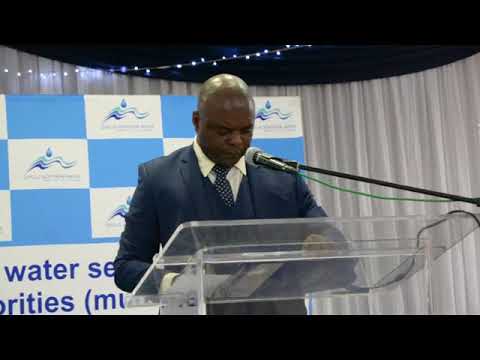
Lepelle Northern Water (LNW) commemorated a cumulative 57 years of providing bulk water services in Limpopo during a function at Bolivia Lodge last Tuesday. After the formal proceedings, guests departed for Ga-Nong Village where a house was donated to a child-headed household.
LNW originated from the Phalaborwa Water Board that was established in 1960, the Northern Transvaal Water Board that was established during 1990 and the Bosveld Water Board that followed in 1993. In 1997, all the water boards were streamlined with the mandate to supply bulk water to water services authorities and industries in the various areas and the three water boards were amalgamated to form LNW. LNW currently operates 22 schemes comprising water and waste water treatment schemes with a capacity ranging in size from 0,1 to 175 megalitres a day, as well as five borehole schemes spread across the Capricorn, Sekhukhune, Waterberg, Mopani and Vhembe Districts.
Chairperson of the LNW Board, Kennedy Tshivhase, delivered the keynote address at the celebration in the city and said that 57 years are indeed a milestone. “Such a milestone compels us to reflect on the legacy we have inherited, how we have fared over the years and perhaps more so the type of legacy we are creating,” Tshivhase said.
According to Tshivhase, access to water is one of the vital and major catalysts of social and economic prosperity. Limpopo is largely rural and the second poorest in the country, yet is also one of the fastest growing provinces. “Together with our shareholder, the Department of Water and Sanitation, we regularly review our results to ensure that we remain on track with pursuit of quality service delivery and are also adequately flexible to respond to any other emerging water services related matters which may arise,” Tshivhase added.
Tshivhase explained that infrastructure development, design, planning and maintenance must also be futuristic in many aspects and must be systematic. “It must, while redressing the past system, address the backlog and carry foresight to meet these competing demands for today and tomorrow. Simply put, we must plan for many generations and leave a beneficial footprint and trail for them”.
“May we, as we reflect today, take note of one of the most recent Statistics South Africa reports (2017), which tells us that about 30,4 million South Africans are living in poverty. This number is just slightly over half of the entire population of the country, so over half of South Africa’s population are living in poverty.
This should unsettle all of us and make us all uncomfortable, at least from the outlook of water services provision. We need to quicken our pace towards drastically improving this situation, all of us by the different mandates we carry and we must achieve this without compromising on quality whatsoever.
This will contribute towards us creating a good legacy for the future generations, and doing so would ensure that the cause which our fallen heroes have died for, is achieved,” Tshivhase concluded.
Story, photos and video: BARRY VILJOEN
>>barryv.observer@gmail.com


Norman Nokeri, explains the purpose
of the day.


Maintenance General Manager of LNW, explains the LNW operational profile.


