Marion Island was part of Ermelo woman’s plan
To go to this island, a person needs to apply at the Department of Environmental Affairs and maths and physical science should be two of your strong subjects.
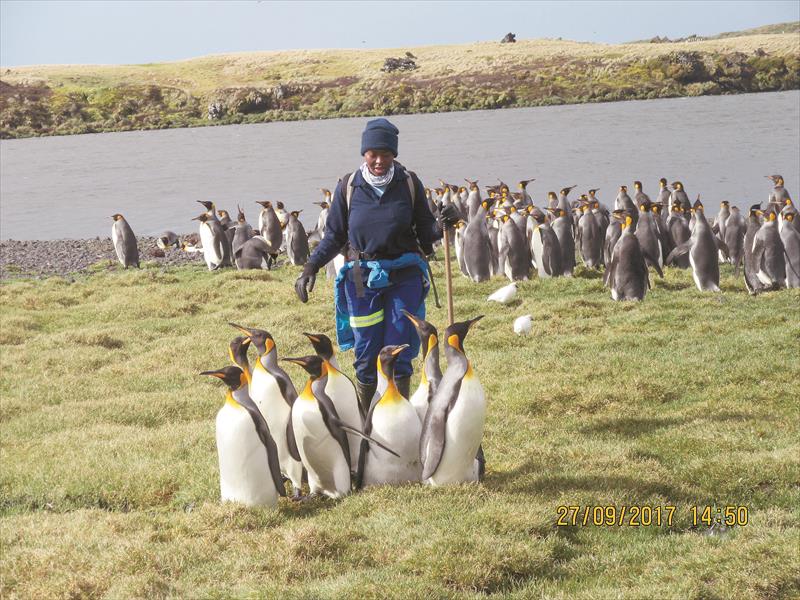
Marion Island was the home of 25-year-old Ms Chelsea Mkwena and 20 other South African members of the weather team for 13 months.
Chelsea grew up in Pretoria where she completed her school education.
She is fluent in Afrikaans and is very proud of her school achievements and won the Afrikaans National Speech and Read Festival twice. Afrikaans was her third language with Tswana her first and English her second language.
She completed her training as a Meteorological Technician at the Regional Weather Training Centre in Pretoria from 2012 to 2013 whereafter she started working at the Ermelo Weather Station in 2014.
This station processes data from Ermelo, Belfast, Machadadorp, Secunda, Newcastle, Vryheid, Carolina, Amersfoort, Goedgevonden and Ogies for weather forecasts.
Being a weather observer is something she had always wanted to do and being part of the team to work on Marion Island was part of her plan.
To go to this island, a person needs to apply at the Department of Environmental Affairs and maths and physical science should be two of your strong subjects.
She had the necessary requirements and was approved to join the weather team on Marion Island in April 2017.
Ms Mkwena had to see to her own toiletries and some of her clothes for the time on Marion Island.
Special clothes to keep the cold out and food were the responsibility of the Department of Environmental Affairs.
Everything they needed for their stay had to go with them as nothing could be sent to the island afterwards.
After four days on the SA Agulhas II, the team reached Marion Island which is situated half way to Antarctica in the Southern Indian Ocean.
“Apart from the fact that I would only see the rest of the team and that there would be no shops on the island, I did not know what to expect,” said Ms Mkwena.
The team consisted of four women and 17 men and they took turns to prepare food.
Day shift
They soon fell into a routine on the island as the programme for the day was a lot similar to a day at the weather station on land.
The day shift started at 6am with weather observations.
At 9am measuring the sea temperatures was part of the routine and every 12 hours an upper air ascent balloon was released to measure temperatures, wind direction and speed.
The information gathered was forwarded to the weather station in Cape Town.
When she was not working, Chelsea went out with other team members to explore the nature on the island, and to study.
Ms Mkwena studies part time at Unisa and hopes to complete her BSC Gen (Physics, Maths and Astronomy as Majors) degree soon.
It was always cold and windy on the island and it was raining most of the time, so Ms Mekwa spent most of the time indoors.
Although they could not make any cell phone calls, there was an Internet connection and they had access to social media and Whatsapp that enabled them to stay in frequent contact with friends and family.
After her degree is completed, Ms Mkwena wants to work as a weather forecaster, a researcher or an astronomer. She has a special interest in astronomy and has written articles for an internal weather magazine on eclipses to bring readers up to date on the background of and what to expect when an eclipse takes place.