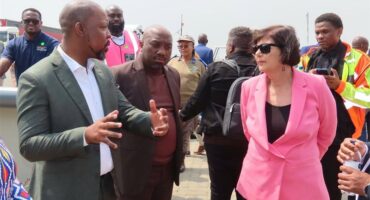
The administrator of the Lekwa Municipality, Mr Johann Mettler, recently gave a detailed report on the status quo.
Apart from outlining the section 139 (7) intervention as ordered by the court and endorsed by cabinet, the dissolution of council and his appointment were outlined.
Mr Mettler reports directly to national cabinet through National Treasury and the Department of Cooperative Government and Traditional Affairs.
As regards a turnaround strategy, the pressing service delivery issues were identified with the aim of addressing them immediately.
Engagement with various stakeholders are underway, including the media.
“In the case of the media, engagement is on-going and aimed at keeping the broader community informed of the progress made on the intervention,” Mr Mettler said.
Their desired outcome is to restore the credibility of and restore the faith in government generally and Lekwa in particular.
Stakeholders include Eskom, Goldi, Lekwa Business Forum, Faith Based Organisations, Department of Water and Sanitation, Sanral, DBSA, Shopping Mall Developers, Vaal River Business Chamber, Lekwa Ratepayers’ Association, local newspapers, MISA, Cogta MP, INCA and internal service delivery departments.
Mr Mettler also said the biggest problem in the municipality relates to availability of reliable electricity daily and energy security in the long term.
Plans have been put in place to increase revenue collection through a data cleansing exercise, as well as targeted debt recovery coupled with actual meter reading.
Government debt is also actively pursued.
Applications have been made for the upgrade of the Notified Maximum Demand (NMD) from 55MVA to 64MVA (Standerton) and 1.7MVA to 4.7MVA (Holmdene).
He added that Eskom issued Cost Estimate Letters for both outcomes, with a requirement for the municipality to pay the current account in full.
They agreed to explore provision of dedicated supply for large power users and de-load them from the current 55MVA.
“With the problems related to energy insecurity, there is also a concern regarding the reliable availability of clean, potable water,” the statement read.
A programme of maintenance and upgrades to the Standerton Water Treatment Plant to improve its reliability and capacity is in the pipeline.
“The municipality is currently experiencing high levels of leakages in the water network and as a result, water pressure is affected in high lying areas.”
The Department of Water and Sanitation has been engaged to work on water leakages and spillages.
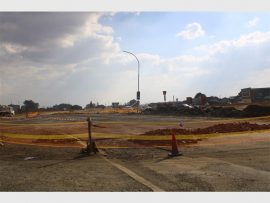
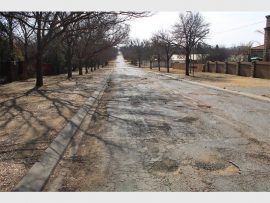
According to him, the erosion of road networks and degradation of municipal roads have been identified as another big problem, with similar devastating consequences as the two aforementioned problems and a partnership with the South African National Roads Agency (Sanral) and the municipality is underway to deal with routine road maintenance.
According to him, revenue management, which should be the anchor for financing the municipality, is plagued by systemic problems including the inability to collect what is due for water and electricity consumption.
The poor collection of rates and taxes, default payments by customers and lack of enforcement by the municipality, fraudulent activities by customers often in cahoots with municipal
employees, further compounds this problem.
To address liquidity of and serious cash flow challenges, the data cleansing and revenue collection will among other address the eradication of illegal connections and faulty or bypassed meters, inspection of business and commercial clients’ water and electricity meters and replacement of bypassed and/or faulty meters.
As regards penalties issued, a total number of 36 fines were issued to the value of R1 402 003,02 and an amount of R 598 090.47 has been paid to date.
With regard to collection of back charges where appropriate, eight customers were identified to the value of R5 163 887.05, with further revenue of R3 598 788.97, which totals R8 762
672.02.