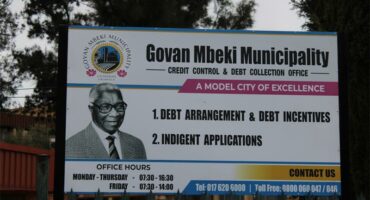
Eskom holds Lekwa in Standerton and Govan Mbeki in Secunda to task for outstanding debt
They said this behaviour of not honouring account payments threatens the security of supply to the citizens living in these supply areas, as Eskom cannot continue to maintain its infrastructure and supply electricity for free.

Municipalities in Mpumalanga owe Eskom R13 253 billion, with Lekwa ranked third in order of debt.
According to a media statement of April 28, the debt is crippling Eskom’s service delivery.
At the end of March this year, 10 municipalities’ total outstanding debt amounted to R13 253 739 590.
Eskom supplies bulk electricity to its municipal customers which is re-distributed and consumed.
“These municipalities receive government grants, as well as payment for services rendered from their loyal customers,” the statement read.
“However, Eskom remains unpaid for the electricity consumed by these municipalities.”
They said this behaviour of not honouring account payments threatens the security of supply to the citizens living in these supply areas, as Eskom cannot continue to maintain its infrastructure and supply electricity for free.
The 10 defaulting municipalities are eMalahleni R 5 978 007 0412. Govan Mbeki R 2 897 941 2853. Lekwa R 1 535 860 4784. Thaba Chweu R 1 046 657 6585. City of Mbombela R 694 508 9616. Victor Khanye R465 351 1207. Mkhondo R 316 546 8598. Msukaligwa R 153 719 5729. Dipaleseng R 101 144 50610 and Emakhazeni R 64 002 110.
The top four municipalities in debt, on average, accounts for 86% of the overdue debt in the province.
“Municipalities have a constitutional responsibility and duty, not only to Eskom but to their customers, to fulfil their financial obligations for the bulk supply of electricity so that Eskom can in turn meet their obligations,” Collin Reddy, General Manager, Distribution Division, Mpumalanga, said.
The statement concluded with saying the debt continues to threaten Eskom’s commitment to ensure continuity of supply and the ability to maintain the network.
Eskom thanked those municipalities that prioritise their account payment.