
The National Treasury debt relief package for municipalities will bring huge relief for GMM
SALGA appreciates that the National Treasury is limiting the interest on overdue bulk accounts to prime plus 2% at 30 days, as opposed to prime plus 5% at 15 days.
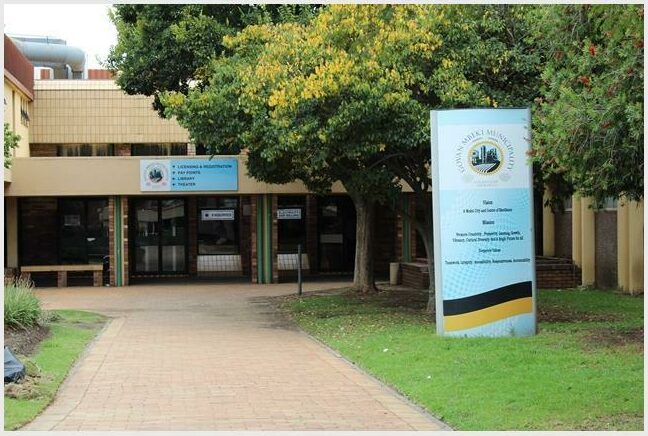
There might be a light at the end of an endless tunnel of Eskom debt for Govan Mbeki Municipality.
The Municipal Debt Relief circular for the 2023/24 Medium Term Revenue and Expenditure Framework (MTREF) published by the National Treasury on March 31 in terms of the Municipal Finance Management Act (MFMA) is part of a National Treasury package designed to resolve Eskom’s financial and debt crisis.
The circular aims to present a solution to nonpayment for electricity consumption by defaulting municipalities, and in parallel, address the consumer culture of not paying for services.
Without universally restoring debt collection, the debt will immediately start accumulating anew.
This circular spells out the conditions and processes municipalities have to follow to qualify for debt relief, which aims to restore financial best practices and improve revenue collection.
ALSO CHECK: Disciplinary hearing of striking Lekwa-employees in progress
The conditions include measures to install prepaid meters, update indigent registers, adopt funded budgets, ring-fencing revenue from water and electricity, and exercise credit control mechanisms.
These measures, if successfully implemented, could also free up revenue for municipalities owing Eskom, to maintain their current bulk accounts, pay other creditors’ current accounts and provide a reliable basic level of services.
The Govan Mbeki Municipality is one of the municipalities in debt with Eskom. GMM owes the power utility more than R3b.
When addressing the council last month, the executive mayor, Nhlakanipho Zuma, said over the past years GMM has paid Eskom more than R1b to catch up with their debt instead of collecting revenue.
ALSO CHECK: SALGA in Mpumalanga wants councils to be financially stable
Zuma said this feels like GMM is merely donating the money because the interest alone consumes whatever the municipality is paying.
He said the municipality is dysfunctional because it had to budget for a huge deficit.
Zuma also said GMM’s budget was unfunded, while the Mpumalanga Premier, Refilwe Mtsweni, made it clear that municipalities must not adopt unfunded budgets.
The South African Local Government Association (Salga) welcomed the overall National Treasury debt relief package with some modifications and additional solutions. Salga believes the package will contribute to improved performance and prevent debt build-up for municipalities.
Salga wants the municipalities to be given sufficient time to meet the conditions, many of which are onerous and said there are structures, systems and processes that need to be in place to comply with the conditions that will range from three to five years.
ALSO CHECK: SALGA and Old Mutual donate hygienic items to neediest municipalities
Salga also said municipalities need to invest time in educating communities about prepaid meters and to gain acceptance before the meters are rolled out.
The association appreciated that the National Treasury is limiting the interest on overdue bulk accounts to prime plus 2% at 30 days, as opposed to prime plus 5% at 15 days, which was agreed upon some years ago, but never implemented.
Salga believes practices such as high interest charged on overdue accounts and penalties have contributed to the high debt.
Salga said in a media statement it does not support the voluntary revocation by municipalities of their distribution licensee if they are unable to meet the debt relief conditions.
The association rather supports conditions such as adopting funded budgets. It believes that the write-off of the high debt to Eskom will enable municipalities to table a funded budget.
Salga said the circular should also consider the impact load-shedding has on municipal revenue and expenditure and the resultant challenges municipalities will face in tabling a funded budget.
“In this regard, we propose the municipal conditional grant system allows for more flexible conditions whereby municipalities can repair infrastructure damaged or vandalised as a result of load-shedding and develop a new infrastructure that will mitigate the negative impacts of load-shedding.”