Lekwa’s electrical issues in the spotlight
The Standerton Advertiser went on a fact finding mission to find out what has been causing recent electrical interruptions.
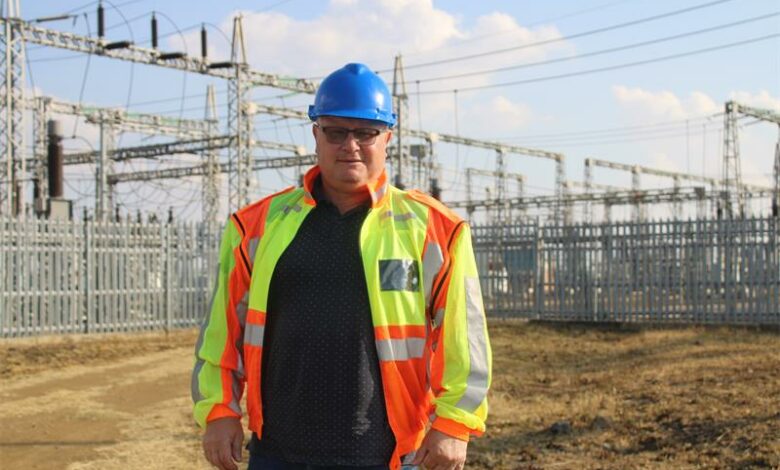
Recent electricity load management efforts by Lekwa have left residents enraged over a lack of scheduling and communication. For the past several weeks, power outages have been occurring frequently across all wards.
Though the situation closely resembles what residents have come to know as “Lekwa-shedding,” the municipality insists this is not the case.
DA councillor Alberto Franco explained that the municipality is no longer legally allowed to implement Lekwa-shedding. However, it is still within its rights to manage the electricity load.
“The municipality is currently implementing load-reduction due to the high electricity usage that typically comes with winter,” said Franco.
The winter electricity load is high due to the use of appliances such as heaters, which puts pressure on an already strained system.
Franco said the current electricity load cannot exceed 60 MVA, but for the town to function smoothly, it needs at least 80 to 100 MVA.
He is not optimistic that the electricity limit will be raised any time soon, as Lekwa owes Eskom R1.9b and Eskom is already struggling to meet the town’s power demand.
ALSO CHECK: Recreational spaces in Standerton are falling apart
“The current SCADA system has been implemented to avoid the entire town tripping all at once. The load-reduction is meant to protect the system from overloading,” said Franco.
He reiterated that the town is not experiencing Lekwa-shedding, but rather load management – a form of load-shedding used to manage the power supply more sustainably.
“During winter, the municipality will rotate all areas for load-reduction to ensure there is no prejudice,” said Franco.
He added that there would be no load-reduction during summer, when the town’s maximum usage does not exceed 45 MVA. Franco acknowledged the severe impact of the power issues on the local economy.
“When there is no electricity, no development can take place and the entire system stagnates,” he said.
He added that electricity, waste, and water challenges all contribute to economic decline.
“It is an impediment to development,” said Franco.
How electrical interruptions affect businesses
Electricity interruptions are not only inconveniencing households but are also severely impacting businesses. Umnandi Catering is one of many enterprises affected by the ongoing power outages. The business provides accommodation and three meals a day to contractors and relies heavily on a stable power supply to operate effectively.
According to Juan Nortjé, HR and control manager at Umnandi Catering, their electricity consumption has tripled since load management was introduced.
“Companies are penalised on peak units, causing an absurd levy when the electricity comes back on,” Nortjé explained.
In an environment where several kitchen appliances need to run continuously, these supply disruptions have made daily operations increasingly difficult. When the power is restored, the business is charged higher tariffs due to peak electricity usage.
Nortjé said they have approached the municipality for answers but have yet to receive a clear explanation.
The business operates year-round, housing contractors and providing essential services. Frequent electricity outages have made it harder to meet clients’ expectations.
“We have to start generators whenever the electricity goes off, which adds significantly to our operational costs,” he said.
Businesses like Umnandi Catering, which require a constant and reliable electricity supply, are bearing the brunt of these interruptions, with rising costs placing increased strain on their sustainability.
Electricity theft is a crime
Another major factor contributing to Lekwa’s ongoing load-reduction efforts is criminal activity—particularly bridged meters, electricity theft, and ghost vendors.
“Ghost vendors are illegal and criminal in the same way that electricity theft is,” said DA councillor Alberto Franco.
He explained that ghost vendors cause significant revenue losses for the municipality, making it even harder to settle its debt with Eskom.
Currently, Lekwa has around 20 000 prepaid meters installed, yet only about 8 000 households legally purchase electricity.
“More than 60% of residents are either buying from ghost vendors or have bridged meters,” said Franco.
ALSO CHECK: Youth empowerment gala to tackle issues faced by Lekwa’s youth
To help combat this, the municipality is working on a programme to install floodlights across the town. These lights are expected to be more maintenance-friendly and will help protect infrastructure by deterring theft and vandalism.
Efforts are also underway to remove illegal connections.
“They’ve already begun ripping out illegal connections in several areas and have started inspecting businesses for bridged meters,” said Franco.
He noted that the best-paying areas in Lekwa include Wards 4, 10, 8, and parts of Ward 3.
“To weed out non-paying residents, the municipality should consider rewarding paying customers with rebates,” Franco suggested.
He acknowledged that high unemployment and limited disposable income make compliance difficult, but said that a culture of payment could be encouraged by offering discounts to consistent payers.
Franco urged residents to report faults, address problems as they arise, and approach the municipality to negotiate payment agreements.